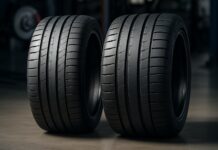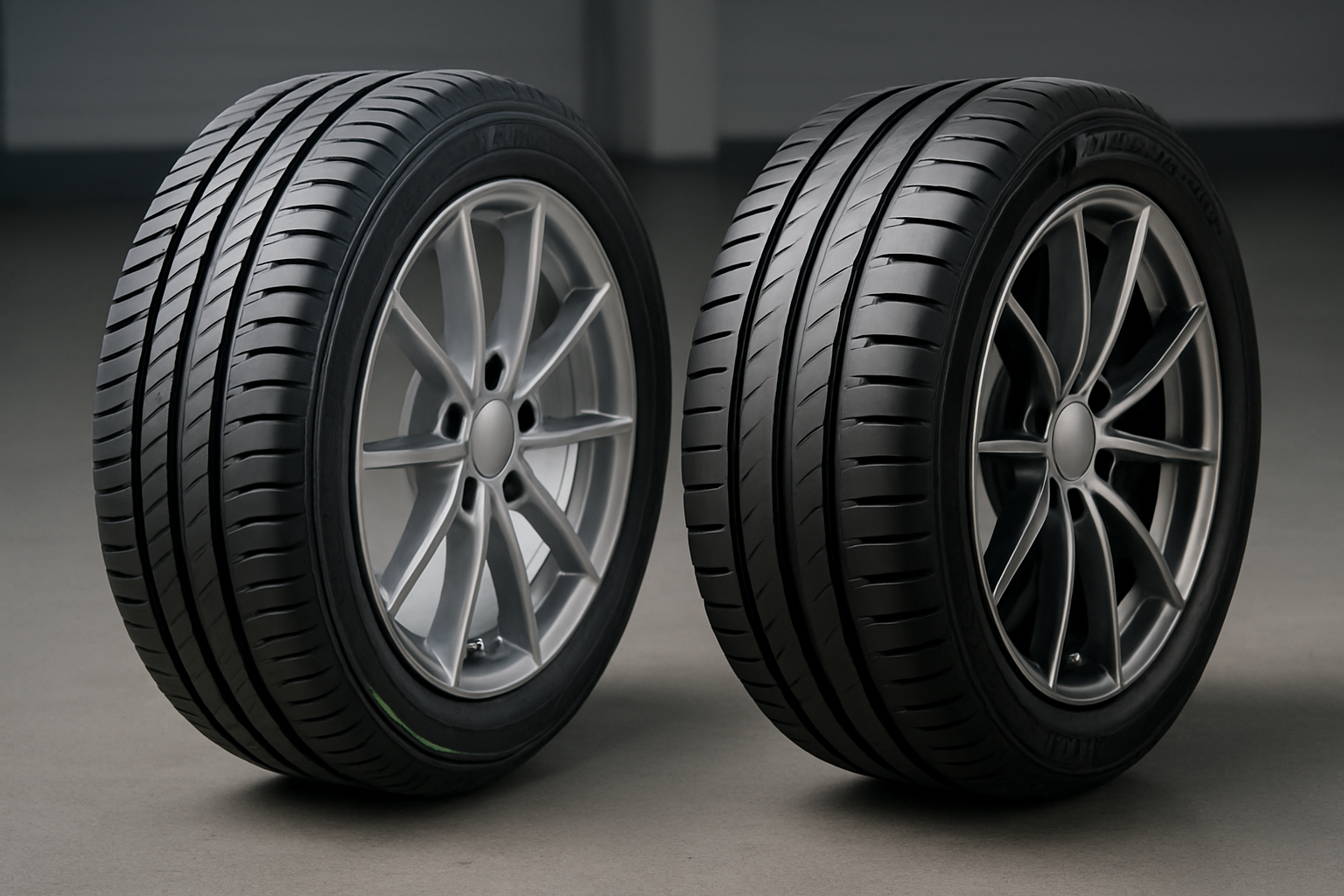
When choosing between Michelin E-Primacy vs Pilot Sport 4, the decision boils down to your driving priorities: the E-Primacy excels in fuel efficiency, low noise, and everyday comfort for regular commuting, whilst the Pilot Sport 4 delivers exceptional grip, responsive handling, and sporty performance for enthusiasts who value driving dynamics. Both tyres offer excellent wet and dry braking, but the E-Primacy prioritises sustainability and cost-effectiveness over time, whereas the Pilot Sport 4 focuses on maximum traction and cornering precision at higher speeds.
Quick comparison table
| Attribute | Michelin E-Primacy | Michelin Pilot Sport 4 |
|---|---|---|
| Price range | £90–£140 per tyre | £110–£180 per tyre |
| Durability | High (optimised tread compound) | Moderate (sport-focused compound wears faster) |
| Performance | Eco-focused, excellent fuel economy | Sport-focused, superior grip and handling |
| Noise level | Very low (69–70 dB) | Moderate (70–72 dB) |
| Maintenance | Low (even wear pattern) | Moderate (check pressure regularly for optimal performance) |
| Best use case | Daily commuting, motorway cruising, eco-conscious drivers | Spirited driving, track days, performance-oriented motorists |
Product #1 overview: Michelin E-Primacy
The Michelin E-Primacy represents the brand’s commitment to sustainable mobility without compromising safety. This tyre employs advanced silica-based tread compounds combined with optimised tread patterns that reduce rolling resistance, translating directly into lower fuel consumption—typically around 0.21 litres saved per 100 km compared to standard tyres.
Built with lightweight construction and reinforced sidewalls, the E-Primacy maintains structural integrity whilst reducing overall weight. The tread design features continuous centre ribs that enhance straight-line stability and minimise road noise, making motorway journeys notably quieter. Michelin’s engineers have incorporated wide longitudinal grooves to evacuate water efficiently, ensuring reliable wet-weather performance.
Materials used include environmentally conscious compounds with a higher proportion of sustainable materials, aligning with modern environmental standards. The tyre typically costs between £90 and £140 per unit, depending on size and retailer.
Pros
- Outstanding fuel efficiency reduces running costs
- Exceptionally quiet operation (EU label: A or B for noise)
- Long tread life thanks to wear-resistant compound
- Strong wet and dry braking performance
- Lower carbon footprint appeals to eco-conscious drivers
Cons
- Less responsive handling compared to sport tyres
- Limited performance at high cornering speeds
- Not ideal for spirited or track driving
Ideal drivers
The E-Primacy suits daily commuters, fleet operators, and drivers who cover significant mileage on motorways. It’s perfect for saloons, estates, and compact SUVs where comfort, economy, and longevity matter most. If your driving consists mainly of urban and motorway journeys with occasional country roads, this tyre delivers excellent value.
Tip from AutoPartsPro specialists: Maintain correct tyre pressure (check monthly) to maximise the E-Primacy’s fuel-saving benefits. Under-inflated tyres can negate the efficiency gains and reduce tread life by up to 25%.
Product #2 overview: Michelin Pilot Sport 4
The Michelin Pilot Sport 4 stands as one of the most respected performance summer tyres available. Developed using technology derived from motorsport, it features a hybrid tread compound: functional elastomers and silica on the outside shoulder provide maximum dry grip, whilst the inner tread uses a different compound optimised for wet conditions.
This asymmetric design philosophy extends to the tread pattern itself. Dynamic Response Technology incorporates hybrid Aramid and Nylon reinforcements in the tyre’s crown, ensuring precise steering response and enhanced stability during aggressive manoeuvres. The tread blocks are specifically shaped to maintain optimal contact pressure across the footprint, whether braking hard or accelerating out of corners.
Constructed with premium materials and race-proven compounds, the Pilot Sport 4 typically retails between £110 and £180 per tyre, reflecting its performance-oriented engineering and shorter replacement intervals compared to touring tyres.
Pros
- Exceptional dry grip and cornering stability
- Impressive wet-weather traction and braking
- Razor-sharp steering response and feedback
- Confidence-inspiring at high speeds and during spirited driving
- Proven track-day capability for enthusiasts
Cons
- Higher rolling resistance reduces fuel economy
- Noisier than eco-focused tyres
- Shorter tread life due to softer sport compound
- Premium pricing compared to touring alternatives
Ideal drivers
The Pilot Sport 4 targets driving enthusiasts, sports car owners, and anyone who prioritises handling precision and performance. It’s the natural choice for hot hatches, sports saloons, and performance-oriented vehicles where dynamic ability matters more than absolute economy. Weekend drivers who enjoy B-roads and occasional track days will appreciate its capabilities.
Expert insight from AutoPartsPro mechanics: The Pilot Sport 4 reaches optimal operating temperature quicker than many competitors, delivering consistent grip from the first corner. For track use, allow a gentle warm-up lap before pushing hard to maximise tyre longevity.
Compatibility (very important for parts ecommerce)
Both the Michelin E-Primacy and Pilot Sport 4 are available in extensive size ranges, but confirming fitment for your specific vehicle remains crucial before purchase.
Vehicle compatibility
The E-Primacy covers sizes from 15 to 20 inches, making it suitable for compact cars, family saloons, estates, and crossover SUVs. Common fitments include popular models like the VW Golf, Ford Focus, BMW 3 Series, and Audi A4. The Pilot Sport 4 ranges from 17 to 20 inches, targeting performance vehicles such as the VW Golf GTI, BMW M Sport variants, Audi S-line models, and sports cars like the Porsche Cayman.
Model year considerations
Always verify tyre specifications against your vehicle’s placard (usually located on the driver’s door pillar or fuel filler cap). Newer vehicles with advanced driver assistance systems (ADAS) may require specific speed ratings or load indices. The E-Primacy typically carries V or W speed ratings (up to 168 or 168 mph), whilst the Pilot Sport 4 commonly features W or Y ratings (up to 186 or 186+ mph).
OEM specifications
Check your existing tyre specifications carefully. Match the width, profile, rim diameter, load index, and speed rating exactly unless consulting a tyre specialist. Some vehicles have staggered fitments (different sizes front and rear), particularly performance models. The Pilot Sport 4 often comes as an OEM fitment on sports variants, whilst the E-Primacy appears on efficiency-focused trim levels.
Installation notes
Professional fitting is essential for both tyres. Ensure wheels are balanced correctly and alignment is checked, especially when switching between tyre types. The directional tread pattern on some sizes requires specific rotation (marked by arrows on the sidewall). When replacing only two tyres, fit new ones to the rear axle for optimal stability, regardless of drive configuration. Remember to update TPMS (tyre pressure monitoring system) sensors if your vehicle is equipped.
For best results, replace tyres in sets of four. Mixing tyre types can affect handling characteristics and electronic stability systems. If budget constraints require replacing just two tyres, ensure the new pair matches the existing brand and model on the other axle.
Final verdict (buying recommendation)
Your choice between these two excellent Michelin tyres should align with your driving style and priorities.
Choose the E-Primacy if: You drive primarily for commuting and family transport, cover high annual mileage (15,000+ miles), prioritise fuel savings and low running costs, value a quiet and comfortable ride, or drive a standard saloon, estate, or crossover. This tyre makes financial sense for drivers who view tyres as a practical necessity rather than a performance upgrade. The long tread life and fuel savings typically offset the initial purchase price within the tyre’s lifespan.
Choose the Pilot Sport 4 if: You own a performance vehicle or hot hatch, enjoy spirited driving on B-roads and country lanes, participate in track days or driving events, prioritise handling precision and steering feedback, or drive shorter distances where fuel economy matters less. The Pilot Sport 4 transforms the driving experience, offering confidence and capability that justify the premium price and shorter lifespan for enthusiasts.
Our AutoPartsPro specialists note that many customers find the E-Primacy surprisingly capable in everyday situations, with handling that satisfies most drivers. Conversely, the Pilot Sport 4 remains civilised enough for daily use, though you’ll notice increased road noise and fuel consumption. For a balanced approach, some drivers fit E-Primacy tyres during winter months (on a second set of wheels) and switch to Pilot Sport 4 for summer performance.
Consider your annual mileage carefully. If you drive under 8,000 miles yearly, the Pilot Sport 4’s shorter lifespan becomes less significant, and you can enjoy its performance benefits longer. Above 15,000 miles annually, the E-Primacy’s durability and efficiency deliver substantial savings.
Frequently asked questions
Can I mix Michelin E-Primacy and Pilot Sport 4 on the same vehicle?
Mixing different tyre models is not recommended as it affects handling balance and electronic stability systems. Always fit matching tyres to both wheels on an axle. If replacing two tyres, fit the newer pair to the rear axle regardless of drive type for optimal safety and stability.
How much fuel can I save with E-Primacy compared to Pilot Sport 4?
The E-Primacy typically saves around 0.15–0.21 litres per 100 km compared to performance tyres. For a driver covering 15,000 miles annually, this translates to approximately 80–120 litres saved yearly, worth £120–£180 at current fuel prices, offsetting the tyre’s cost over its lifespan.
Does the Pilot Sport 4 work adequately in light rain conditions?
Yes, the Pilot Sport 4 features excellent wet-weather capability with its hybrid tread compound and deep grooves. Independent testing shows braking distances comparable to premium touring tyres. However, it’s a summer tyre unsuitable for temperatures below 7°C or winter conditions—switch to dedicated winter tyres seasonally.
Which tyre lasts longer between E-Primacy and Pilot Sport 4?
The E-Primacy typically delivers 35,000–45,000 miles of tread life due to its harder, wear-resistant compound and lower rolling resistance design. The Pilot Sport 4 usually achieves 20,000–30,000 miles because its softer performance compound prioritises grip over longevity. Actual mileage varies with driving style and maintenance.
Are these tyres compatible with wheel hubs on modified vehicles?
Both tyres work with standard and modified vehicles provided you select the correct size and specifications. If you’ve fitted larger wheels, ensure the overall diameter remains within 3% of original to avoid speedometer errors and potential insurance issues. Consult your modification specialist or AutoPartsPro experts for specific fitment advice on altered suspension setups.