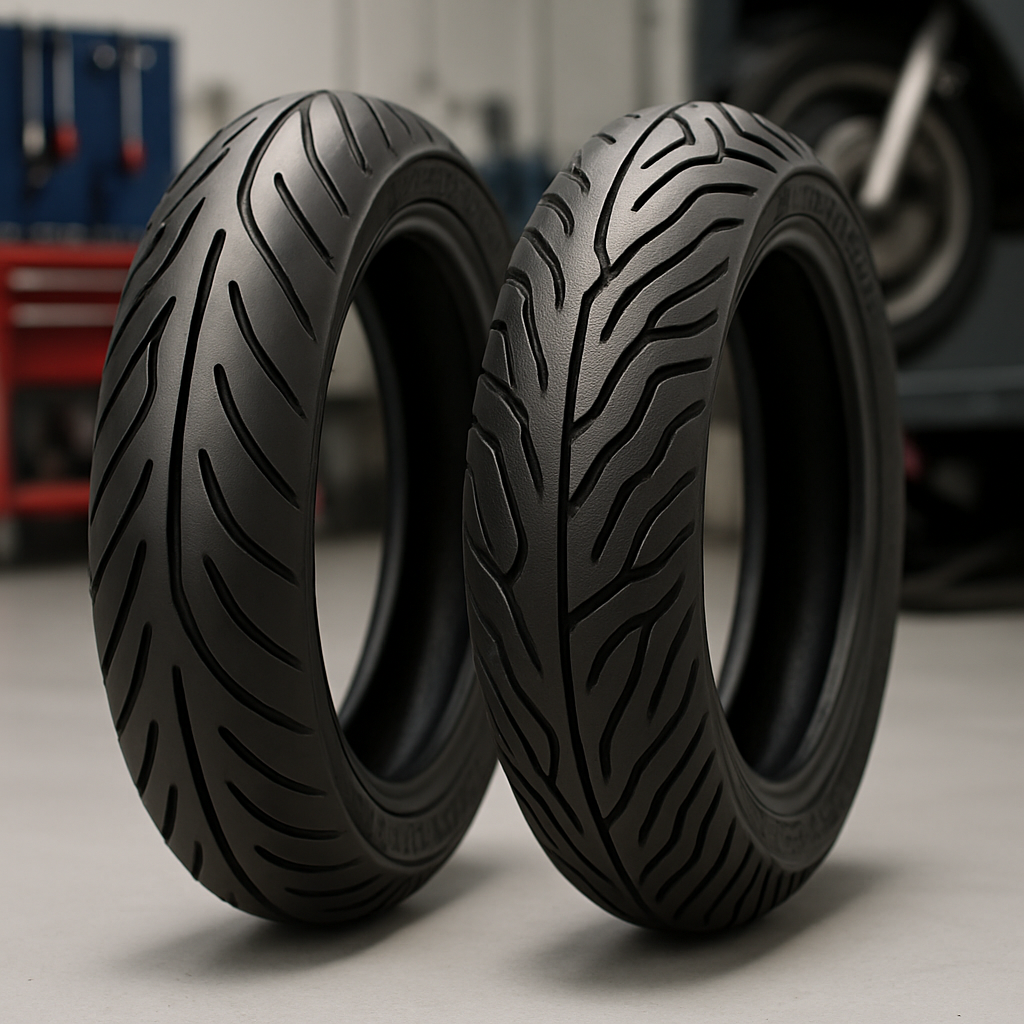
When choosing between the Pirelli Angel Scooter and Michelin City Grip 2, the decision hinges on your riding priorities: the Pirelli Angel Scooter delivers exceptional dry-weather performance and sporty handling with longer tread life, whilst the Michelin City Grip 2 excels in wet conditions with superior grip and safety for year-round commuting. Both tyres represent premium options for scooter enthusiasts in the UK, offering distinct advantages depending on weather patterns, riding style, and budget considerations. Understanding the technical differences between these two leading options will help you make an informed choice that matches your specific requirements.
Quick comparison table
| Feature | Pirelli Angel Scooter | Michelin City Grip 2 |
|---|---|---|
| Price range | £45-75 per tyre | £50-80 per tyre |
| Wet grip rating | Good (B rated) | Excellent (A rated) |
| Dry performance | Exceptional | Very good |
| Tread life | 15,000-20,000 km | 12,000-18,000 km |
| Noise level | Moderate | Low |
| Best use case | Sport-oriented riding, dry climates | All-weather commuting, wet conditions |
Product #1 overview: Pirelli Angel Scooter
The Pirelli Angel Scooter represents Italian engineering focused on performance and versatility. This tyre uses a dual-compound construction with a harder centre strip for longevity and softer shoulder compounds for cornering grip. The tread pattern features longitudinal grooves that efficiently channel water whilst maintaining substantial contact patch during acceleration and braking.
Manufactured using Pirelli’s motorcycle racing heritage, the Angel Scooter employs silica-enhanced compounds that maintain flexibility across temperature ranges. The carcass structure uses high-density nylon reinforcement, providing stability at higher speeds common on larger displacement scooters.
Typical pricing sits between £45-75 per tyre depending on size, making it competitively positioned in the premium segment. The spare parts market offers various fitment options for popular scooter models.
Our AutoPartsPro mechanics recommend checking tyre pressures weekly when running Pirelli Angels, as the performance-oriented construction is sensitive to under-inflation, which can accelerate shoulder wear significantly.
Pros of Pirelli Angel Scooter
- Outstanding dry-weather grip and cornering stability
- Extended tread life compared to competitors
- Precise steering response and feedback
- Excellent high-speed stability on motorways
- Wide range of sizes for different scooter models
Cons of Pirelli Angel Scooter
- Wet-weather performance trails dedicated rain tyres
- Slightly higher noise levels at motorway speeds
- Longer warm-up period in cold conditions
- Premium pricing may deter budget-conscious buyers
Ideal riders for Pirelli Angel Scooter
This tyre suits enthusiastic riders who prioritise handling dynamics and longevity. Owners of larger scooters (125cc and above) who frequently ride on A-roads and motorways will appreciate the stability and feedback. Those living in predominantly dry climates or who can avoid riding in heavy rain will maximise the Angel’s strengths.
Product #2 overview: Michelin City Grip 2
The Michelin City Grip 2 focuses squarely on urban mobility and all-weather capability. This tyre employs Michelin’s proprietary silica compound technology, delivering remarkable wet-weather performance through thousands of microscopic biting edges within the tread blocks. The asymmetric tread pattern features deep sipes and wide circumferential grooves designed specifically for British weather conditions.
Construction-wise, the City Grip 2 uses a reinforced casing with textile plies that provide flexibility for comfort whilst maintaining structural integrity. The tread depth runs deeper than the Angel Scooter, contributing to extended wet-weather performance even as the tyre wears.
Expect to invest £50-80 per tyre depending on size specifications. The slight premium reflects Michelin’s focus on safety technology and compound development. Many riders consider this investment worthwhile given the UK’s unpredictable weather patterns.
The City Grip 2 incorporates Michelin’s Total Performance philosophy, balancing multiple attributes rather than excelling in a single area. This approach delivers consistent performance across varying conditions without dramatic compromises.
AutoPartsPro specialists observe that City Grip 2 tyres maintain predictable handling characteristics even when worn to the minimum tread depth, unlike some competitors that become unpredictable in their final 20% of life.
Pros of Michelin City Grip 2
- Class-leading wet-weather grip and braking
- Quiet operation across all speed ranges
- Consistent performance as tread wears
- Excellent cold-weather flexibility
- Shorter warm-up time for immediate grip
Cons of Michelin City Grip 2
- Slightly shorter tread life than Pirelli Angel
- Marginally less sporty feel in dry conditions
- Higher initial purchase cost
- Softer compound may wear faster on high-powered scooters
Ideal riders for Michelin City Grip 2
Year-round commuters who cannot choose their riding days will benefit most from the City Grip 2. Urban riders navigating wet roads, painted markings, and metal surfaces will appreciate the confidence-inspiring grip. Those prioritising safety over ultimate performance, particularly newer riders or those carrying passengers regularly, should seriously consider these tyres. For advice on maintaining your scooter’s braking system, refer to maintenance guides.
Compatibility considerations
Both tyre ranges offer comprehensive coverage for modern scooters, but confirming exact fitment remains critical. The Pirelli Angel Scooter lineup spans from 110/70-11 through to 150/70-14, covering models from the Honda PCX to Yamaha XMAX. Michelin City Grip 2 offers similar coverage with some additional sizes for smaller 50cc machines.
Check your scooter’s sidewall markings or owner’s manual for the correct size designation. The format reads as width/aspect ratio-rim diameter (e.g., 120/70-12). Substituting sizes can affect speedometer accuracy, handling characteristics, and potentially void insurance coverage.
Model year considerations matter less with scooter tyres than motorcycles, as manufacturers rarely change wheel sizes during a model’s production run. However, verify load index and speed rating requirements. Most scooters require M-rated (130 km/h) or P-rated (150 km/h) tyres as minimum specifications.
OEM specifications sometimes list multiple approved tyre options. Whilst both Pirelli and Michelin meet or exceed OEM standards, some manufacturers specifically recommend certain brands for their models. Consult your dealer or maintenance specialist if uncertain.
Installation considerations
Professional fitting is strongly recommended for both tyres. Scooter wheels require specific mounting techniques to avoid damage to tubeless beads. Balancing proves critical for vibration-free operation, particularly at motorway speeds. Budget £15-25 per wheel for professional mounting, balancing, and disposal of old tyres.
Tyre direction matters significantly with these asymmetric designs. Both manufacturers mark rotation direction clearly on sidewalls. Incorrect installation compromises wet-weather performance and potentially creates safety hazards.
Final verdict and buying recommendation
Select the Pirelli Angel Scooter if you prioritise longevity, sporty handling, and primarily ride in dry conditions. This tyre delivers exceptional feedback and stability for spirited riding whilst offering superior tread life that offsets the initial investment. Larger scooter owners who cover significant motorway miles will particularly appreciate the high-speed composure.
Choose the Michelin City Grip 2 for superior all-weather capability, especially if you commute regardless of conditions. The wet-weather grip advantage provides measurable safety benefits during British winters. Urban riders navigating unpredictable road surfaces, frequent stops, and varying conditions will find the City Grip 2’s balanced performance invaluable.
Budget-conscious buyers might lean towards the Pirelli for longer replacement intervals, whilst safety-focused riders should invest in the Michelin’s wet-weather technology. Neither choice represents a compromise—both tyres excel within their intended parameters.
Consider purchasing both types if you own multiple scooters or can rotate seasonally. Running Pirelli Angels during summer months and switching to Michelin City Grip 2s for winter optimises performance year-round, though this approach suits enthusiasts more than casual riders.
For maintaining your scooter’s overall performance beyond tyres, ensure regular maintenance schedules are followed to maximise safety and reliability.
Frequently asked questions
Can I mix Pirelli Angel Scooter front with Michelin City Grip 2 rear?
Whilst technically possible, mixing tyre brands is not recommended. Different compounds and tread patterns create inconsistent handling characteristics, particularly during emergency braking or evasive manoeuvres. Matched pairs ensure predictable behaviour and optimal safety across all riding conditions.
How long do these tyres typically last in UK conditions?
Expect 15,000-20,000 km from Pirelli Angels and 12,000-18,000 km from Michelin City Grip 2s under normal commuting conditions. Aggressive riding, heavy loads, and predominantly urban stop-start traffic reduce lifespan. Regular pressure checks and smooth riding styles extend tread life significantly.
Do these tyres require special break-in procedures?
Both manufacturers recommend a 100-mile gentle break-in period, avoiding hard acceleration, heavy braking, and aggressive cornering. This scrubs off manufacturing release agents and allows compounds to properly cure. Gradually increase lean angles and braking forces during this initial phase.
Which tyre performs better in cold temperatures below 5°C?
The Michelin City Grip 2 maintains flexibility and grip in cold conditions better than the Pirelli Angel Scooter. Michelin’s silica compound remains supple at lower temperatures, providing safer performance during British winter months when temperatures frequently hover near freezing.
Are these tyres suitable for high-performance maxi-scooters over 300cc?
Both tyres offer specific sizes rated for maxi-scooters, but verify load index and speed ratings carefully. The Pirelli Angel Scooter generally suits sportier maxi-scooter applications better, whilst the City Grip 2 excels on touring-oriented models. Check manufacturer specifications for your specific model before purchasing.