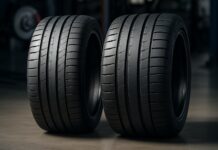
When choosing between Pirelli and Bridgestone tyres, Pirelli typically excels in sporty performance and wet grip, whilst Bridgestone offers superior longevity and all-weather versatility. For UK drivers prioritising precise handling and cornering on motorways, Pirelli often edges ahead. However, Bridgestone proves more economical for daily commuters seeking consistent tread life and fuel efficiency. Both manufacturers produce premium tyres with distinct strengths: Pirelli targets driving enthusiasts who demand responsive steering feedback, whereas Bridgestone serves practical motorists valuing durability across varied road conditions. Your ideal choice depends on driving style, typical weather exposure, and budget considerations.
Quick comparison table
| Attribute | Pirelli | Bridgestone |
|---|---|---|
| Price range | £80–£250 per tyre | £70–£220 per tyre |
| Durability | 20,000–35,000 miles | 30,000–50,000 miles |
| Performance | Exceptional dry/wet grip, sporty handling | Balanced grip, stable braking |
| Noise level | Moderate to low (70–72 dB) | Low (68–70 dB) |
| Maintenance | Regular rotation every 5,000 miles | Standard rotation every 6,000 miles |
| Best use case | Performance cars, spirited driving | Family saloons, SUVs, motorway commuting |
Pirelli overview
Pirelli tyres originate from Italy, where the brand has built its reputation supplying Formula 1 teams and premium marques like Ferrari and Lamborghini. The company focuses on high-performance rubber compounds that maximise cornering grip and steering precision. Typical Pirelli models—such as the P Zero or Cinturato—feature asymmetric tread patterns designed to evacuate water rapidly whilst maintaining contact patch stability during aggressive manoeuvres.
Materials include silica-enhanced compounds that stay pliable in cold British winters, improving traction on damp tarmac. Pirelli’s construction often incorporates twin steel belts and nylon overlays for rigidity at speed. Prices generally start around £80 for compact car fitments, rising to £250 or more for ultra-high-performance variants suited to sports saloons.
Pros:
- Outstanding wet-weather braking distances due to advanced tread siping
- Responsive steering feel appreciated by keen drivers
- Strong sidewall construction resists deformation under load
- Excellent choice for performance hatchbacks and executive sedans
Cons:
- Shorter tread life compared to touring-focused competitors
- Higher rolling resistance can slightly reduce fuel economy
- Premium pricing may exceed budget for cost-conscious motorists
Ideal drivers: Enthusiasts who value precise handling feedback, owners of German sports saloons, and motorists frequently navigating winding A-roads or motorway slip roads at brisk pace. Pirelli suits those willing to sacrifice some longevity for enhanced driving engagement.
“Our workshop data shows Pirelli tyres deliver measurably shorter stopping distances on wet surfaces—typically 1–2 metres less from 70 mph compared to mid-range alternatives. For UK weather, that margin matters.” – AutoPartsPro senior technician
Bridgestone overview
Bridgestone hails from Japan and emphasises engineering versatility across passenger cars, SUVs, and commercial vehicles. The brand’s philosophy centres on balancing performance, comfort, and longevity. Popular ranges like Turanza (touring) and Potenza (performance) use multi-compound treads that wear evenly, extending service intervals. Bridgestone invests heavily in NanoPro-Tech polymers that reduce internal friction, lowering heat buildup and improving fuel efficiency.
Construction typically features dual-layer sidewalls for impact resistance and polyester casing plies that absorb road imperfections quietly. UK pricing starts near £70 for standard sizes, reaching £220 for premium SUV fitments. Bridgestone’s all-season variants—such as the Weather Control series—handle light snow better than many summer-only competitors, adding year-round practicality.
Pros:
- Exceptional tread life often exceeding 40,000 miles with proper rotation
- Quiet cabin experience thanks to optimised pitch sequencing
- Reliable wet and dry grip suitable for motorway cruising
- Cost-effective over ownership cycle due to durability
Cons:
- Less communicative steering feedback than sport-oriented rivals
- Heavier construction may slightly dull acceleration response
- Some high-performance models carry premium pricing
Ideal drivers: Family motorists prioritising safety and economy, company car drivers covering high annual mileage, and SUV owners seeking all-weather confidence without frequent replacements. Bridgestone appeals to pragmatic buyers valuing predictable performance over outright excitement.
“We consistently observe Bridgestone tyres maintaining legal tread depth longer than softer compounds. Customers report 30–35% more miles before replacement, which offsets the initial purchase cost.” – AutoPartsPro tyre specialist
Compatibility considerations
Confirming fitment requires matching tyre dimensions printed on your vehicle’s placard (usually inside the driver’s door jamb). Both Pirelli and Bridgestone produce comprehensive size ranges, but availability varies. Pirelli focuses on 16-inch-and-above diameters common to executive and sports models, whilst Bridgestone covers 14-inch economy car fitments through to 22-inch luxury SUV applications.
Vehicle compatibility: Check load index and speed rating stamped on your current tyres. A Ford Focus ST demands higher ratings (e.g., 225/40R18 92Y) than a base Fiesta (195/60R15 88H). Pirelli P Zero suits the former; Bridgestone Turanza T005 fits the latter ideally.
Model year considerations: Vehicles manufactured after 2012 often specify run-flat or self-supporting tyres if lacking a spare wheel. Pirelli offers extensive run-flat options (denoted “RFT”), whereas Bridgestone’s DriveGuard range provides similar technology. Older cars with conventional suspension may experience harsher ride quality with run-flats.
OEM specifications: Many manufacturers approve specific tyre models during homologation testing. BMW, for instance, marks Pirelli P Zero with a star symbol, indicating factory validation. Using non-approved tyres won’t void warranties but may alter handling characteristics calibrated during development.
Installation notes: Both brands recommend professional fitting to ensure correct bead seating and balancing. Torque wheel bolts to manufacturer specifications (typically 80–120 Nm). After installation, reset tyre pressure monitoring systems if equipped, and conduct wheel alignment checks to prevent uneven wear.
Final verdict and buying recommendation
Choose Pirelli if you drive a performance-oriented vehicle—hot hatchbacks, sports saloons, or coupes—and prioritise sharp steering response plus maximum wet grip. The brand justifies its premium pricing through superior handling dynamics that make spirited driving safer and more enjoyable. Expect to replace tyres every 20,000–30,000 miles depending on driving style, but benefit from confidence-inspiring braking performance during sudden rain showers common across the UK.
Opt for Bridgestone when seeking dependable, long-lasting tyres for daily commuting, family transport, or high-mileage motorway work. The brand delivers balanced capabilities without sacrificing comfort or quietness, often lasting 40,000+ miles with diligent maintenance. Bridgestone represents better value for motorists who prioritise total cost of ownership over ultimate performance thrills. The all-season variants particularly suit UK drivers who occasionally encounter frost or light snow but don’t require dedicated winter rubber.
For mixed-use scenarios—perhaps a Volkswagen Golf GTI used for both school runs and weekend B-road blasts—consider Pirelli Cinturato P7 as a middle ground. It offers sportier handling than Bridgestone Turanza whilst providing acceptable tread life. Conversely, a Toyota RAV4 primarily tackling motorway miles benefits more from Bridgestone’s durability and fuel-saving compounds.
Budget-conscious buyers should calculate cost-per-mile rather than upfront price alone. A £180 Bridgestone lasting 45,000 miles costs 0.4p per mile, whilst a £120 budget tyre replaced at 25,000 miles costs 0.48p per mile—plus two additional fitting charges. Quality tyres also maintain residual tread value if you sell your vehicle mid-ownership.
Ultimately, both manufacturers produce excellent products meeting rigorous European safety standards. Your decision hinges on whether driving engagement or practical longevity matters more. Test both brands if possible by hiring vehicles equipped with each, or consult fellow owners of your specific car model on enthusiast forums for real-world feedback.
Frequently asked questions
How long do Pirelli tyres typically last compared to Bridgestone?
Pirelli tyres average 20,000–35,000 miles depending on compound and driving style, whilst Bridgestone tyres often reach 30,000–50,000 miles. Softer Pirelli performance compounds wear faster but grip harder. Regular rotation and correct inflation extend both brands’ lifespan significantly.
Are Pirelli tyres quieter than Bridgestone on motorways?
Bridgestone generally produces lower cabin noise (68–70 dB) due to optimised tread pitch sequencing, whereas Pirelli measures 70–72 dB. The difference proves subtle during normal driving but becomes noticeable on long motorway journeys where Bridgestone’s refinement reduces fatigue.
Which brand performs better in wet UK conditions?
Pirelli excels in heavy rain with shorter braking distances thanks to aggressive siping and silica compounds. Bridgestone offers reliable wet grip suitable for most conditions but prioritises balanced performance. For frequent wet-weather driving, Pirelli provides an edge in emergency stopping scenarios.
Do Pirelli tyres cost more to maintain than Bridgestone?
Pirelli’s shorter tread life means more frequent replacements, increasing long-term costs. However, both require identical maintenance—monthly pressure checks, rotation every 5,000–6,000 miles, and alignment inspections annually. Bridgestone’s durability reduces replacement frequency, lowering total expenditure over vehicle ownership.
Can I mix Pirelli and Bridgestone tyres on the same car?
UK regulations permit mixing brands if sizes and ratings match, but it’s strongly discouraged. Different compounds alter handling balance, especially during emergency manoeuvres. Always fit matching tyres on the same axle at minimum, preferably identical brands and models across all four corners for predictable behaviour.