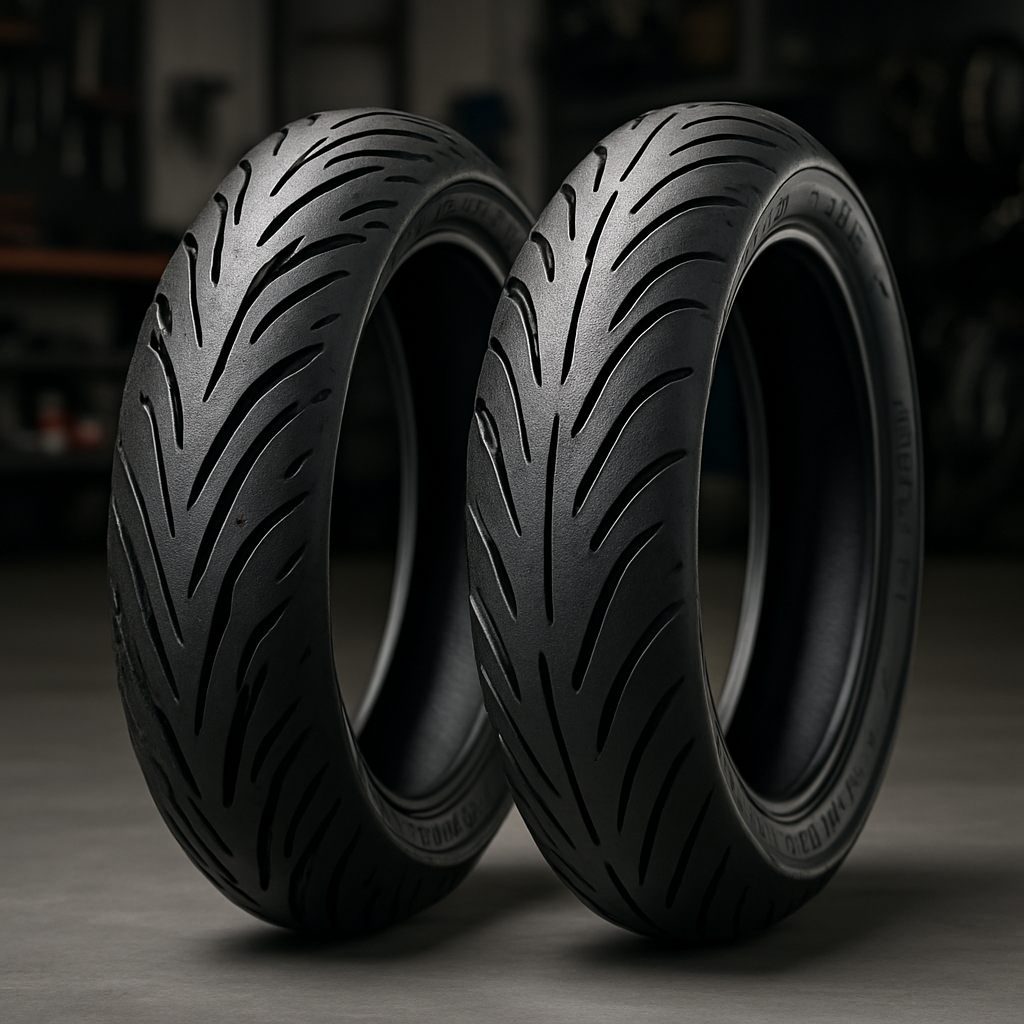
When choosing between Michelin Road 6 and Michelin Road 6 GT, the key difference lies in their intended purpose: the Road 6 targets sport bike riders seeking maximum wet weather grip and agile handling, whilst the Road 6 GT caters to sport-touring and larger displacement motorcycles demanding enhanced stability, longevity, and passenger comfort. Both tyres share Michelin’s revolutionary tread technology but differ in carcass construction, compound formulation, and profile design to meet distinct riding demands.
Motorcycle tyres represent one of the most critical safety investments for any rider. The Michelin Road series has earned legendary status among enthusiasts for delivering exceptional wet weather performance without compromising dry handling. The fifth generation Road 5 set industry benchmarks, but Michelin pushed boundaries further with the Road 6 lineup. Understanding which variant suits your motorcycle and riding style requires examining technical specifications, real-world performance characteristics, and compatibility factors that affect both safety and enjoyment.
Our mechanics at AutoPartsPro consistently recommend matching tyre profiles to your motorcycle’s weight distribution and intended use. Installing sport-focused tyres on heavy touring bikes compromises stability, whilst fitting touring-spec tyres on sport bikes dulls responsiveness.
Quick comparison table
| Attribute | Michelin Road 6 | Michelin Road 6 GT |
|---|---|---|
| Price range | £120-180 per tyre | £140-200 per tyre |
| Durability | 8,000-12,000 miles | 10,000-15,000 miles |
| Wet performance | Exceptional agility | Excellent stability |
| Dry handling | Sport-focused precision | Neutral, confidence-inspiring |
| Noise level | Moderate at speed | Quieter, refined |
| Maintenance | Standard pressure checks | Standard pressure checks |
| Best use case | Sport bikes, naked bikes, aggressive riding | Sport-touring, adventure bikes, two-up riding |
Michelin Road 6 overview
The Michelin Road 6 represents the pure sport iteration within this tyre family. Engineers designed it specifically for lighter, more agile motorcycles where quick steering transitions and corner entry confidence matter most. The tyre employs Michelin’s patented 2CT+ dual-compound technology, placing a softer silica-rich blend on the shoulders for cornering grip whilst maintaining a harder centre compound for longevity during straight-line riding.
Construction-wise, the Road 6 features a sports-oriented carcass with optimised rigidity that allows rapid direction changes. The tread pattern incorporates full-depth sipes—tiny grooves cut throughout the entire tread thickness—ensuring consistent wet weather performance even when approaching the wear indicators. This technology addresses the traditional compromise where tyres lose wet grip as they wear down.
Typical pricing sits between £120-180 per tyre depending on size, making it a premium option that delivers genuine performance value. Riders report exceptional feedback through the handlebars, allowing precise throttle and brake inputs mid-corner. The contact patch geometry favours quick-flicking motorcycles rather than heavyweight tourers.
Pros:
- Outstanding wet weather grip throughout tyre life
- Rapid warm-up time, even in cold British weather
- Precise steering response for sport riding
- Excellent aquaplaning resistance
- Lighter construction reduces unsprung weight
Cons:
- Shorter lifespan compared to touring-spec alternatives
- Less stable with heavy luggage or passengers
- Can feel nervous on heavier motorcycles
- Higher replacement frequency increases annual costs
Ideal riders: The Road 6 suits sport bike owners, naked bike enthusiasts, and riders who prioritise canyon carving over motorway miles. If you ride a Yamaha MT-09, Kawasaki Z900, or similar machines predominantly solo, this tyre delivers the engagement you’re seeking. Commuters on lighter bikes also benefit from the superior wet performance during unpredictable weather.
Michelin Road 6 GT overview
The GT variant shifts focus toward stability, comfort, and longevity without abandoning Michelin’s wet weather prowess. This tyre targets sport-touring motorcycles, adventure bikes, and larger displacement naked bikes where increased weight and two-up riding demand different performance characteristics. The carcass construction employs additional reinforcement layers that resist deformation under load.
Michelin adjusts the compound formulation in the GT specification, incorporating more silica for wet grip whilst balancing wear rates appropriate for higher mileage riders. The tread profile features a slightly taller, more rounded shape that provides neutral handling characteristics and reduces steering effort—beneficial during long motorway stretches or when carrying luggage and a passenger.
Pricing ranges from £140-200 per tyre, reflecting the increased material specifications and engineering complexity. The GT variant typically delivers 25-30% more mileage than the standard Road 6, offsetting the higher initial cost. Riders consistently praise the GT’s planted feel when loaded, confidence-inspiring stability at motorway speeds, and comfortable ride quality that doesn’t fatigue during all-day rides.
Pros:
- Extended tread life reduces replacement frequency
- Superior stability with luggage and passengers
- Quieter operation at cruising speeds
- Excellent high-speed stability
- Comfortable for long-distance touring
Cons:
- Less agile steering response than sport variants
- Higher initial purchase cost
- Slightly longer warm-up period
- Heavier construction adds marginal weight
Ideal riders: Choose the Road 6 GT if you own a BMW R1250GS, Kawasaki Versys 1000, Yamaha Tracer 900, or similar sport-touring platforms. Riders who frequently carry passengers, tour with luggage, or cover significant motorway distances benefit most from the GT’s characteristics. The additional stability inspires confidence when fully loaded, whilst the extended lifespan suits high-mileage riders.
After fitting hundreds of motorcycle tyres, our technicians emphasise proper break-in procedures. Both Road 6 variants require 100 miles of moderate riding to scrub off manufacturing release agents and allow compounds to properly cure before aggressive cornering.
Compatibility considerations
Selecting the correct Michelin Road variant extends beyond simply choosing your preferred characteristics. Proper fitment ensures optimal performance, safety, and legal compliance. Both Road 6 and GT versions span extensive size ranges, but not every size exists in both specifications.
Vehicle compatibility: The standard Road 6 covers sizes from 120/60-17 through 200/55-17, targeting sport bikes, super-sport machines, and lightweight naked bikes. The GT specification ranges from 120/70-17 through 190/55-17 at the rear, with specific sizing for adventure bikes including 110/80-19 and 150/70-17 combinations. Always verify your motorcycle manufacturer’s recommended sizes stamped on the swingarm or listed in your owner’s manual.
Model year considerations: Both tyre variants suit motorcycles from 2000 onwards, provided the rim widths match Michelin’s specifications. Older motorcycles with narrower rims may not properly support modern tyre profiles, affecting handling characteristics. Consult fitment charts before purchasing, particularly for vintage or modified machines.
Load and speed ratings: The GT variants typically feature higher load indexes to accommodate heavier motorcycles and luggage. A Road 6 GT rear tyre might carry a 73W rating (365kg at 270km/h), whilst the standard Road 6 equivalent shows 69W (325kg at 270km/h). Installing tyres with insufficient load capacity compromises structural integrity and safety. Speed ratings remain consistent, with most variants rated for sustained speeds up to 270km/h.
Installation notes: Both tyre types require professional mounting equipment and balancing. The stiffer GT carcass demands careful attention during installation to avoid bead damage. Always replace valve stems when fitting new tyres, and verify proper bead seating before inflation. Torque specifications for wheel nuts vary by motorcycle model—consult your service manual rather than estimating. If you’re working on other motorcycle components, quality spare parts make all the difference in longevity and performance.
Mixing tyre specifications front and rear creates unpredictable handling characteristics. Install matching Road 6 or GT pairs rather than combining variants. The front and rear tyres work as a system, with engineers carefully balancing profiles, compounds, and constructions to deliver cohesive performance.
Final verdict and buying recommendation
Your decision between Michelin Road 6 and Road 6 GT should align with your motorcycle type, riding style, and typical usage patterns. Neither tyre represents a universally superior choice—each excels within its designed parameters.
Choose the Michelin Road 6 if:
- You ride a sport bike, super-sport, or lightweight naked motorcycle
- Solo riding comprises the majority of your miles
- You prioritise agile handling and quick steering response
- Most journeys involve B-roads and spirited riding rather than motorway cruising
- You’re willing to replace tyres more frequently for enhanced performance
Choose the Michelin Road 6 GT if:
- Your motorcycle weighs over 220kg or frequently carries passengers
- Annual mileage exceeds 8,000 miles
- Touring with luggage forms a significant portion of your riding
- You value stability and comfort over razor-sharp handling
- Motorway commuting or long-distance rides dominate your schedule
Both tyres deliver Michelin’s renowned wet weather performance, representing substantial safety improvements over budget alternatives. The investment in premium rubber pays dividends during unexpected rain showers—common throughout the UK riding season. Consider your motorcycle’s weight, your riding preferences, and whether you typically ride solo or two-up when making your selection.
For riders who own multiple motorcycles or those considering a bike change within the tyre’s lifespan, the GT’s versatility and longevity often provide better overall value. Conversely, dedicated sport bike riders rarely regret choosing the sharper, more engaging standard Road 6. When in doubt, consult your motorcycle manufacturer’s recommendations and consider test rides on both specifications if possible.
Can I mix Michelin Road 6 and Road 6 GT on the same motorcycle?
Mixing tyre specifications creates unpredictable handling characteristics and voids Michelin’s performance guarantees. The different carcass constructions and profiles alter steering geometry and feedback. Always install matching pairs—either both Road 6 or both GT variants front and rear for consistent, safe performance across all riding conditions.
How long do Michelin Road 6 tyres typically last?
The standard Road 6 delivers 8,000-12,000 miles depending on riding style, motorcycle weight, and maintenance practices. The GT variant extends this to 10,000-15,000 miles thanks to its reinforced construction and optimised compound. Aggressive riders, heavier motorcycles, and neglected tyre pressures significantly reduce lifespan regardless of variant chosen.
Do these tyres require special break-in procedures?
Yes, both variants need approximately 100 miles of moderate riding to scrub manufacturing release agents and allow compounds to cure properly. Avoid aggressive acceleration, hard braking, and extreme lean angles during this period. Gradually increase cornering intensity as the tyres develop full grip characteristics throughout the initial break-in phase.
Are Michelin Road 6 tyres suitable for track days?
Whilst the Road 6 handles occasional track sessions competently, neither variant represents an optimal track choice. Michelin designs these as road-focused sport-touring tyres prioritising wet weather performance and longevity. Dedicated track tyres offer superior dry grip and temperature resistance. For track-focused riders, consider Michelin Power slick or treaded race compounds instead.
What tyre pressures should I use for Road 6 GT when touring?
Always follow your motorcycle manufacturer’s recommended pressures listed in the owner’s manual or swingarm sticker. Typically, increase rear pressure by 2-4 PSI when carrying luggage or passengers. Check pressures cold before rides, as operating temperatures raise readings. Proper inflation maximises tyre life, handling, and safety—especially critical when loaded for touring adventures.