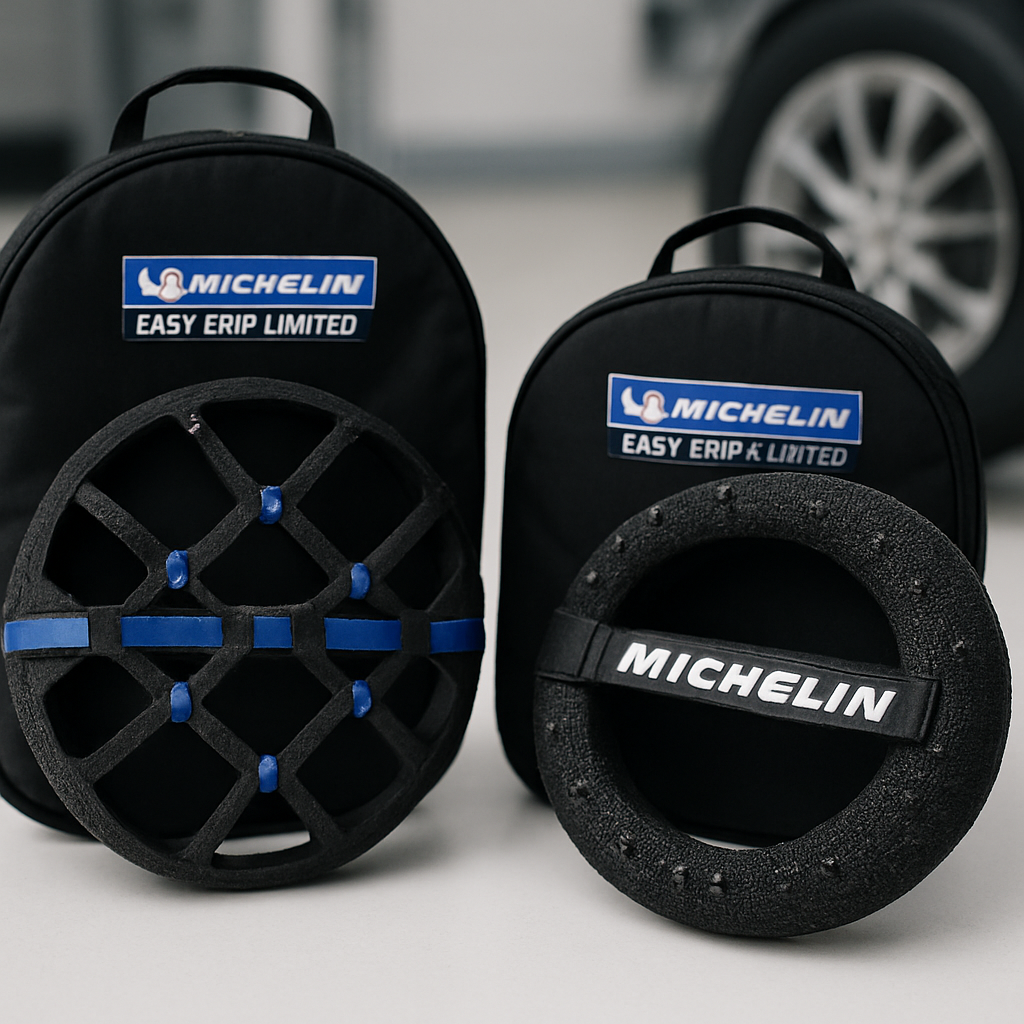
When comparing Michelin Easy Grip Limited and Michelin Easy Grip Evolution, the key difference lies in coverage and reusability. The Limited variant offers partial tyre coverage designed for occasional winter use and lighter snow conditions, whilst the Evolution provides full circumference coverage with enhanced grip for more demanding winter terrain. Both are composite textile snow chains that fit without moving the vehicle, but the Evolution model delivers superior traction and durability for drivers who regularly encounter harsh winter conditions. For UK motorists planning continental trips or facing unpredictable winter weather, understanding these differences ensures you choose the right solution for your vehicle and driving needs.
Quick comparison table
| Feature | Michelin Easy Grip Limited | Michelin Easy Grip Evolution |
|---|---|---|
| Price range | £80-£120 | £130-£180 |
| Coverage | Partial (60% tyre surface) | Full circumference (100% coverage) |
| Durability | Single season use | Multi-season capability |
| Installation time | 5 minutes | 5 minutes |
| Maximum speed | 50 km/h (31 mph) | 50 km/h (31 mph) |
| Snow performance | Good for light snow | Excellent for deep snow |
| Reusability | Limited reuse | High reusability |
| Best use case | Occasional alpine trips | Regular winter driving |
According to our mechanics at AutoPartsPro, composite textile chains like these Michelin systems offer a brilliant compromise for UK drivers who need emergency snow traction without the storage bulk of traditional metal chains. They’re particularly valuable for those unexpected winter motorway closures in alpine regions.
Michelin Easy Grip Limited overview
The Michelin Easy Grip Limited represents an entry-level composite snow chain system designed for drivers who occasionally venture into winter conditions. This system uses high-strength composite material rather than traditional metal links, making it lighter and easier to store in your boot.
The Limited variant works by wrapping around approximately 60% of the tyre’s rolling surface. The installation process requires no vehicle movement – you simply position the grip pad against the tyre, drive forward slightly to engage, then secure with a tensioning strap. The composite material features steel studs embedded within a polyester matrix, providing adequate bite on snow and ice.
Materials used include reinforced polyester fabric with integrated steel grip elements. The tensioning system employs elasticated straps with quick-release buckles. These components are designed to withstand temperatures down to -40°C, though the overall structure has a limited service life compared to the Evolution model.
Typical pricing ranges between £80 and £120 depending on tyre size compatibility. This positions the Limited as an affordable option for infrequent winter use.
Pros:
- Lightweight and compact storage
- Quick installation without moving vehicle
- Affordable entry price point
- No risk of damaging wheel arches or bodywork
- Suitable for vehicles where traditional chains cannot be fitted
Cons:
- Limited durability for repeated use
- Partial tyre coverage reduces grip compared to full systems
- Not ideal for steep gradients or deep snow
- Single-season reliability in harsh conditions
- Requires replacement after moderate wear
The Limited version suits occasional drivers who make one or two alpine skiing trips annually. If you’re travelling through France or Switzerland during winter holidays and need to comply with snow chain regulations, this provides adequate performance without significant investment. However, it’s not recommended for commercial drivers or those regularly facing severe winter conditions.
Michelin Easy Grip Evolution overview
The Michelin Easy Grip Evolution represents the premium tier of composite snow traction systems. It features complete circumference coverage, meaning the grip surface wraps entirely around the tyre rather than covering just a portion. This fundamental design difference translates directly into superior traction performance.
The Evolution system employs a more robust composite construction with higher-density steel studs distributed across a wider surface area. The installation mechanism remains tool-free and requires no vehicle repositioning, maintaining the convenience factor that makes these systems popular. The enhanced tensioning system provides better retention under demanding conditions.
Construction materials include heavy-duty polyester with increased steel stud density – approximately 40% more grip points than the Limited variant. The buckle system features reinforced polymer components rated for higher stress loads. This construction supports extended service life across multiple winter seasons.
Pricing typically falls between £130 and £180, reflecting the enhanced materials and engineering. Whilst this represents a premium over the Limited model, the cost-per-use decreases significantly for regular winter drivers due to improved durability.
Pros:
- Full circumference coverage for maximum traction
- Multi-season durability and reusability
- Superior performance on steep inclines
- Better suited for deep snow conditions
- More confident braking and acceleration
- Excellent value for regular winter use
Cons:
- Higher initial purchase cost
- Slightly bulkier storage requirements
- Still limited to 50 km/h maximum speed
- Requires proper storage to maintain longevity
The Evolution model targets drivers who regularly encounter winter conditions or those who prioritise safety margins. If you’re driving through Scandinavian countries, planning extended alpine stays, or simply want the reassurance of maximum available grip, the Evolution justifies its premium pricing. Commercial drivers and delivery services operating in winter conditions will find the enhanced durability particularly valuable.
Our AutoPartsPro specialists note that the Evolution’s full coverage design distributes forces more evenly across the tyre surface, reducing the risk of tyre damage and providing more predictable handling characteristics compared to partial-coverage systems.
Compatibility considerations
Both Michelin Easy Grip systems are available in multiple size variants, but proper fitment verification is essential before purchase. These composite chains suit vehicles with limited wheel arch clearance where traditional metal chains would contact suspension components or bodywork.
Vehicle compatibility extends across most passenger cars, crossovers, and light commercial vehicles. However, you must verify your specific tyre dimensions against Michelin’s size chart. The systems are designed for tyres ranging from 13-inch to 19-inch rim diameters, with width compatibility between 155mm and 265mm depending on the specific model variant.
Model year considerations matter less than physical wheel arch clearance. Modern vehicles with sportier suspension setups or larger brake callipers may have minimal clearance, making composite chains the only viable option. Always check your vehicle handbook for manufacturer recommendations regarding snow chain use.
OEM specifications typically dictate maximum chain thickness – generally around 12-15mm for passenger vehicles. Both Easy Grip variants fall well within these parameters at approximately 9mm thickness, making them compatible with vehicles that prohibit traditional chains.
Installation requires no special tools, but familiarisation before emergency use is strongly advised. Practice fitting in dry conditions at home. The process involves positioning the chain against the drive wheels, advancing the vehicle 30-50cm to engage the grip surface, then securing the tensioning straps. Some vehicles with electronic stability systems may require these to be temporarily disabled during chain use – consult your handbook.
For front-wheel-drive vehicles, fit chains to the front axle. Rear-wheel-drive requires rear axle fitment. Four-wheel-drive vehicles should prioritise the primary drive axle, though some manufacturers recommend fitting to all four wheels if conditions permit.
Final verdict and buying recommendation
Choose the Michelin Easy Grip Limited if you’re an occasional winter driver making one or two alpine trips annually. The lower price point makes sense when usage remains minimal, and the performance adequately handles light to moderate snow on maintained roads. This option suits budget-conscious buyers who need to satisfy legal requirements in snow chain zones without frequent use justifying premium investment.
Opt for the Michelin Easy Grip Evolution if winter driving forms a regular part of your annual routine. The enhanced durability and full-coverage design provide superior safety margins that justify the additional cost. For drivers covering mountainous routes regularly, operating commercial vehicles in winter, or those who prioritise maximum available grip, the Evolution represents better long-term value despite higher upfront expense.
From our specialist perspective at AutoPartsPro, the Evolution model offers the better overall package for UK drivers planning European winter travel. The improved reusability means the cost difference becomes negligible across a vehicle’s ownership lifecycle, whilst the performance advantage provides genuine safety benefits in challenging conditions. However, if your winter driving consists solely of a single annual ski trip on well-maintained motorways, the Limited variant provides adequate capability at attractive pricing.
Both systems require proper storage in the included bag to prevent UV degradation and moisture damage. Inspect before each use for worn studs or damaged composite material. Neither system should be used on dry tarmac, as this accelerates wear and reduces effectiveness. Remove chains as soon as road conditions permit safe travel without them. Remember that whilst composite chains reduce cabin noise compared to metal alternatives, some vibration remains noticeable – this is normal and doesn’t indicate fitment issues.
Whichever system you choose, carry them in your vehicle whenever winter travel is planned. Alpine regulations can change rapidly based on weather conditions, and having chains aboard prevents being turned back at control points. Consider your specific driving patterns, budget constraints, and risk tolerance when making your final decision. Both represent significant improvements over metal chains for convenience, though neither matches the absolute maximum grip of heavy-duty metal alternatives in extreme conditions.
Frequently asked questions
Can I use Michelin Easy Grip chains on motorways?
Yes, both variants are legal for motorway use when conditions require chains. However, observe the 50 km/h speed limit strictly. Remove chains when reaching clear tarmac to prevent damage and maintain normal motorway speeds safely.
How long do Michelin Easy Grip chains last?
The Limited variant typically lasts one to two seasons with occasional use. The Evolution can endure three to five seasons with proper care. Actual lifespan depends on usage frequency, road surface abrasiveness, and storage conditions between uses.
Do these chains work on ice as well as snow?
Both systems provide improved grip on ice compared to standard tyres, though performance is optimised for snow. The steel studs bite into ice surfaces, but dedicated winter tyres with proper tread compounds offer superior ice performance for regular winter driving.
Can I fit these chains myself without experience?
Absolutely. The tool-free design allows first-time users to fit them successfully. Practice at home before your trip to build confidence. Most users complete installation within five minutes after initial familiarisation with the system.
Are Michelin Easy Grip chains compatible with ABS and traction control?
Yes, both systems work with ABS and traction control systems. These safety features remain active and functional. Some manufacturers recommend slightly reduced intervention thresholds, but no system deactivation is required unlike with some traditional chain designs.