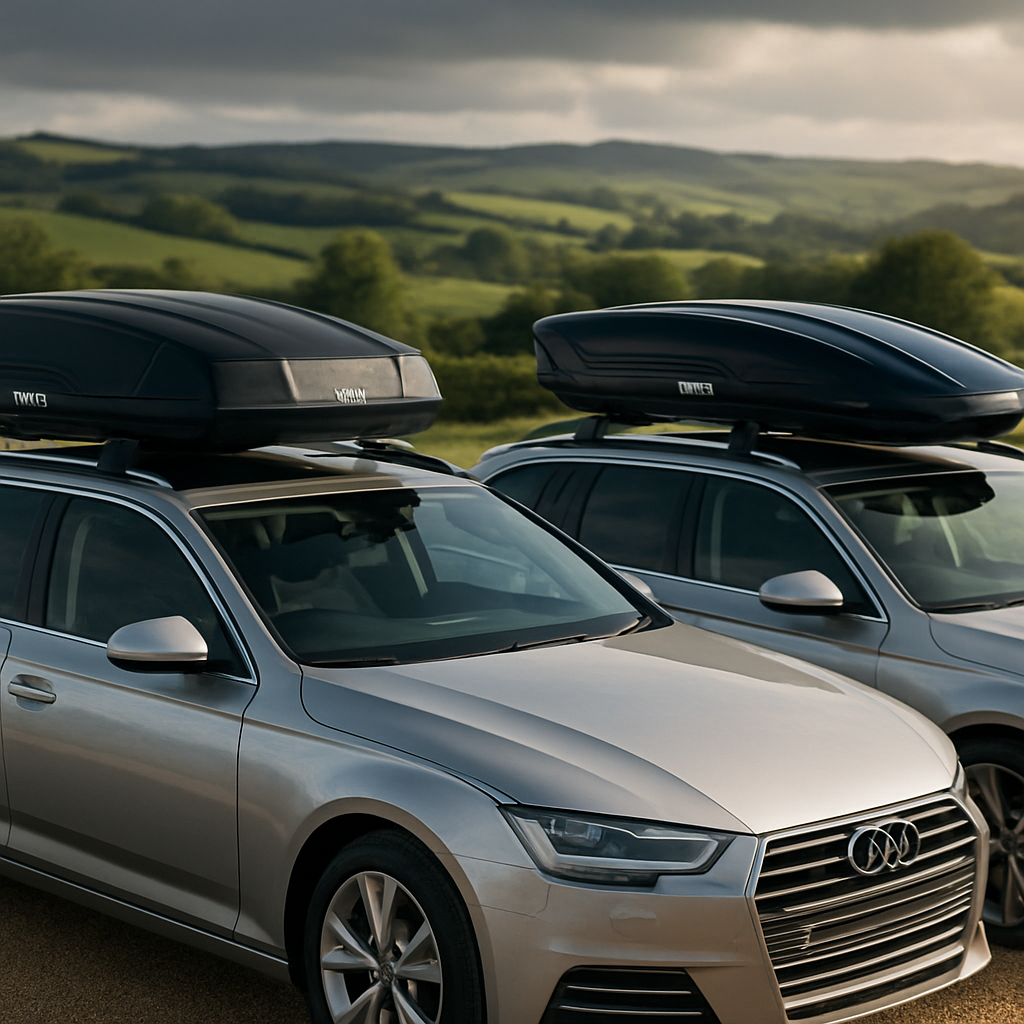
Choosing between the Thule Force XT and Thule Motion XT ultimately depends on your budget and aerodynamic priorities. The Force XT offers exceptional value with a boxy, high-capacity design ideal for bulky gear and families needing maximum storage at a lower price point. The Motion XT, meanwhile, features a streamlined aerodynamic profile that reduces wind noise and fuel consumption, making it perfect for frequent motorway drivers who prioritise refinement and are willing to invest more. Both roof boxes deliver Thule’s legendary build quality, secure dual-side opening, and compatibility with most roof bar systems, ensuring years of reliable service for holidays, camping trips, and sporting adventures.
Quick comparison table
| Feature | Thule Force XT | Thule Motion XT |
|---|---|---|
| Price range | £350-£500 | £450-£650 |
| Design | Boxy, angular | Sleek, aerodynamic |
| Capacity | 300-500 litres | 400-500 litres |
| Aerodynamics | Moderate drag | Low drag, quieter |
| Fuel impact | 10-15% increase | 8-12% increase |
| Opening | Dual-side SlideLock | Dual-side PowerClick |
| Weight | 14-18kg | 16-20kg |
| Best for | Budget buyers, bulky loads | Motorway cruisers, refinement |
Both boxes meet City Crash safety standards and use Thule’s patented mounting systems. The Force XT’s squared-off shape maximises internal volume, whilst the Motion XT’s tapered rear minimises turbulence. Your choice hinges on whether you value capacity per pound or long-distance comfort.
“After testing dozens of roof boxes in our workshop, our mechanics consistently recommend the Force XT for families who need space without breaking the bank, whilst the Motion XT suits company car drivers covering serious mileage who notice the fuel savings within months.”
Product #1 overview: Thule Force XT
The Force XT represents Thule’s practical approach to roof storage. Its angular, box-shaped design prioritises internal space over sleek styling. The outer shell uses ABS plastic with UV-resistant coating, preventing fade and cracking even after years of exposure. Prices start around £350 for the Sport (300L) model and reach £500 for the XXL (500L) variant.
This box operates with Thule’s SlideLock system, allowing you to open from either side depending on your parking situation. The central locking mechanism secures all mounting points simultaneously, whilst the grip-friendly lid requires minimal effort to operate even with gloved hands. Internal ski holders and cargo straps come standard, keeping your spare parts or camping gear properly secured during transit.
How it works: The Force XT mounts to square or round roof bars using Thule’s Quick Grip system. You position the box, tighten the knobs until they click, then lock everything with the included keys. The PowerClick mounting confirms proper installation with an audible click. Internal capacity varies by model, but even the mid-range L size swallows four sets of skis or multiple suitcases with room to spare.
Materials: High-impact ABS plastic shell, reinforced mounting rails, stainless steel hardware, dual-density foam seal around the lid perimeter.
Pros:
- Excellent value for money across the range
- Maximum internal volume for external dimensions
- Simple, foolproof mounting system
- Wide range of sizes (300L to 500L)
- Dual-side opening for parking flexibility
- Robust construction withstands harsh weather
Cons:
- Boxy shape creates more wind noise above 70mph
- Less refined appearance compared to Motion XT
- Higher fuel consumption due to aerodynamic profile
- Slightly heavier than comparable Motion models
Ideal drivers: Families needing seasonal storage for holiday gear, outdoor enthusiasts transporting bulky equipment like tents and sleeping bags, budget-conscious buyers wanting Thule quality without premium pricing, drivers who prioritise capacity over motorway refinement.
Product #2 overview: Thule Motion XT
The Motion XT showcases Thule’s engineering prowess with its carefully sculpted aerodynamic profile. The teardrop-inspired design channels airflow smoothly over the roof, reducing drag coefficient and wind noise significantly compared to boxier alternatives. Prices range from £450 for the Alpine (450L) to £650 for the XXL (500L) model.
This premium box features the PowerClick mounting system with integrated torque indicator. You’ll hear and feel distinct clicks when the mounting tension reaches the optimal level, eliminating guesswork during installation. The SlideLock system operates identically to the Force XT, but the Motion’s sleeker lid profile requires slightly less overhead clearance when opening in low garages.
The Motion XT’s shell uses the same UV-resistant ABS construction as the Force, but the curved surfaces distribute stress more evenly, potentially extending service life in extreme conditions. The interior features the same ski holders and cargo net attachments, with marginally more headroom in the centre section due to the arched lid design.
How it works: Installation mirrors the Force XT process, using the same T-track adapter system for roof bars. The aerodynamic shape means you’ll notice less buffeting at motorway speeds, with some drivers reporting 2-3mpg better fuel economy compared to boxier designs during long-distance cruising. The tapered rear end particularly benefits saloon and estate cars where airflow separation causes drag.
Materials: UV-resistant ABS outer shell with reinforced lid structure, dual-layer mounting rails, stainless steel locking mechanism, premium weatherproof seal.
Typical price: £450-£650 depending on capacity and retailer.
Pros:
- Significantly quieter at motorway speeds
- Improved fuel economy versus boxy designs
- Sleek appearance enhances vehicle aesthetics
- PowerClick mounting provides installation confidence
- Better high-speed stability in crosswinds
- Premium finish with attention to detail
Cons:
- Higher purchase price across all sizes
- Slightly less internal volume than Force XT equivalents
- Curved shape can complicate packing odd-shaped items
- Premium doesn’t necessarily mean more durable
Ideal drivers: Frequent motorway travellers covering 15,000+ miles annually, company car drivers conscious of fuel costs, enthusiasts who value refined driving experience, owners of prestige vehicles wanting aesthetically matched accessories, anyone sensitive to wind noise during long journeys.
“We’ve mounted hundreds of roof boxes on customer vehicles, and the Motion XT consistently earns praise from drivers who commute long distances or regularly tour Europe. The fuel savings genuinely offset the higher purchase price if you’re doing serious mileage.”
Compatibility considerations
Both the Force XT and Motion XT work with Thule’s WingBar, SquareBar, ProBar, and SlideBar roof rack systems, plus most aftermarket bars from Halfords, Exodus, and other manufacturers. The critical measurement is bar spacing – Thule recommends minimum 60cm between bars for optimal load distribution, with 70cm ideal for larger boxes.
Vehicle compatibility extends to virtually all cars with factory roof rails or aftermarket bars. However, check your vehicle’s maximum roof load rating in the owner’s manual. Most saloons and estates support 75kg dynamic load (whilst driving), whilst some smaller hatchbacks limit you to 50kg. Remember that the box weight (14-20kg) counts towards this limit, leaving 30-60kg for cargo.
Model year considerations: Pre-2018 Thule boxes used slightly different mounting hardware. If you’re buying used, ensure all mounting clamps and keys are present. The current generation (2018-onwards) features improved weather sealing and revised mounting points that grip bars more securely.
OEM specifications: Both boxes comply with TÜV City Crash safety standards, meaning they’ve been tested for sudden braking and low-speed impact scenarios. The boxes won’t detach during emergency stops when properly installed. Maximum speed rating is 130km/h (81mph), though UK legal limits obviously apply.
Installation notes: Budget 30-45 minutes for first-time installation. You’ll need the box, your vehicle’s roof bars, the included mounting hardware, and the instruction manual. Position the box centrally, ensuring equal overhang front and rear. Tighten the mounts in a diagonal pattern (like wheel nuts) to distribute pressure evenly. Test the locks before loading cargo – the key should turn smoothly without forcing. If you’re also fitting roof lights, mount them forward of the box to avoid shadowing.
Some owners report clearance issues on vehicles with factory aerials or shark fin GPS antennas. The Motion XT’s lower profile sometimes squeezes past where the Force XT won’t. Measure twice, order once – particularly if your car has aftermarket sunroof deflectors or other roof accessories.
h2>Final verdict and buying recommendation
Choose the Thule Force XT if you’re working within a tighter budget, need maximum cubic capacity for camping gear or sports equipment, drive primarily on A-roads and urban routes, or simply prefer substance over style. The Force delivers outstanding value, and the fuel penalty only matters if you’re covering serious motorway miles. Families doing two or three holiday trips annually will barely notice the aerodynamic compromise.
Opt for the Thule Motion XT if you regularly commute long distances, drive a premium vehicle where aesthetics matter, notice wind noise easily, want the most refined roof box experience available, or can justify the extra £100-150 through fuel savings over 2-3 years. The Motion XT transforms roof box ownership from a practical necessity into a genuine enhancement to your driving experience.
Our mechanics typically recommend the Force XT Sport or L for most UK families, as the 400L capacity handles typical holiday loads whilst keeping costs sensible. The Motion XT Alpine makes sense for company car drivers or anyone regularly touring Scotland or Europe, where the quieter, more efficient design pays dividends. Neither box will disappoint – both represent Thule’s commitment to quality and durability that often sees these boxes outlast the vehicles they’re fitted to.
Whichever you choose, remember that proper installation matters more than model selection. Take time to position the box correctly, torque the mounts properly, and distribute weight evenly inside. A well-loaded Force XT outperforms a carelessly packed Motion XT every time.
Frequently asked questions
Can I fit the Thule Force XT or Motion XT to my car without existing roof bars?
You’ll need roof bars installed first, either factory-fitted rails or aftermarket crossbars. Most vehicles accept aftermarket systems from Thule, Halfords, or similar manufacturers. Check your car’s door frame for mounting points before purchasing.
How much does the roof box affect fuel consumption in real-world driving?
Expect 10-15% increased fuel consumption with the Force XT and 8-12% with the Motion XT during motorway driving. Urban driving shows minimal impact. Empty boxes affect economy more than weight – aerodynamic drag is the primary factor.
Will these roof boxes fit through standard car park height barriers?
Most UK car parks allow 2.0-2.1m clearance. A typical estate with roof box measures 1.9-2.0m total height. Always check barrier height signage, and consider removing the box for airport long-stay parks with stricter limits.
Can I leave the roof box fitted permanently or should I remove it between trips?
Whilst both boxes withstand year-round weather exposure, removing between trips reduces fuel consumption, minimises wear on mounting points, prevents theft opportunities, and extends the UV-resistant coating’s lifespan. Storage takes minimal garage space.
Do I need to buy any additional accessories for these Thule roof boxes?
Both boxes include all mounting hardware, locks, and keys. You might want Thule’s ski bag insert for winter sports gear, or additional locks if you’re particularly security-conscious. Ensure your roof bars are compatible before purchase.