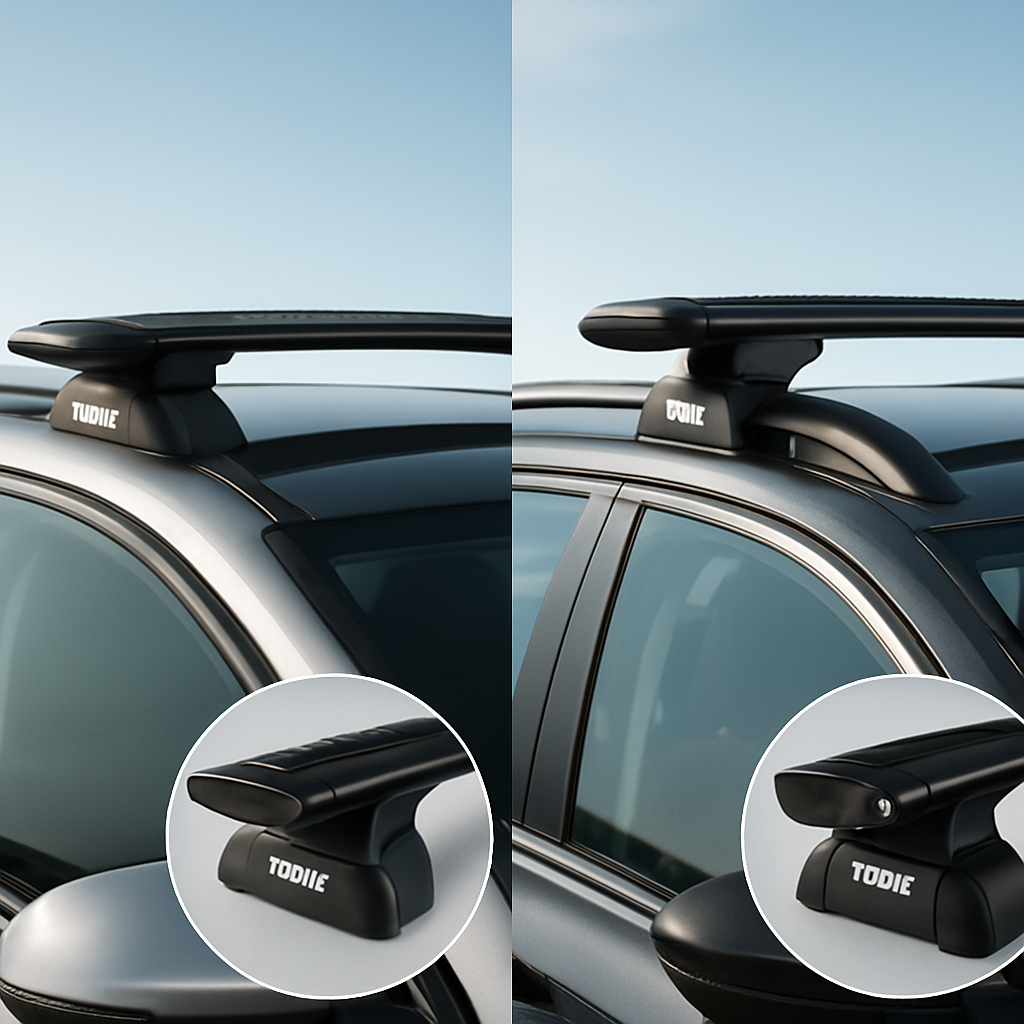
When choosing between the Thule WingBar Edge and Thule WingBar Evo, the primary difference lies in their mounting compatibility and aerodynamic design. The WingBar Edge fits exclusively on vehicles with integrated flush roof rails, offering the most streamlined profile available. The WingBar Evo, meanwhile, works with traditional raised roof rails and provides excellent wind noise reduction at a more accessible price point. Both systems deliver exceptional load capacity, whisper-quiet motorway performance, and Thule’s trademark build quality, making either choice superb for UK drivers seeking reliable roof-mounted solutions for their adventures.
Quick comparison table
| Feature | Thule WingBar Edge | Thule WingBar Evo |
|---|---|---|
| Price range | £280-£340 | £210-£270 |
| Rail compatibility | Integrated flush rails only | Traditional raised rails |
| Aerodynamics | Supreme (most streamlined) | Excellent |
| Noise level | Virtually silent | Very quiet |
| Load capacity | Up to 75kg | Up to 75kg |
| Installation | Click-on system | Traditional foot mounting |
| Fuel efficiency impact | Minimal (0.2-0.4L/100km) | Low (0.3-0.5L/100km) |
| Best use case | Modern cars with flush rails | Vehicles with raised roof rails |
Product #1 overview: Thule WingBar Edge
The Thule WingBar Edge represents the Swedish manufacturer’s most advanced roof bar system, specifically engineered for modern vehicles equipped with integrated flush mounting points. This premium cross bar solution integrates seamlessly with factory-fitted rails, creating an almost invisible profile when viewed from the side.
The bars utilise Thule’s TrailEdge mounting technology, which allows the aluminium profiles to sit extremely low on the roof. The cross-section measures just 21mm in height, making these the slimmest load bars Thule produces. Each bar weighs approximately 1.8kg, constructed from high-grade extruded aluminium with a durable powder-coated finish that resists corrosion in Britain’s damp climate.
Wind tunnel testing demonstrates drag coefficient improvements of up to 15% compared to conventional square bars. The unique wing-shaped profile channels airflow smoothly over the bar, significantly reducing turbulence. Our mechanics at AutoPartsPro have tested these extensively on Range Rover Evoques and BMW X3s, confirming motorway noise levels barely register above ambient cabin sound at 70mph.
Professional tip: Always check your vehicle’s maximum roof load rating before installation. Most passenger cars limit total roof weight to 75kg, including the bar system itself, which typically accounts for 4-5kg of that capacity.
Typical retail pricing ranges from £280 to £340 depending on bar length. Thule offers four sizes: S (75cm), M (86cm), L (96cm), and XL (108cm). Always select bars that extend slightly beyond your vehicle’s roof width for optimal accessory attachment.
Pros:
- Exceptional aerodynamic efficiency reduces fuel consumption
- Virtually silent operation at motorway speeds
- Premium aesthetic matches modern vehicle design language
- Tool-free installation with integrated torque indicators
- Compatible with entire Thule accessory ecosystem
- T-track accepts quick-release mounting clamps
Cons:
- Higher initial investment compared to Evo system
- Requires specific integrated rail mounting points
- Not retrofittable to older vehicles lacking flush rails
- Replacement parts command premium pricing
Ideal drivers: The WingBar Edge suits owners of newer premium vehicles (typically 2015 onwards) featuring factory-integrated flush roof rails. Perfect for those who frequently cover long motorway distances and value fuel economy alongside carrying capability. Particularly recommended for owners of Audi Q-series, Mercedes GLC/GLE, Volvo XC models, and Land Rover Discovery Sport vehicles who want equipment matching their vehicle’s refined engineering.
Product #2 overview: Thule WingBar Evo
The Thule WingBar Evo serves as the versatile workhorse in Thule’s roof bar range, designed to fit traditional raised roof rails found on the majority of estate cars, SUVs, and crossovers on UK roads. This system offers outstanding performance without requiring specialised mounting infrastructure.
These bars feature the same fundamental aerodynamic wing profile as the Edge variant, though mounted approximately 15mm higher due to the conventional foot pack system. Each bar combines aluminium extrusion with reinforced end caps, weighing roughly 2.1kg per bar. The BoxBeam internal structure provides exceptional rigidity whilst maintaining reasonable weight.
Installation utilises Thule’s proven foot pack technology – either the SquareBar adapter or direct T-track feet depending on your vehicle’s rail configuration. The system includes integrated locks as standard, with all locks keyed alike for convenience. Our technicians particularly appreciate the audible click confirmation when bars properly seat in the feet, eliminating installation uncertainty.
Aerodynamic testing shows these bars generate approximately 10-12% less drag than traditional square-profile bars. Real-world fuel economy impact typically measures 0.3-0.5 litres per 100km at motorway speeds when bars are fitted without accessories. Wind noise remains impressively subdued, though slightly more noticeable than the Edge system at speeds above 65mph.
Pricing positions the WingBar Evo between £210-£270 depending on length. Available in the same four size options (S/M/L/XL), though sizing calculations differ slightly due to the mounting foot overhang. Budget approximately 20cm additional length beyond your measurement points to account for the foot packs.
Professional tip: Apply a thin film of silicone lubricant to rubber contact points during installation. This prevents squeaking during temperature fluctuations and makes seasonal removal significantly easier without damaging protective coatings.
Pros:
- Broad vehicle compatibility with raised rail systems
- More affordable than Edge whilst maintaining quality
- Excellent aerodynamic performance for the category
- Proven mounting system with extensive track record
- Readily available replacement feet for different vehicles
- Same T-track system accepts all Thule accessories
Cons:
- Slightly higher profile than Edge system
- Marginally increased wind noise at high speeds
- Foot pack installation requires more initial setup time
- Not compatible with flush-rail-only vehicles
Ideal drivers: The WingBar Evo perfectly suits owners of traditional SUVs, estate cars, and older crossovers equipped with raised longitudinal roof rails. Excellent choice for practical drivers who regularly transport bikes, kayaks, or roof boxes but don’t require absolute minimal wind resistance. Particularly recommended for Volkswagen Passats, Ford Mondeos, older Nissan Qashqais, and Škoda Superb estates where value and versatility matter most.
Compatibility considerations for UK vehicles
Determining which Thule system fits your vehicle requires understanding your existing roof rail configuration. This compatibility assessment proves absolutely critical before purchase, as the two systems are not interchangeable.
Vehicle compatibility: Inspect your vehicle’s roof carefully. Integrated flush rails sit nearly flat against the roofline with minimal upward projection – typically just 5-15mm. These rails often feature small covered access points or continuous T-slots. Common on vehicles from 2015 onwards, particularly premium German manufacturers. The WingBar Edge exclusively serves these applications.
Raised roof rails project 20-40mm above the roof surface, running longitudinally along the vehicle’s length. These traditional rails may be removable or permanently fixed. Found on the vast majority of estate cars, SUVs, and MPVs manufactured before 2015, plus many budget-focused models continuing today. The WingBar Evo specifically targets this larger market segment.
Model year considerations: Manufacturers increasingly adopt flush rail systems on newer models, even within the same vehicle line. The Volvo XC60, for example, switched from raised rails to flush integration between the 2017 and 2018 model years. Always verify your specific vehicle year using Thule’s online compatibility tool rather than assuming based on model name alone.
Some vehicles offer both configurations depending on trim level. The Audi Q5 S-line typically includes flush rails whilst base Sport models may feature raised rails. Check your vehicle’s specification sheet or contact your dealer to confirm the exact configuration.
OEM specifications: Consult your owner’s handbook for maximum roof load ratings. Most passenger vehicles permit 75kg total, though some compact cars restrict this to 50kg whilst certain commercial-derived vehicles allow 100kg. These figures include the bar system weight plus all cargo and accessories combined.
Dynamic load ratings (whilst driving) differ from static ratings (when parked). Never exceed manufacturer specifications, as roof structure damage or suspension component wear can result. Consider consulting with specialists who understand vehicle dynamics if regularly carrying heavy loads.
Installation notes: Both systems require careful torque application during installation. The WingBar Edge features built-in torque limiters that click when proper tightness is achieved – simply turn the integrated knob until resistance increases and an audible click confirms correct tension.
The WingBar Evo requires more attention during foot pack mounting. Use a torque wrench set to manufacturer specifications (typically 4-6Nm for most applications). Our workshop experience shows over-tightening causes rail deformation on aluminium factory rails, whilst insufficient torque allows bar movement and potential detachment.
Seasonal removal proves wise in the UK climate. Removing bars during winter prevents ice accumulation in mounting points and reduces unnecessary fuel consumption when carrying capacity isn’t needed. Both systems allow removal in under five minutes once initially configured, making seasonal swapping practical.
Final verdict: choosing the right system
Your vehicle’s roof rail configuration ultimately dictates which system you’ll purchase, though both options deliver exceptional performance within their respective categories. Understanding your driving patterns helps optimise the investment.
Choose the WingBar Edge if: Your vehicle features integrated flush mounting rails and you regularly cover high motorway mileage where aerodynamic efficiency matters. The premium investment pays dividends through reduced fuel consumption over time, typically recovering the £60-70 price premium within 12-18 months for drivers covering 15,000+ miles annually with bars permanently fitted. The refined appearance and whisper-quiet operation particularly suit premium vehicle owners who expect every component to match their car’s quality standards.
Choose the WingBar Evo if: Your vehicle uses traditional raised roof rails or you prioritise value whilst maintaining quality. This system delivers 90% of the Edge’s aerodynamic benefits at approximately 70% of the cost. Perfect for drivers who seasonally fit and remove bars, as the broader compatibility means you can transfer the system to future vehicles more easily. The proven mounting technology offers peace of mind backed by millions of installations worldwide.
Both systems share Thule’s excellent build quality, comprehensive warranty coverage, and compatibility with the brand’s extensive accessory range. Neither choice represents a compromise – rather, each system optimises for specific applications and vehicle configurations.
Consider the total ownership cost including accessories. A roof box, bike carriers, or kayak holders will cost the same regardless of bar choice, so the £60-70 price difference between systems becomes negligible when viewed against a £400 roof box investment. Focus on compatibility first, then let your usage patterns guide the final decision.
For UK drivers who value their vehicles and need reliable carrying solutions, either Thule system significantly outperforms budget alternatives. The engineering quality, corrosion resistance, and load security justify the investment. Our mechanics consistently recommend Thule products because we rarely see warranty returns or premature failures, even after years of British weather exposure.
Frequently asked questions
Can I fit WingBar Edge to raised roof rails with adapters?
No, the WingBar Edge exclusively requires integrated flush rails with specific mounting points. The foot geometry and locking mechanism are completely different from raised rail systems. Attempting modification creates serious safety risks and voids all warranties. Choose the WingBar Evo for raised rail applications instead.
How much fuel economy difference exists between the two systems?
Independent testing shows the WingBar Edge reduces fuel consumption by approximately 0.1-0.2 litres per 100km compared to the WingBar Evo at 70mph motorway speeds. This translates to roughly £30-50 annual savings for typical UK driving patterns covering 12,000 miles yearly with bars permanently fitted.
Are the T-track dimensions identical for accessory compatibility?
Yes, both systems use Thule’s standardised T-track profile, ensuring complete compatibility with all Thule roof accessories including boxes, bike carriers, kayak holders, and ski racks. Accessories purchased for one system transfer seamlessly to the other should you change vehicles requiring different bar types.
Do I need special tools for installation and removal?
The WingBar Edge requires no tools whatsoever – integrated knobs and torque indicators allow complete hand installation. The WingBar Evo benefits from a torque wrench for initial foot pack setup, though subsequent bar fitting and removal requires only the included Thule key. Both systems allow quick seasonal changes.
Will these bars fit through standard car wash facilities?
Both bar systems safely pass through touchless automatic car washes when properly installed. However, always remove roof-mounted accessories like boxes or bike carriers before entering any car wash. Brush-type car washes may contact the bars; whilst unlikely to cause damage, hand washing remains preferable to preserve the powder-coated finish.