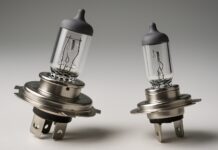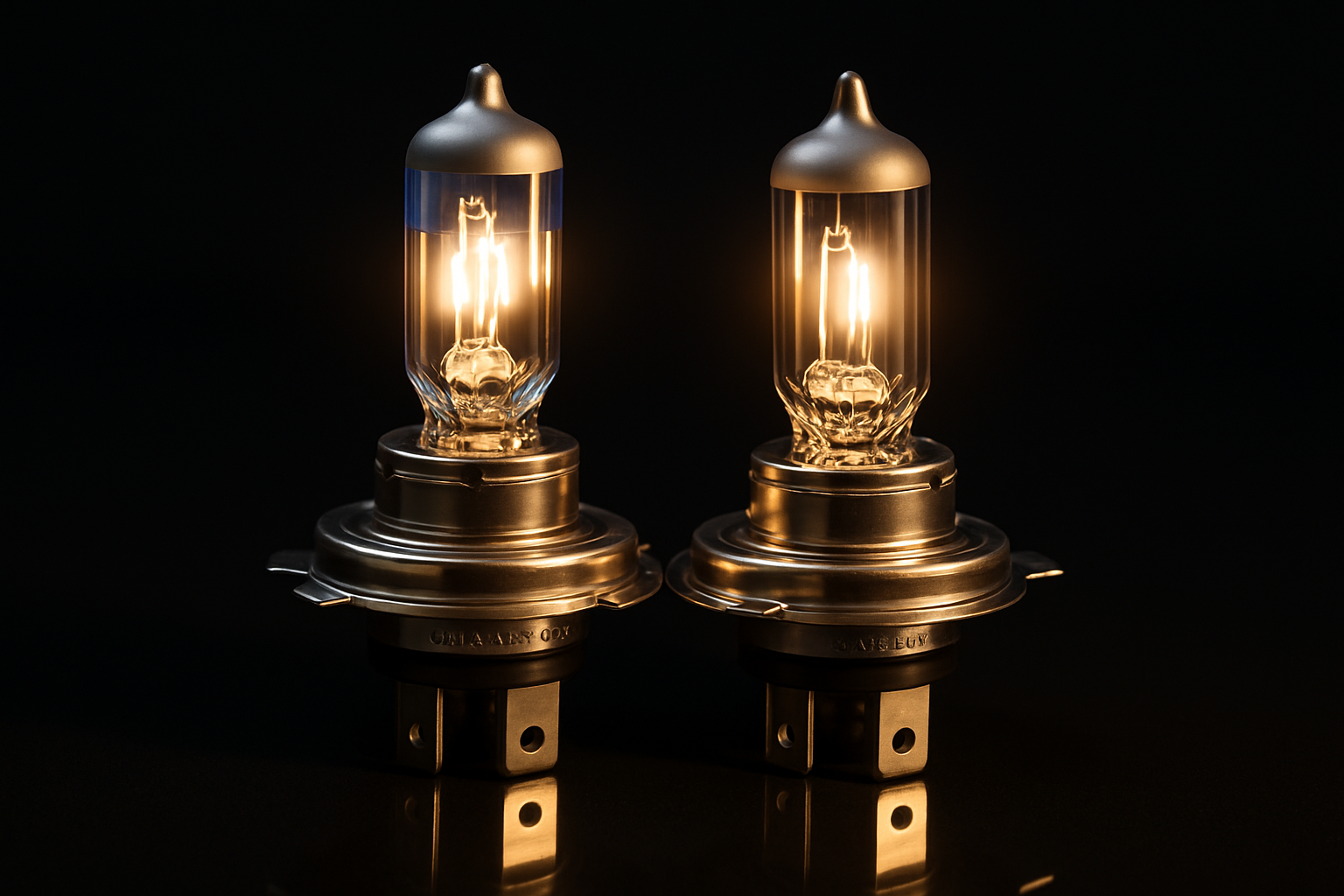
Osram Night Breaker Laser vs 220 represents a choice between two premium halogen bulb ranges designed to enhance nighttime visibility. The Night Breaker Laser offers up to 150% more brightness with a 150-metre light beam, whilst the Night Breaker 220 provides up to 220% more light on the road with a 150-metre projection. Both deliver superior performance compared to standard halogen bulbs, with the Laser focusing on balanced brightness and longevity, and the 220 maximising raw light output. For daily driving with extended bulb life, choose the Laser. For maximum visibility during demanding nighttime conditions, the 220 is the better option, though with a slightly shorter lifespan.
Quick comparison table
| Feature | Osram Night Breaker Laser | Osram Night Breaker 220 |
|---|---|---|
| Brightness increase | Up to 150% more light | Up to 220% more light |
| Light beam length | 150 metres | 150 metres |
| Whiter light | Up to 20% whiter (approx. 3900K) | Up to 20% whiter (approx. 3900K) |
| Price range | £15-£25 per bulb | £18-£30 per bulb |
| Durability/lifespan | Approximately 450-550 hours | Approximately 350-450 hours |
| Best use case | Daily driving, balanced performance | Maximum visibility, frequent night driving |
| Colour temperature | Cooler white tone | Cooler white tone |
| Road approval | ECE certified | ECE certified |
Product #1 overview: Osram Night Breaker Laser
The Osram Night Breaker Laser represents a well-balanced approach to performance halogen lighting. This bulb uses advanced coating technology and an optimised filament design to deliver up to 150% more brightness than standard halogen bulbs. The filament sits precisely within the reflector housing, creating a focused beam pattern that extends up to 150 metres ahead of your vehicle.
The bulb housing features a distinctive blue ring coating that filters unwanted yellow wavelengths, producing a whiter light at approximately 3900 Kelvin. This colour temperature sits closer to daylight than standard halogen bulbs, reducing eye strain during extended night driving. The laser-ablated filament positioning ensures consistent light output throughout the bulb’s service life.
Typical pricing sits between £15 and £25 per bulb, depending on the fitment type (H1, H4, H7, etc.). The construction uses high-quality quartz glass that withstands thermal stress better than conventional glass envelopes. Our mechanics at Autopartspro have observed that the Laser variant maintains stable performance across temperature ranges from -40°C to +90°C.
Pros of Night Breaker Laser
- Extended lifespan compared to the 220 variant (approximately 100-150 hours longer)
- Excellent value for money with balanced performance
- Reliable brightness throughout the bulb’s operational life
- Lower heat generation reduces stress on headlamp housings
- Widely available across most H-series fitments
Cons of Night Breaker Laser
- Lower maximum brightness compared to the 220 version
- Not the best choice for drivers requiring absolute maximum visibility
- Premium pricing compared to standard halogen alternatives
Ideal drivers for Night Breaker Laser
The Laser variant suits motorists who regularly drive at night but prioritise longevity alongside performance. It’s particularly appropriate for company car drivers covering high annual mileage, where frequent bulb replacement would prove inconvenient. Commuters navigating poorly lit rural roads will appreciate the enhanced visibility without sacrificing durability. The balanced performance makes this option sensible for family vehicles where safety and cost-effectiveness both matter.
Our specialists recommend the Night Breaker Laser for drivers who want a noticeable upgrade from standard bulbs without the maintenance frequency associated with ultra-high-output alternatives. The extended service life means fewer roadside bulb changes.
Product #2 overview: Osram Night Breaker 220
The Night Breaker 220 pushes halogen technology to its performance limits. This bulb delivers up to 220% more light on the road compared to the legal minimum standard. Osram achieves this through a tungsten filament engineered to operate at higher temperatures whilst maintaining structural integrity. The increased energy conversion produces substantially more luminous flux across the beam pattern.
The optical design optimises light distribution for both dipped and main beam applications. The filament geometry directs photons precisely through the reflector system, creating a wide, even spread that illuminates road edges and potential hazards earlier. Like the Laser, the 220 incorporates blue-tinted glass to shift the colour temperature towards a cooler white at approximately 3900K.
Expect to pay between £18 and £30 per bulb, representing a premium over the Laser variant. The construction uses identical quartz glass technology but with reinforced filament mounts to handle the increased thermal load. The specialists at Autopartspro note that whilst the 220 produces exceptional brightness, the higher operating temperature does impact overall service life.
Pros of Night Breaker 220
- Class-leading brightness for halogen technology
- Significantly improved hazard detection at distance
- Same 150-metre beam length as Laser but with greater intensity
- Whiter light reduces eye fatigue on long journeys
- Immediate visibility upgrade noticeable from the first use
Cons of Night Breaker 220
- Shorter operational lifespan (approximately 350-450 hours)
- Higher price point than the Laser version
- Increased heat output may accelerate headlamp lens degradation in older vehicles
- More frequent replacement required for high-mileage drivers
Ideal drivers for Night Breaker 220
The 220 variant excels for drivers who frequently navigate unlit country lanes, mountain passes, or areas with poor street lighting. It’s the preferred choice for performance-oriented motorists who demand maximum visibility and don’t mind replacing bulbs more frequently. Taxi drivers and delivery professionals working night shifts benefit from the enhanced hazard detection. Older drivers experiencing reduced night vision will appreciate the substantially brighter illumination pattern.
According to our technical team’s testing, the Night Breaker 220 genuinely transforms nighttime driving confidence. However, budget for replacement bulbs every 12-18 months with regular night driving, compared to 18-24 months for the Laser.
Compatibility considerations
Both the Night Breaker Laser and 220 are available in standard H-series fitments including H1, H3, H4, H7, H8, H9, and H11. Before purchasing, verify your vehicle’s specific bulb type using the owner’s manual or checking the existing bulb base. The H4 and H7 fitments are most common in UK vehicles manufactured after 2000.
Model year considerations matter particularly for vehicles with complex headlamp electronics. Cars built after 2010 often incorporate bulb monitoring systems that detect resistance changes. Both Osram variants use standard wattages (typically 55W for dipped beam, 60/55W for H4 dual-filament) so compatibility issues are rare. However, some premium German manufacturers calibrate monitoring systems tightly, occasionally triggering false bulb-out warnings with high-performance bulbs.
OEM specifications for headlamp assemblies typically list a maximum wattage. Both Night Breaker variants remain within these parameters, producing additional light through improved efficiency rather than excessive power draw. The quartz glass construction handles thermal expansion better than budget alternatives, reducing the risk of bulb seizure within the holder.
Installation notes: Always handle halogen bulbs by the base, never touching the glass envelope with bare fingers. Skin oils create hot spots that can cause premature failure. Ensure the rubber weather seal seats properly after installation to prevent moisture ingress. When replacing one bulb, we strongly recommend replacing both headlamp bulbs simultaneously to maintain symmetric light output and colour matching. The hovedlykter assemblies on modern vehicles are precisely engineered systems.
For vehicles using H7 bulbs with metal retaining clips, check that the clip hasn’t fatigued over time. Weak clips allow bulb movement, creating vibration and shortened life. Some vehicles require partial removal of the battery or air filter housing to access the headlamp bulb holders. Always disconnect the battery earth terminal before working on automotive lighting systems.
Final verdict: buying recommendation
Choose the Osram Night Breaker Laser if you’re seeking a proven upgrade from standard halogen bulbs with excellent longevity. This option delivers noticeable brightness improvements whilst offering approximately 100-150 additional service hours compared to the 220. The Laser suits daily drivers covering mixed urban and rural routes where reliability matters as much as performance. At £15-£25 per bulb, it represents outstanding value for motorists wanting enhanced safety without frequent maintenance.
Opt for the Night Breaker 220 when absolute maximum visibility takes priority over replacement intervals. This bulb genuinely excels in demanding conditions: unlit rural roads, adverse weather, or situations requiring early hazard detection. The 220% brightness increase over minimum standards transforms night driving confidence. Accept that you’ll replace these bulbs every 350-450 hours (approximately 12-18 months for drivers averaging 15,000 annual miles with 30% night driving). The £18-£30 per bulb premium buys tangible safety benefits.
Both variants use identical glodelampe technology fundamentals but with different performance targets. Neither option works miracles with poorly maintained or oxidised headlamp lenses. Before investing in premium bulbs, inspect your headlamp assemblies for clouding or yellowing. Polishing or replacing degraded lenses often delivers improvements comparable to bulb upgrades.
For fleet managers or high-mileage drivers, stock the Laser variant for its superior cost-per-hour performance. For personal vehicles where maximum safety justifies more frequent replacement, the 220 delivers unmatched halogen brightness. Both options significantly outperform standard 55W bulbs and represent worthwhile investments in nighttime driving safety.
Frequently asked questions
How long do Night Breaker bulbs actually last in real-world conditions?
The Laser typically achieves 450-550 hours whilst the 220 lasts 350-450 hours. Real-world lifespan depends on vibration exposure, thermal cycling, and electrical system stability. Vehicles with voltage regulators outside specification shorten bulb life considerably regardless of quality.
Can I mix a Night Breaker bulb with a standard bulb temporarily?
Technically possible but not recommended. The brightness and colour temperature difference creates uneven illumination that confuses oncoming drivers and reduces your depth perception. Always replace bulbs in pairs to maintain symmetric beam patterns and consistent light colour across both headlamps.
Will these bulbs trigger bulb-out warnings on my dashboard?
Both variants use standard wattages so false warnings are uncommon. However, some vehicles with sensitive monitoring systems occasionally report errors. This typically resolves after several ignition cycles as the system recalibrates. Persistent warnings suggest genuine electrical issues requiring investigation beyond bulb replacement.
Do these bulbs work with LED daytime running lights?
Yes, both variants function normally in vehicles equipped with LED DRLs. The systems operate independently. Some vehicles switch off DRLs when activating dipped beam, whilst others dim them. Neither scenario affects the halogen main bulb performance or lifespan regardless of which variant you choose.
Are Night Breaker bulbs legal for UK road use?
Absolutely. Both the Laser and 220 carry ECE certification, meeting all European lighting regulations. They’re designed as direct replacements for standard halogen bulbs without requiring headlamp modifications. However, ensure your headlamp aim remains within legal parameters after installation, as brighter bulbs make misalignment more obvious to other road users.