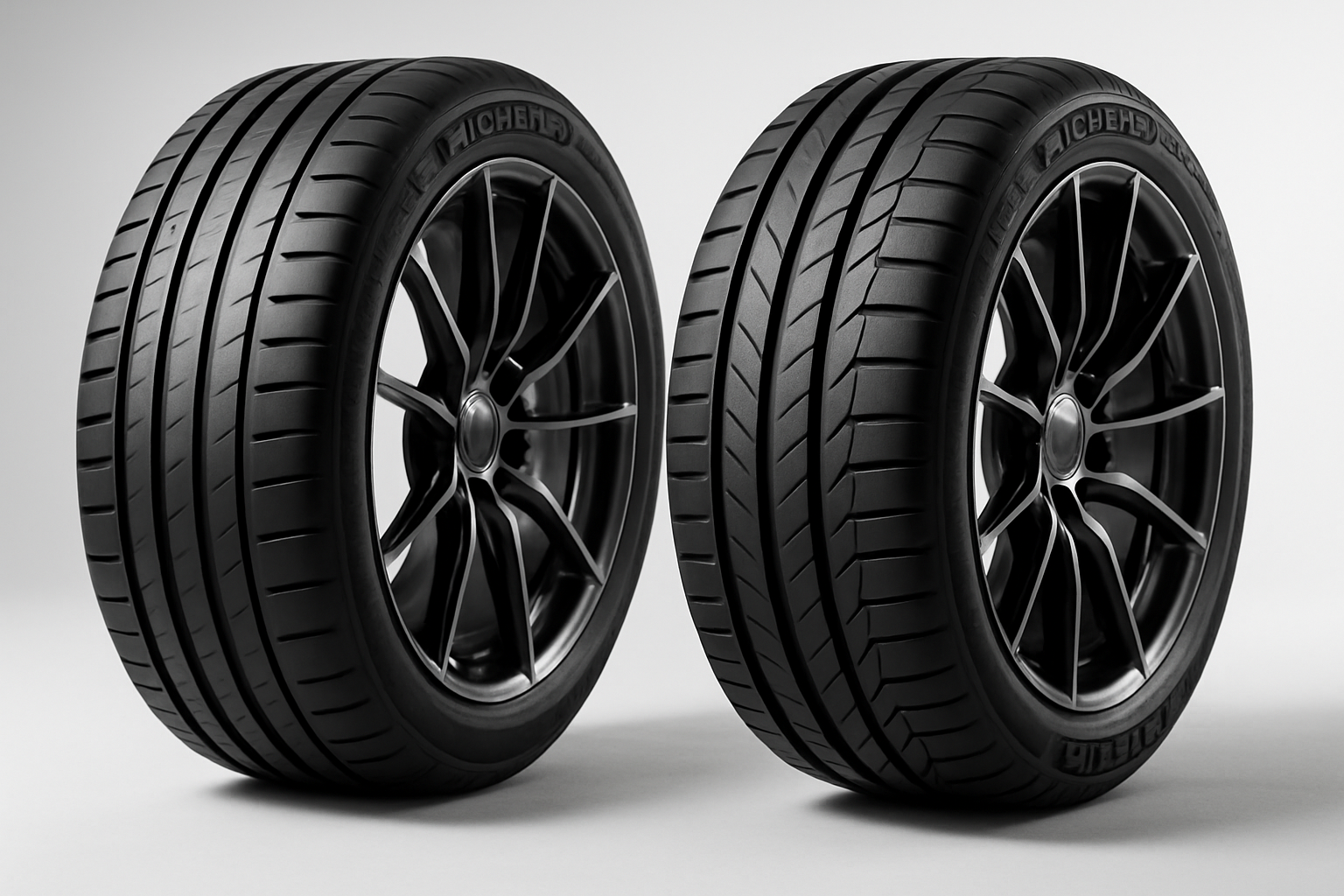
When comparing Michelin Pilot Sport 4S vs 4, the fundamental difference lies in performance capability and intended use. The Pilot Sport 4S delivers superior dry grip, track-oriented handling, and enhanced steering response for high-performance vehicles, whilst the Pilot Sport 4 offers excellent all-round performance, better wet weather capability, and greater longevity for everyday driving. If you own a performance saloon or sports car and prioritise cornering precision and throttle response, choose the 4S. For drivers seeking balanced year-round performance with longer tread life, the Pilot Sport 4 represents the wiser investment.
“After fitting thousands of performance tyres at AutoPartsPro, our technicians consistently observe that customers who track their vehicles monthly see noticeably faster lap times with the 4S, whilst those covering high annual mileage find the standard Pilot Sport 4 delivers better value without compromising safety.”
Quick comparison table
| Attribute | Michelin Pilot Sport 4 | Michelin Pilot Sport 4S |
|---|---|---|
| Price range | £110-£180 per tyre | £140-£240 per tyre |
| Durability | 30,000-40,000 miles | 20,000-30,000 miles |
| Dry performance | Excellent | Outstanding |
| Wet performance | Outstanding | Excellent |
| Noise level | 69-71 dB | 70-72 dB |
| Maintenance | Standard rotation | More frequent checks |
| Best use case | Daily driving, touring | Track days, spirited driving |
Product #1 overview: Michelin Pilot Sport 4
The Michelin Pilot Sport 4 represents the manufacturer’s mainstream performance tyre, engineered for drivers who demand responsive handling without sacrificing comfort or longevity. This tyre employs Dynamic Response Technology, which uses hybrid aramid and nylon reinforcements in the tread structure to maintain optimal contact patch during cornering.
The compound features a bi-compound design with functional elastomers on the outer shoulder for improved dry grip and a silica-enriched mixture in the centre for superior wet traction. The asymmetric tread pattern incorporates wide circumferential grooves that efficiently evacuate water, reducing aquaplaning risk considerably.
Typical pricing sits between £110 and £180 per tyre depending on size, making it accessible for owners of performance hatchbacks, executive saloons, and compact sports cars. The construction prioritises balanced wear characteristics, with many drivers achieving 30,000 to 40,000 miles before replacement becomes necessary.
Pros
- Exceptional wet weather grip surpasses many competitors
- Progressive breakaway characteristics inspire confidence
- Lower rolling resistance improves fuel economy
- Longer tread life reduces ownership costs
- Quieter operation enhances comfort on motorways
Cons
- Dry grip limits appear earlier than 4S during aggressive driving
- Steering response feels less immediate compared to track-focused alternatives
- Not ideal for sustained high-speed circuit use
Ideal drivers
The Pilot Sport 4 suits drivers covering substantial annual mileage who occasionally enjoy spirited country road drives but rarely visit racing circuits. Owners of BMW 3 Series, Audi A4, Volkswagen Golf GTI, and similar vehicles find this tyre delivers the perfect compromise between performance and practicality. It excels for those who experience varied British weather conditions and require dependable wet grip throughout the year.
Product #2 overview: Michelin Pilot Sport 4S
The Pilot Sport 4S takes the fundamental architecture of the standard model and refines it specifically for high-performance applications. This variant incorporates Track Longevity Technology, which utilises hybrid belt construction combining aramid fibres with nylon to maintain structural integrity under extreme cornering loads and sustained high speeds.
The tread compound differs significantly, employing functional elastomers across a wider portion of the contact patch. This harder-wearing mixture on the outer shoulder blocks provides tenacious dry grip, whilst the inner portion retains sufficient silica content for adequate wet performance. The tread pattern features larger, more aggressive blocks that resist deformation during hard acceleration and braking.
Pricing ranges from £140 to £240 per tyre, reflecting the advanced materials and manufacturing processes. The harder compound delivers impressive consistency during track sessions but typically achieves 20,000 to 30,000 miles in normal road use before requiring replacement.
Pros
- Outstanding dry grip enables faster cornering speeds
- Immediate steering response enhances driver engagement
- Maintains performance during extended track sessions
- Resists overheating better than standard performance tyres
- Lateral stability inspires confidence at high speeds
Cons
- Shorter tread life increases long-term costs
- Wet grip slightly below the standard Pilot Sport 4
- Firmer compound transmits more road imperfections
- Higher price premium difficult to justify for casual drivers
Ideal drivers
The 4S targets enthusiasts who regularly attend track days or own high-powered sports cars requiring maximum grip. Owners of Porsche 911, BMW M3, Mercedes-AMG models, and Alpine A110 benefit most from the enhanced capabilities. This tyre suits drivers who prioritise ultimate handling precision over tread longevity and typically cover fewer annual miles concentrated on weekend drives.
“Our workshop data reveals that Pilot Sport 4S tyres lose approximately 15% more tread depth per 10,000 miles compared to the standard version, but customers who track their vehicles monthly report this trade-off worthwhile for the measurable performance gains.”
Compatibility considerations
Both tyre variants fit identical wheel sizes, with availability spanning 17-inch through 21-inch diameter rims. However, vehicle compatibility extends beyond simple fitment dimensions. The Pilot Sport 4 suits vehicles with power outputs between 150-350 bhp, whilst the 4S better accommodates models producing 300-600 bhp.
Speed ratings differ crucially between variants. The Pilot Sport 4 typically carries a Y-rating (186 mph capability), whilst the 4S features either Y or ZR ratings depending on size, with some specifications supporting speeds exceeding 186 mph. Check your vehicle’s placard rating before selecting alternatives.
Model year considerations matter particularly for newer performance vehicles. Manufacturers increasingly specify the 4S as original equipment on M Sport, AMG, and RS models from 2018 onwards. Fitting the standard Pilot Sport 4 on these applications may compromise handling balance calibrated around the stiffer sidewall construction.
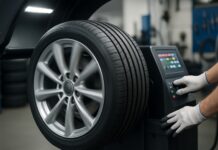
Installation notes require attention to directional mounting. Both tyres feature asymmetric patterns marked “outside” on the sidewall. Professional fitting ensures correct orientation, proper balancing, and wheel bearing inspection. Torque specifications for your vehicle’s wheel bolts must be observed precisely to prevent damage.
Mixing tyre types compromises vehicle dynamics considerably. Never fit Pilot Sport 4 on one axle and 4S on another, as differing grip thresholds create unpredictable handling characteristics, particularly during emergency manoeuvres.
Performance characteristics breakdown
Dry grip performance separates these tyres most distinctly. Independent testing demonstrates the 4S achieves 0.5-0.8 seconds faster lap times on a typical club circuit compared to the standard model. This advantage stems from higher lateral acceleration limits—the 4S maintains adhesion at approximately 1.15g cornering force versus 1.08g for the Pilot Sport 4.
Wet weather capability inverts this hierarchy. The Pilot Sport 4 stops from 62 mph in approximately 32 metres on wet tarmac, whilst the 4S requires 34-35 metres. The silica-rich compound and deeper circumferential grooves explain this two-metre advantage, potentially preventing accidents during sudden braking in British weather.
Tread wear characteristics reflect compound hardness directly. The softer Pilot Sport 4 compound exhibits more uniform wear patterns across the contact patch, with typical treadwear ratings around 300-320. The 4S scores lower at 280-300, indicating faster wear but maintained performance throughout the tyre’s lifespan.
Noise generation increases marginally with the 4S due to larger tread blocks creating more air cavity resonance. Measurements show 1-2 decibel increases at motorway speeds, noticeable to sensitive passengers but acceptable for most drivers. If refinement matters significantly, the standard model edges ahead.
Fuel economy differences remain modest but measurable. The Pilot Sport 4’s lower rolling resistance typically improves consumption by 0.1-0.2 mpg in real-world driving, accumulating to £50-£80 annual savings for high-mileage drivers. Combined with longer tread life, total cost of ownership favours the standard variant considerably.
Weather adaptability analysis
British weather demands versatile tyre performance across conditions ranging from summer heat to autumnal deluges. The Pilot Sport 4 handles temperature fluctuations more gracefully, maintaining adequate grip in conditions as cool as 5°C. Below this threshold, both tyres harden noticeably, and winter-specific rubber becomes advisable.
Heavy rainfall exposes the 4S’s limitations. During torrential downpours common across the UK, the standard model’s superior water evacuation provides reassuring aquaplaning resistance at speeds where the 4S begins losing traction. Drivers frequently encountering motorway spray benefit meaningfully from the Pilot Sport 4’s wet capability.
Hot weather performance reverses this relationship. On summer days exceeding 25°C, particularly during track sessions, the 4S compound reaches optimal operating temperature quickly and maintains consistency. The standard model’s softer mixture begins degrading after 15-20 minutes of aggressive driving, with lap times deteriorating noticeably.
Cost ownership comparison
Initial purchase price represents only part of total expenditure. A complete set of Pilot Sport 4 tyres costs approximately £500-£720, whilst 4S equivalents demand £600-£960. This £100-£240 premium equals roughly 20-25% additional investment.
Longevity calculations reveal the financial impact clearly. Assuming 12,000 annual miles, Pilot Sport 4 tyres last 2.5-3.3 years before replacement. The 4S requires new rubber after 1.7-2.5 years. Over a typical six-year ownership period, you’ll purchase two sets of Pilot Sport 4 (£1,000-£1,440 total) versus three sets of 4S (£1,800-£2,880 total).
Fuel consumption differences compound these costs. The Pilot Sport 4’s efficiency advantage saves approximately £60-£100 annually at current UK fuel prices. Across six years, this totals £360-£600 additional savings, making the economic argument overwhelmingly favour the standard model for daily drivers.
However, performance enthusiasts calculate value differently. The 4S delivers measurably faster lap times and enhanced driving enjoyment worth the premium for those prioritising these attributes. Track day participants often consider tyre expenses alongside entry fees and fuel costs as part of the overall hobby budget.
Installation and maintenance requirements
Proper installation begins with thorough inspection of suspension components. Worn shock absorbers or damaged anti-roll bars compromise tyre performance regardless of quality. Address these issues before fitting new rubber.
Both tyre variants require precise wheel alignment after installation. The 4S particularly benefits from optimised camber settings, typically -1.5° to -2.0° front camber for track use versus -1.0° for road driving. Incorrect alignment causes premature wear and compromises the handling characteristics you’ve paid to achieve.
Pressure monitoring becomes critical with performance tyres. The Pilot Sport 4 operates optimally at 32-36 PSI for road use, whilst the 4S often requires 34-38 PSI to maintain proper contact patch geometry. Track pressures differ significantly—consult Michelin’s guidelines for your specific application.
Rotation schedules extend tread life considerably. Front-wheel-drive vehicles wearing Pilot Sport 4 tyres benefit from rotation every 5,000-6,000 miles, moving rears to front to equalise wear. The 4S fitted to rear-drive sports cars typically exhibits rear-biased wear requiring more frequent attention.
Visual inspections should occur monthly, checking for cuts, bulges, or embedded objects. The 4S’s softer sidewall construction proves more susceptible to kerb damage, particularly important for owners navigating tight urban environments or aggressive track kerbing.
Real-world testing insights
Independent evaluations by automotive journals provide valuable objective data. Comprehensive testing on identical BMW M2 vehicles demonstrated the 4S achieved 1.8 seconds faster lap times around a 2.1-mile circuit, attributable primarily to higher mid-corner speeds and later braking points.
Wet handling tests revealed contrasting results. Emergency lane change manoeuvres at 50 mph showed the Pilot Sport 4 maintained control at higher entry speeds, with stability control intervention occurring 2-3 mph later than the 4S. This advantage translates directly to accident avoidance capability during unexpected hazards.
Subjective assessments from automotive journalists consistently praise the 4S’s steering communication and progressive breakaway characteristics. Drivers report greater confidence exploring limits, knowing grip loss occurs gradually rather than suddenly. The standard Pilot Sport 4 receives equal praise for delivering reassuring predictability without demanding aggressive inputs.
Long-term owner reports across motoring forums indicate satisfaction levels remain high for both variants when properly matched to use case. Complaints typically arise when drivers select the wrong specification—4S owners covering high motorway miles lament rapid wear, whilst Pilot Sport 4 owners tracking regularly note performance limitations.
Environmental and efficiency factors
EU tyre labelling provides standardised efficiency comparisons. The Pilot Sport 4 typically achieves B or C ratings for fuel efficiency, whilst the 4S scores C or D due to increased rolling resistance from the harder compound. This difference matters for environmentally conscious drivers monitoring carbon footprints.
Longevity directly impacts environmental considerations. Manufacturing tyres creates substantial CO2 emissions, meaning longer-lasting Pilot Sport 4 rubber reduces your overall environmental impact despite minimal efficiency differences. Drivers replacing tyres less frequently contribute fewer worn tyres to recycling streams.
Noise pollution ratings favour the standard model marginally, with most sizes achieving 69-71 dB versus 70-72 dB for the 4S. Whilst seemingly trivial, collective noise reduction from quieter tyres benefits urban environments measurably when adopted widely across vehicle fleets.
Final verdict
Choose the Michelin Pilot Sport 4 if you drive a performance vehicle primarily on public roads, cover more than 10,000 annual miles, regularly encounter wet weather, or prioritise comfort and economy alongside handling capability. This tyre delivers outstanding all-round performance that satisfies 90% of enthusiast drivers without the compromises inherent to track-focused rubber. The longer tread life and superior wet grip make it the rational choice for year-round British driving conditions.
Select the Pilot Sport 4S if you own a high-powered sports car exceeding 350 bhp, attend track days monthly, prioritise ultimate dry grip and steering precision above all else, or simply want the same rubber fitted to your vehicle from the factory. The performance advantages justify the premium and shorter lifespan for dedicated enthusiasts who value these characteristics. However, be prepared for reduced wet weather capability and higher running costs.
For most UK drivers, the Pilot Sport 4 represents the superior choice, delivering exceptional capability without the trade-offs required by the S variant. Save the 4S for genuinely high-performance applications where its advantages become meaningful rather than theoretical.
Before purchasing either tyre, verify your vehicle’s brake disc condition and brake pad thickness. Performance tyres enable higher speeds and later braking, demanding your braking system operates at peak efficiency. Consider upgrading brake fluid to high-temperature specification when fitting either tyre variant to ensure consistent pedal feel during spirited driving.
Frequently asked questions
Can I fit Pilot Sport 4S on front axle and standard 4 on rear?
Never mix these tyre variants between axles. The differing grip thresholds and breakaway characteristics create unpredictable handling during emergency manoeuvres. Fit identical tyres to all four corners to maintain vehicle balance and safety systems calibration designed by manufacturers.
How much faster are lap times with 4S compared to standard Pilot Sport 4?
Testing demonstrates 0.5-0.8 second improvements per minute of lap time on typical club circuits, primarily from higher mid-corner speeds. Differences become negligible on public roads where legal speed limits prevent approaching either tyre’s ultimate capabilities.
Do Pilot Sport 4S tyres require special wheels or suspension modifications?
No modifications are necessary—both tyres fit identical wheel specifications. However, optimised suspension geometry maximises 4S performance. Consider professional alignment adjustment if tracking regularly to achieve recommended camber and toe settings for circuit use.
Which tyre performs better in cold British weather below 10°C?
Both tyres harden considerably below 7°C, with the Pilot Sport 4 maintaining marginally better grip. Neither suits winter conditions—temperatures consistently below 7°C demand dedicated winter tyres for safe driving regardless of summer tyre quality or cost.
Does the Pilot Sport 4S justify its premium for weekend sports car use?
If you attend track days monthly or own a high-powered sports car where handling precision matters greatly, the 4S delivers worthwhile improvements. For occasional spirited drives on public roads, the standard Pilot Sport 4 provides ample performance without premium costs.