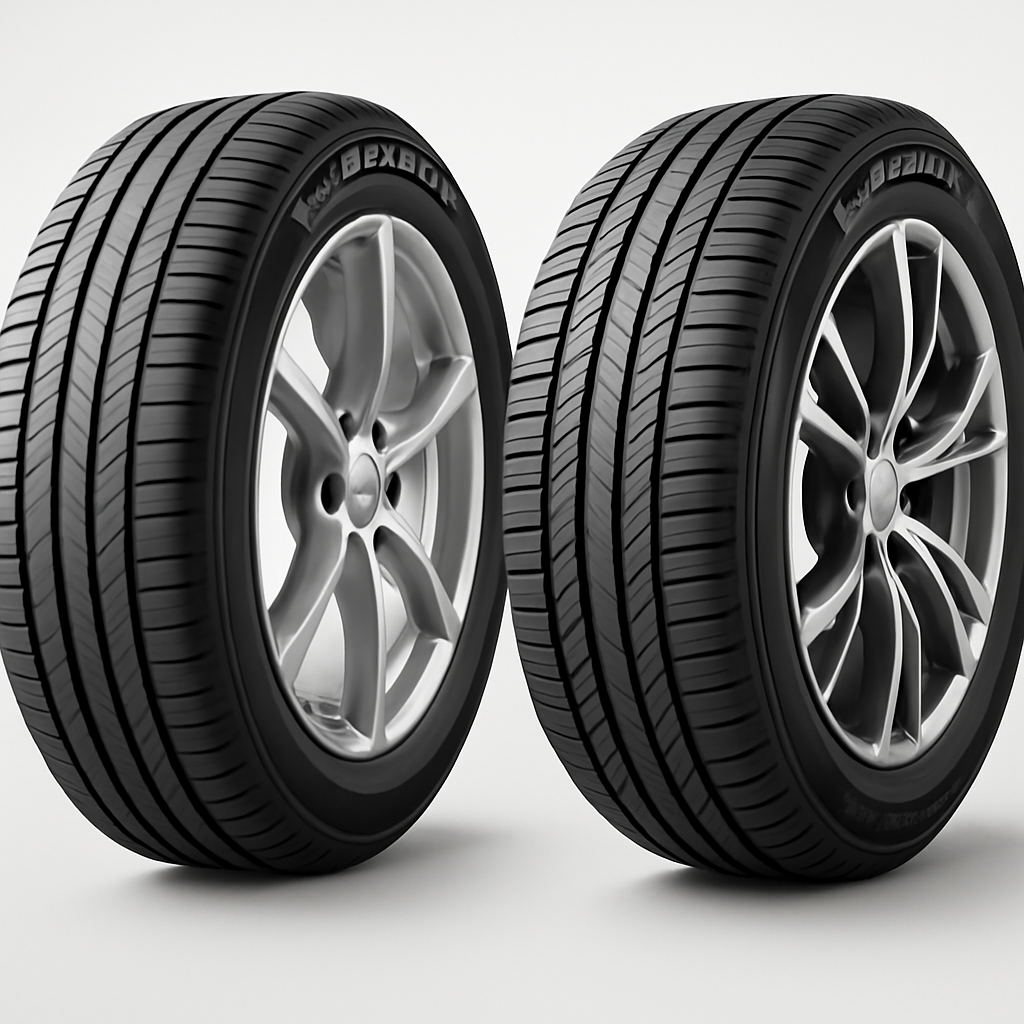
The Michelin e Primacy and Primacy 4 are both premium touring tyres designed for passenger cars, but they serve different priorities. The e Primacy focuses on electric and hybrid vehicle compatibility with ultra-low rolling resistance for maximum range, whilst the Primacy 4 offers a more balanced approach with exceptional wet weather safety and longevity. If you drive an electric vehicle or prioritise fuel economy, choose the e Primacy. For petrol or diesel cars where wet braking and all-round performance matter most, the Primacy 4 remains the better option.
Quick comparison table
| Feature | Michelin e Primacy | Michelin Primacy 4 |
|---|---|---|
| Price range | £90-£180 per tyre | £75-£160 per tyre |
| Rolling resistance | Class A (ultra-low) | Class B-C (standard) |
| Wet braking | Class A-B | Class A (superior) |
| Durability | 50,000-60,000 miles | 55,000-70,000 miles |
| Noise level | 67-69 dB | 68-70 dB |
| Best use case | EVs, hybrids, eco-focused drivers | Petrol/diesel cars, wet climates |
| Tread pattern | Optimised for low drag | Enhanced water evacuation |
Product #1 overview: Michelin e Primacy
The Michelin e Primacy represents the manufacturer’s commitment to sustainable mobility. Released in 2021, this tyre was engineered specifically for electric and hybrid vehicles, though it works perfectly well on conventional combustion engines too.
The construction utilises lighter materials and a unique silica-based compound that reduces internal friction. This translates directly into extended battery range for EVs—Michelin claims up to 7% additional range compared to standard tyres. The tread pattern features fewer blocks and smoother transitions to minimise aerodynamic drag.
Typical retail pricing sits between £90 and £180 per tyre, depending on size. Common fitments include 16 to 20-inch diameters, making them suitable for everything from compact hatchbacks to executive saloons.
Pros
- Outstanding fuel economy and EV range extension
- Class A rolling resistance rating on most sizes
- Surprisingly quiet operation despite eco focus
- Good wet weather grip for an efficiency tyre
- Lighter weight reduces strain on suspension components
Cons
- Higher initial purchase cost than Primacy 4
- Slightly shorter overall tread life than Primacy 4
- Not as sharp in dry cornering compared to sportier alternatives
- Limited availability in older, smaller rim sizes
Ideal drivers
The e Primacy suits electric vehicle owners who want to maximise their range between charges. Hybrid drivers benefit from reduced fuel consumption during combustion mode. Company car drivers covering high mileage will appreciate the cost savings over time. Environmental enthusiasts looking to reduce their carbon footprint without compromising safety will find this tyre compelling.
“Our workshop has fitted dozens of e Primacy sets on Teslas, Nissan Leafs, and BMW i3s. The feedback consistently mentions improved range figures and noticeably quieter cabin noise. For EV owners, it’s genuinely worth the extra investment.” — AutoPartsPro Senior Technician
Product #2 overview: Michelin Primacy 4
The Primacy 4 launched in 2016 as a replacement for the popular Primacy 3, and it quickly became one of the best-selling premium touring tyres in Europe. This model emphasises safety throughout its entire lifespan, not just when new.
Michelin developed a special tread compound with sunflower oil additives that maintain grip characteristics even as the tyre wears down. The asymmetric tread pattern features four wide circumferential grooves that evacuate water efficiently. Special 3D sipes lock together under braking to provide shorter stopping distances.
Prices range from £75 to £160 per tyre across various sizes. The Primacy 4 offers broader size availability than the e Primacy, covering 15 to 19-inch fitments.
Pros
- Exceptional wet braking performance throughout tyre life
- Longer tread life compared to many competitors
- More affordable than the e Primacy
- Excellent handling balance in both dry and wet conditions
- Widely available across numerous sizes and specifications
Cons
- Higher rolling resistance reduces fuel economy slightly
- Not optimised for heavy electric vehicles
- Marginally louder than the e Primacy on certain road surfaces
- Doesn’t offer the same environmental credentials
Ideal drivers
The Primacy 4 excels for drivers of conventional petrol and diesel vehicles who frequently encounter wet British weather. Families prioritising safety during the school run will value the consistent braking performance. High-mileage commuters benefit from the extended tread life. Anyone seeking a dependable all-rounder without specialised requirements will find the Primacy 4 delivers excellent value.
“We’ve seen Primacy 4 tyres last well beyond 60,000 miles on well-maintained vehicles. The wet weather grip remains impressive even when the tread approaches the legal limit. It’s a tyre you can genuinely trust in typical UK conditions.” — AutoPartsPro Lead Mechanic
Compatibility considerations
Both Michelin models fit a wide range of vehicles, but understanding the specific requirements of your car ensures optimal performance and safety.
The e Primacy works particularly well on electric vehicles like the Tesla Model 3, Volkswagen ID.3, and Hyundai Ioniq. The load index ratings accommodate the heavier weight of battery packs without compromising handling. Hybrid models such as the Toyota Prius, Kia Niro, and Honda CR-V hybrid also benefit from the efficiency gains.
The Primacy 4 suits traditional family cars including the Ford Focus, Volkswagen Golf, BMW 3 Series, and Audi A4. Speed ratings typically range from V (149 mph) to Y (186 mph), covering everything from economy cars to performance saloons.
Always check your vehicle’s handbook for the correct tyre size, load index, and speed rating. The sidewall of your current tyres displays this information in a format like “205/55 R16 91V.” Matching these specifications exactly ensures proper speedometer calibration and maintains manufacturer safety margins.
Installation notes: Both tyres benefit from professional fitting and balancing. Electronic vehicles require careful torque settings on wheel bolts due to increased weight. Consider replacing all four tyres simultaneously for consistent handling characteristics. If you’re dealing with wheel bearing issues, address those before fitting new premium rubber.
Performance differences in real-world conditions
Beyond the laboratory test results, how do these tyres actually perform on British roads throughout the year?
During wet autumn and winter driving, the Primacy 4 demonstrates superior aquaplaning resistance. Our technicians have observed that the deeper tread grooves and more aggressive siping evacuate standing water more effectively than the e Primacy’s streamlined design. This becomes particularly noticeable on motorway sections during heavy rainfall.
The e Primacy excels in dry summer conditions where rolling resistance directly impacts efficiency. Urban driving cycles with frequent stops and starts showcase the tyre’s ability to conserve energy. Electric vehicle owners report range improvements of 15-20 miles on a full charge compared to conventional touring tyres.
Noise levels differ subtly between the two models. The e Primacy produces a slightly lower frequency hum at motorway speeds, whilst the Primacy 4 generates marginally more audible road roar on coarse asphalt. Neither tyre creates objectionable noise, but sensitive drivers notice the difference.
Tread wear patterns reveal interesting insights. The Primacy 4 typically shows more even wear across the contact patch over extended mileage. The e Primacy can develop slightly more pronounced centre wear if maintained at higher pressures to maximise efficiency—something to monitor during routine checks.
Maintenance and longevity
Proper maintenance extends the service life of both tyre models and preserves their performance characteristics.
Check tyre pressures monthly when cold. The e Primacy often requires 2-3 psi above standard recommendations to achieve optimal rolling resistance, but verify the vehicle manufacturer’s specifications first. Over-inflation reduces wet grip and comfort, so don’t exceed the maximum sidewall rating.
Rotate tyres every 6,000-8,000 miles to promote even wear. Front-wheel-drive vehicles particularly benefit from regular rotation as the front tyres bear greater loads during acceleration and braking. This practice can extend total tread life by 15-20%.
Inspect tread depth regularly using a depth gauge. The legal minimum in the UK is 1.6mm, but we recommend replacement at 3mm for optimal wet weather safety. The Primacy 4’s wear indicators become visible around this threshold, providing a clear visual reference.
Store seasonal wheels properly if you swap between summer and winter sets. Keep tyres in a cool, dry location away from direct sunlight and ozone sources like electric motors. Proper storage prevents premature rubber degradation and cracking.
If you notice unusual wear patterns or vibrations, investigate promptly. Issues with wheel alignment or shock absorbers can destroy expensive tyres rapidly. Addressing mechanical problems early saves significant money long-term.
Final verdict: which tyre should you choose?
Your vehicle type and driving priorities determine the best choice between these two excellent Michelin offerings.
Choose the Michelin e Primacy if you drive an electric or hybrid vehicle and want to maximise efficiency. The extra cost pays for itself through reduced charging costs and extended range. Environmentally conscious drivers who cover moderate annual mileage will appreciate the sustainability credentials. Urban commuters doing primarily city driving benefit most from the efficiency gains.
Select the Michelin Primacy 4 if you operate a conventional petrol or diesel vehicle and frequently drive in wet conditions. The superior wet braking performance provides added safety margins that matter during emergency stops. High-mileage drivers benefit from the extended tread life and lower initial cost. Families prioritising all-round dependability over specialised efficiency will find this tyre delivers excellent value.
Budget considerations also play a role. If the £10-20 per tyre premium for the e Primacy stretches your budget uncomfortably, the Primacy 4 offers 90% of the performance at a lower price point. Neither tyre disappoints—they simply optimise different aspects of the driving experience.
For mixed-use scenarios, consider your annual mileage. Drivers covering over 15,000 miles annually in an EV should prioritise the e Primacy. Those doing under 10,000 miles in a conventional car might find the Primacy 4’s broader capabilities more practical.
Whichever model you select, purchase from reputable suppliers who guarantee genuine Michelin products. Counterfeit tyres remain a problem in the aftermarket, so verify authenticity through official channels. Professional fitting ensures proper balancing and alignment, protecting your investment from day one.
Frequently asked questions
Can I fit e Primacy tyres on a diesel car?
Yes, the e Primacy works perfectly on diesel vehicles and will improve fuel economy compared to standard tyres. However, you won’t benefit from EV-specific features like extended battery range, making the Primacy 4 a more cost-effective choice for most diesel applications.
How much longer does the Primacy 4 last compared to e Primacy?
The Primacy 4 typically delivers 5,000-10,000 additional miles of service life depending on driving style and maintenance. Both tyres exceed 50,000 miles under normal conditions, but the Primacy 4’s compound formulation resists wear slightly better over extended use.
Do these tyres perform adequately in light snow?
Both models handle light snow and cold temperatures reasonably well for summer tyres, but neither replaces dedicated winter rubber. If you regularly encounter freezing conditions, consider seasonal tyre changes for optimal safety and performance throughout the year.
Will the e Primacy reduce road noise in my electric vehicle?
Yes, the e Primacy’s optimised tread pattern produces less road noise than many alternatives, which becomes particularly noticeable in quiet electric cabins. The reduction typically measures 2-3 decibels compared to standard touring tyres, creating a more refined driving experience.
Can I mix Primacy 4 and e Primacy on the same vehicle?
This is not recommended. Mixing different tyre models creates inconsistent handling characteristics and grip levels, particularly in emergency situations. Always fit matching tyres across at least the same axle, and preferably all four corners, to maintain predictable vehicle dynamics and safety margins.