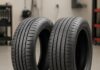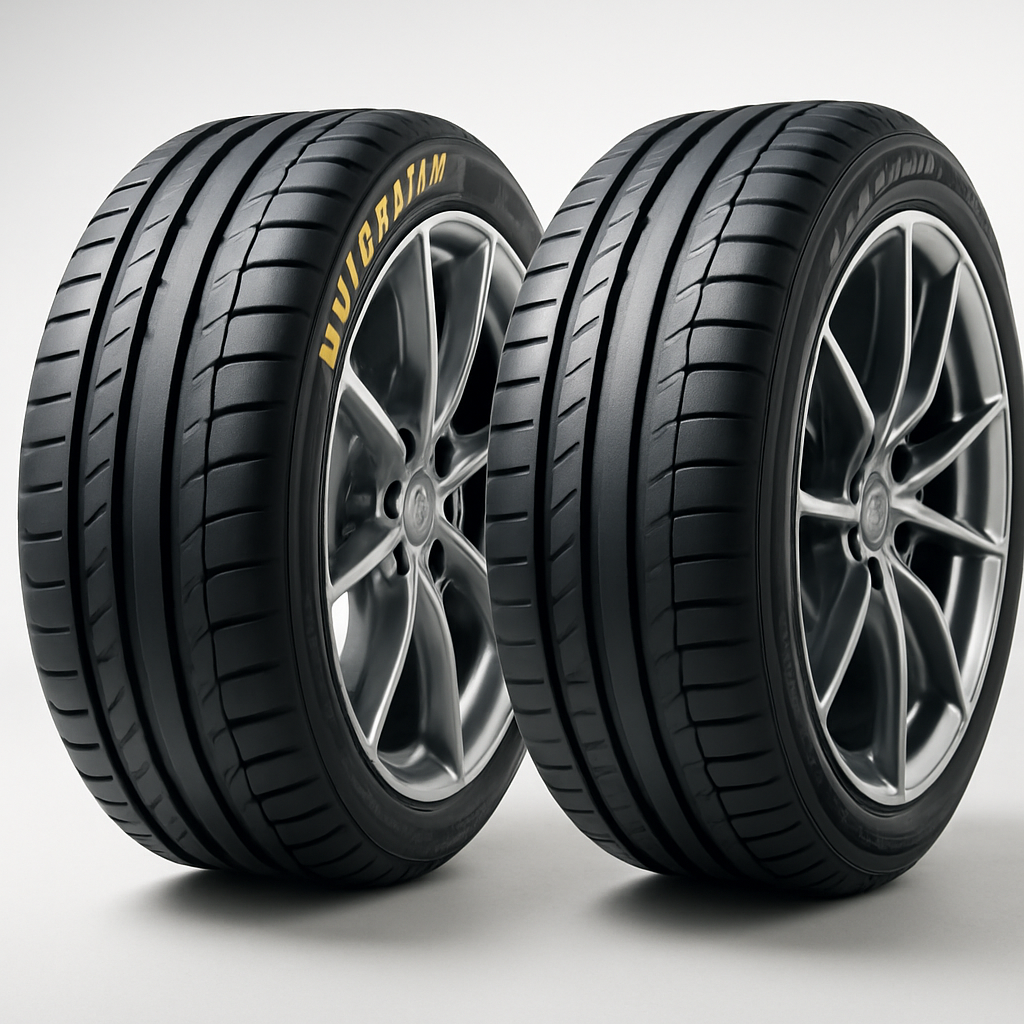
The Michelin Pilot Sport 5 represents a substantial evolution over the Pilot Sport 4, delivering approximately 20% longer tread life, improved wet braking performance by up to 1.5 metres shorter stopping distance, and enhanced dry grip through refined rubber compounds and optimised contact patch design. Both tyres excel as ultra-high performance summer options, but the Pilot Sport 5 particularly suits drivers seeking maximum wet weather safety and extended longevity, whilst the Pilot Sport 4 remains an outstanding choice for enthusiasts prioritising dry handling precision at a potentially lower price point.
Quick comparison table
| Attribute | Michelin Pilot Sport 4 | Michelin Pilot Sport 5 |
|---|---|---|
| Price range | £90-£220 per tyre | £105-£245 per tyre |
| Tread life | 30,000-40,000 km | 40,000-50,000 km |
| Wet braking (80-0 km/h) | 28.5 metres | 27.0 metres |
| Dry handling | Excellent | Exceptional |
| Noise level | 69-72 dB | 68-71 dB |
| Rolling resistance | Class B-C | Class A-B |
| Best use case | Performance driving, track days | Daily performance driving, all-round safety |
Michelin Pilot Sport 4 overview
The Michelin Pilot Sport 4 launched in 2015 as a premium ultra-high performance summer tyre designed for sports cars, hot hatches, and powerful saloons. This tyre utilises Michelin’s Dynamic Response Technology, which combines two distinct rubber compounds across the tread face: a high-rigidity outer shoulder compound for enhanced cornering stability and a flexible central compound optimised for braking performance.
The tread pattern features four wide longitudinal grooves that efficiently evacuate water, whilst the asymmetric design incorporates a continuous central rib for responsive steering feedback. Premium Touch Design technology gives the sidewalls distinctive styling that complements modern performance vehicles. Construction involves twin steel belts reinforced with nylon for high-speed durability.
Typical pricing ranges from £90 to £220 per tyre depending on size, making it positioned firmly in the premium segment. The Pilot Sport 4 generally suits 17-inch to 21-inch wheel fitments with speed ratings from W (270 km/h) to Y (300 km/h). Our Autopartspro mechanics observe that whilst this tyre excels in dry conditions, its wet performance, though good, doesn’t quite match the latest generation alternatives.
Pros:
- Outstanding dry grip and cornering precision
- Progressive breakaway characteristics that inspire confidence
- Responsive steering feel with minimal tyre squirm
- Proven track record across diverse performance vehicles
- Often available at discounted prices now superseded
Cons:
- Shorter tread life compared to successor
- Wet braking distances slightly longer than Pilot Sport 5
- Higher rolling resistance affects fuel economy marginally
- Can feel firm on broken road surfaces
Ideal drivers: Track day enthusiasts, spirited drivers who prioritise ultimate dry handling, and those seeking excellent value from a proven premium performance tyre. The Pilot Sport 4 particularly suits lighter sports cars where communication through the tyre matters most.
Our specialists recommend checking your brake discs condition when fitting new performance tyres, as upgraded rubber often reveals marginal braking system deficiencies.
Michelin Pilot Sport 5 overview
Introduced in 2021, the Michelin Pilot Sport 5 represents Michelin’s latest thinking in ultra-high performance tyre technology. This successor employs an entirely new rubber formulation incorporating functional elastomers and reinforced resins that deliver simultaneously improved grip and longevity—traditionally opposing characteristics in tyre design.
The tread architecture features Michelin’s evolved Dynamic Response Technology with an optimised contact patch shape that extends 5% larger than its predecessor. Enhanced sipe geometry throughout the tread blocks increases biting edges for wet grip, whilst wider longitudinal grooves improve aquaplaning resistance. The compound contains silica elements that maintain suppleness across broader temperature ranges.
Pricing typically spans £105 to £245 per tyre, representing approximately 10-15% premium over remaining Pilot Sport 4 stock. Available in sizes from 17 to 22 inches with speed ratings reaching Y, the Pilot Sport 5 covers fitments from performance hatchbacks through to powerful executive saloons. Construction quality remains exceptional with reinforced sidewalls that resist kerb damage better than many competitors.
According to Autopartspro’s technical team, the Pilot Sport 5 demonstrates measurable improvements in almost every metric whilst maintaining the engaging driving characteristics enthusiasts expect. The enhanced wet performance particularly impresses during British weather conditions where sudden downpours challenge tyre capabilities.
Pros:
- Industry-leading wet braking performance in independent tests
- Approximately 20% longer tread life extends value proposition
- Lower rolling resistance improves fuel efficiency
- Reduced road noise enhances refinement
- Excellent progressive handling at the limit
Cons:
- Higher initial purchase cost than Pilot Sport 4
- Slightly softer sidewall feel may not suit all drivers
- Limited long-term wear data compared to established predecessor
- Premium pricing means alternatives offer better budget value
Ideal drivers: Daily performance car users who demand safety alongside engagement, drivers covering higher annual mileages who benefit from extended tread life, and those prioritising the latest technology. The Pilot Sport 5 excels for powerful front-wheel-drive hot hatches where wet traction proves crucial.
When upgrading to performance tyres, our mechanics always emphasise the importance of proper wheel alignment—misaligned suspension geometry will compromise even the finest rubber and accelerate uneven wear.
Compatibility considerations
Both Michelin Pilot Sport variants fit identical vehicle applications, as they share common size ranges and load/speed ratings. However, several compatibility factors deserve attention when selecting between these tyres.
Vehicle compatibility: Both tyres suit performance-oriented vehicles including hot hatches (Golf GTI, Civic Type R), sports cars (Porsche Cayman, BMW M2), and powerful saloons (Audi S4, Mercedes C43 AMG). Original equipment fitments include numerous premium manufacturers who specify Pilot Sport tyres as factory options. Always verify your vehicle’s recommended tyre size stamped on the door pillar or specified in the owner’s manual.
Model year considerations: Vehicles manufactured before 2015 may have been originally fitted with Pilot Sport 3 or earlier generations. Both Pilot Sport 4 and 5 represent substantial upgrades in grip and safety. Newer vehicles from 2019 onwards increasingly specify Pilot Sport 4 S or even Pilot Sport 5 as original equipment, meaning the Pilot Sport 5 maintains factory-intended performance levels.
OEM specifications: Check whether your vehicle requires specific Michelin variants like acoustic foam inserts for noise reduction, run-flat construction for vehicles without spare wheels, or reinforced sidewalls for heavier electric vehicles. The Pilot Sport 5 offers broader special variant availability including EV-specific constructions with reinforced carcasses.
Installation notes: Always replace tyres in axle pairs minimum—never mix Pilot Sport 4 and 5 on the same axle. Mixing generations front-to-rear proves acceptable with newer tyres fitted to the rear axle for stability. Ensure proper inflation pressures as performance tyres often require higher pressures than standard fitments. Consider wheel alignment verification after fitting to maximise tread life and handling precision.
Both tyres require professional balancing and fitting—the reinforced construction and asymmetric tread patterns demand precision installation. When fitting new performance tyres, inspect related components including wheel bearings, suspension bushings, and brake components to ensure the chassis can exploit the improved grip levels.
Final verdict and buying recommendation
For most UK drivers, the Michelin Pilot Sport 5 represents the superior choice despite its higher initial cost. The extended tread life effectively narrows the price gap when calculated on a cost-per-kilometre basis, whilst the meaningful improvements in wet braking and aquaplaning resistance deliver tangible safety benefits during typical British driving conditions. The reduced road noise and lower rolling resistance add welcome refinement and efficiency gains.
Choose the Michelin Pilot Sport 5 if you prioritise all-weather performance, cover higher annual mileages (over 12,000 km yearly), drive a powerful front-wheel-drive vehicle where wet traction proves critical, or simply want the latest tyre technology with demonstrated improvements across multiple parameters. The Pilot Sport 5 particularly suits daily-driven performance cars where the balance between engagement and practicality matters most.
Opt for the Michelin Pilot Sport 4 if you primarily drive in dry conditions, engage in regular track days where ultimate dry grip outweighs longevity concerns, operate a lightweight rear-wheel-drive sports car where communicative feedback matters enormously, or find clearance pricing that creates substantial savings over the Pilot Sport 5. The Pilot Sport 4 remains an outstanding tyre that continues winning comparison tests—it simply faces a better successor.
For track-focused applications, consider the Pilot Sport 4 S (not covered here) which offers even sharper responses, whilst those seeking year-round capability should investigate the Pilot Sport All Season 4 instead. Remember that even the finest tyres cannot compensate for worn brake components or degraded suspension parts—maintain your entire chassis system for optimal safety and performance.
Regardless of choice, both Michelin Pilot Sport options deliver premium performance that justifies their cost through superior safety margins, predictable handling characteristics, and the confidence to exploit your vehicle’s capabilities. The Pilot Sport 5 simply moves the benchmark higher across nearly every metric whilst maintaining the engaging character that defines this tyre family.
Frequently asked questions
How much longer does the Pilot Sport 5 last compared to the Pilot Sport 4?
Independent testing shows the Pilot Sport 5 delivers approximately 20% extended tread life through advanced rubber compounds and optimised contact patch design. Typical longevity reaches 40,000-50,000 kilometres versus 30,000-40,000 kilometres for the Pilot Sport 4 under similar driving conditions.
Can I mix Pilot Sport 4 and Pilot Sport 5 tyres on my vehicle?
Never mix different tyre models on the same axle as this creates handling imbalances and safety risks. Mixing front-to-rear proves acceptable with newer Pilot Sport 5 tyres fitted to the rear axle, though matching all four corners delivers optimal performance and predictability.
Which tyre performs better in wet British weather conditions?
The Michelin Pilot Sport 5 demonstrates superior wet performance with approximately 1.5 metres shorter braking distances from 80 km/h and improved aquaplaning resistance through enhanced tread design. This makes it particularly suited to unpredictable UK weather patterns where sudden rain challenges tyre grip.
Are Pilot Sport tyres suitable for winter driving in the UK?
Both Pilot Sport 4 and 5 are summer tyres optimised for temperatures above 7°C. Performance degrades significantly below this threshold with reduced grip and braking ability. For year-round use, consider dedicated winter tyres or the Pilot Sport All Season 4 variant instead.
How do these tyres affect fuel consumption compared to standard fitments?
The Pilot Sport 5 typically achieves Class A-B rolling resistance ratings, improving fuel efficiency by approximately 0.2-0.3 litres per 100 kilometres versus the Pilot Sport 4’s Class B-C ratings. Both represent compromises versus efficiency-focused tyres but the Pilot Sport 5 narrows this gap considerably.