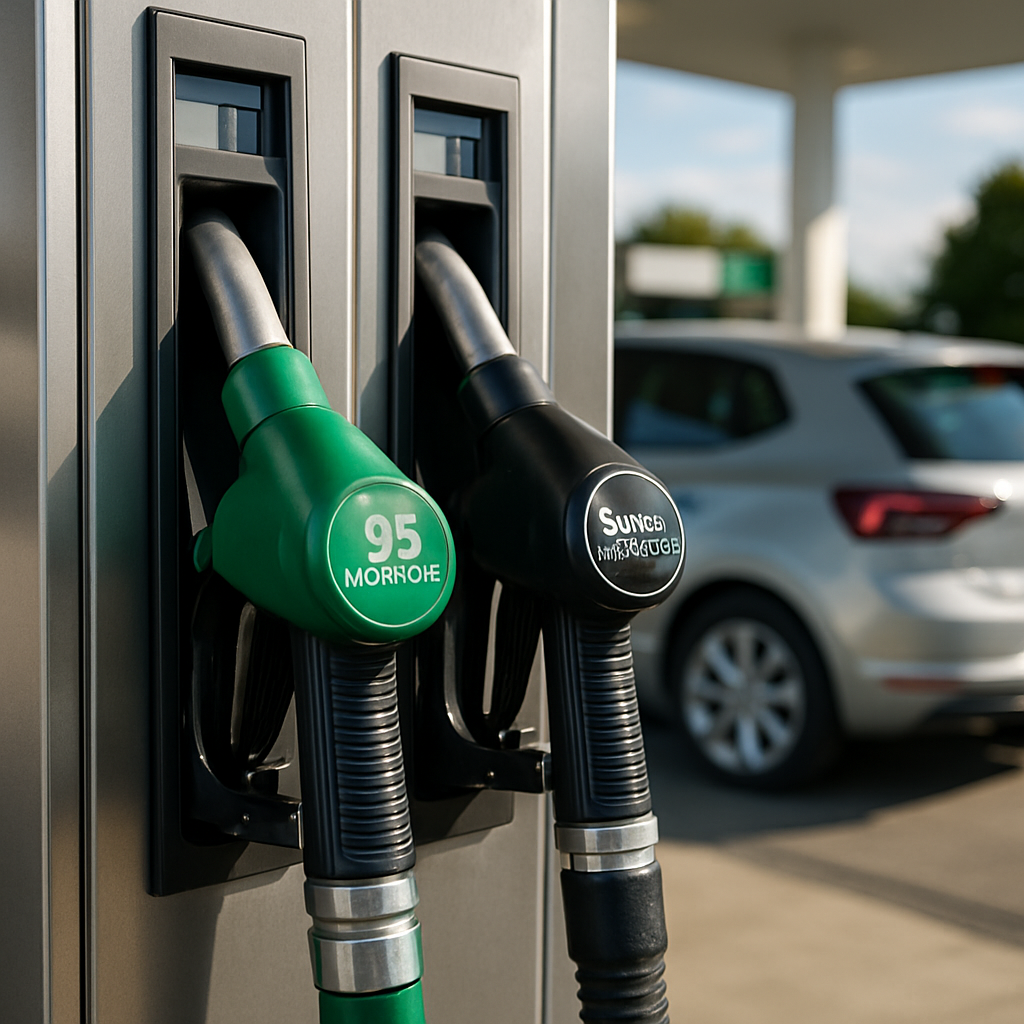
Choosing between bensin 95 eller 98 depends on your engine’s compression ratio and manufacturer recommendations. The primary difference lies in octane rating: 95-octane petrol has an octane number of 95, whilst 98-octane offers higher knock resistance. For most modern vehicles, 95-octane provides adequate performance and protection. However, high-performance engines with compression ratios above 10.5:1 benefit from 98-octane fuel. You can safely blend these grades without damaging your engine, as they’re chemically compatible. The resulting mixture will have an octane rating between 95 and 98, depending on proportions mixed.
Quick comparison table
| Attribute | Bensin 95 | Bensin 98 |
|---|---|---|
| Octane rating | 95 RON | 98 RON |
| Price range | Lower (£1.35-£1.45/litre) | Higher (£1.50-£1.65/litre) |
| Knock resistance | Standard | Superior |
| Engine compatibility | Most standard engines | High-performance engines |
| Fuel efficiency | Standard | Marginally better |
| Best use case | Daily driving, economy cars | Sports cars, turbocharged engines |
Product #1 overview: bensin 95
Standard unleaded petrol with a 95-octane rating represents the baseline fuel grade for most vehicles on British roads. This fuel contains additives that prevent engine knocking whilst maintaining cost-effectiveness for everyday driving.
The octane number indicates the fuel’s resistance to pre-ignition or “pinking” during the compression stroke. Bensin 95 contains approximately 5% ethanol (E5 specification) in the UK, meeting environmental standards whilst protecting older engine components.
Typical pricing ranges from £1.35 to £1.45 per litre at forecourts across the UK, making it the economical choice for routine motoring. The fuel meets EN228 European standards and contains detergent additives that keep injection systems clean.
Pros of 95-octane petrol
- Lower cost per litre reduces running expenses
- Widely available at virtually every petrol station
- Sufficient for engines designed with compression ratios below 10.5:1
- Meets manufacturer specifications for most family vehicles
- Contains cleaning agents that maintain fuel system integrity
Cons of 95-octane petrol
- May cause knocking in high-compression engines
- Slightly reduced performance in turbocharged powerplants
- Lower energy density compared to premium grades
- Not optimal for vehicles specifically requiring higher octane
Ideal drivers for 95-octane
Standard unleaded suits drivers of naturally aspirated engines, older vehicles, and economy-focused motorists. If your owner’s manual specifies 95 RON as the minimum requirement, this grade provides complete protection without unnecessary expense. Family saloons, compact hatchbacks, and commercial vans operate flawlessly on this specification.
According to AutoPartsPro’s senior technician with 15 years’ experience: “We’ve analysed hundreds of engines, and 95-octane performs perfectly in vehicles designed for it. Don’t waste money on premium fuel unless your handbook specifically demands it or you’re experiencing persistent knocking.”
Product #2 overview: bensin 98
Premium unleaded petrol with a 98-octane rating offers enhanced knock resistance for demanding engines. This super-grade fuel contains refined hydrocarbons with superior anti-knock properties, allowing advanced ignition timing without detonation risks.
The higher octane number permits engines to run higher compression ratios and boost pressures safely. Manufacturers of performance vehicles often specify 98 RON to extract maximum power whilst protecting internal components from damaging pre-ignition events.
Expect to pay £1.50 to £1.65 per litre for this premium specification. The fuel typically includes enhanced additive packages featuring polyetheramine detergents that thoroughly clean combustion chambers, valves, and fuel delivery systems.
Pros of 98-octane petrol
- Prevents knocking in high-compression engines
- Allows optimal ignition timing for maximum power output
- Contains superior cleaning additives for fuel system maintenance
- Marginally improves fuel economy in engines designed to exploit it
- Reduces carbon deposits in combustion chambers
Cons of 98-octane petrol
- Significantly higher cost per litre
- No tangible benefits in engines designed for 95 RON
- Less widely available, particularly in rural areas
- Cost savings from marginal efficiency gains rarely offset price premium
Ideal drivers for 98-octane
Premium unleaded suits owners of turbocharged engines, supercharged vehicles, and high-performance sports cars. If your manufacturer specifies 98 RON in the handbook, using lower grades risks engine damage and warranty invalidation. Modern direct-injection turbocharged engines particularly benefit from the knock resistance this grade provides.
Our lead diagnostic technician notes: “Performance engines with variable valve timing and aggressive boost profiles absolutely require 98-octane. The ECU can compensate for lower grades by retarding timing, but you’ll lose power and efficiency. For these applications, premium fuel is insurance against expensive repairs.”
Compatibility considerations
Understanding which fuel grade your vehicle requires prevents costly mistakes and optimises performance. The compression ratio stamped on your engine specification plate provides the critical clue.
Vehicle compatibility factors
Engines with compression ratios below 10.0:1 typically operate satisfactorily on 95-octane fuel. Ratios between 10.0:1 and 10.5:1 represent a grey area where either grade functions adequately. Above 10.5:1, manufacturers usually mandate 98-octane minimum.
Turbocharged and supercharged engines create additional cylinder pressure beyond the mechanical compression ratio. These forced-induction powerplants often require premium fuel regardless of stated compression figures. Check your owner’s manual for definitive guidance.
Model year considerations
Vehicles manufactured before 2000 generally featured lower compression ratios suited to 95-octane fuel. Modern engines exploit advanced materials and knock sensors to run higher compression, often necessitating premium grades. The transition period between 2000 and 2010 saw mixed specifications, so handbook consultation proves essential.
Classic vehicles may require lead replacement additives alongside standard unleaded to protect valve seats designed for leaded petrol. This consideration transcends octane rating discussions.
OEM specifications
Manufacturers test engines extensively with specific fuel grades. The handbook recommendation represents the minimum octane rating for safe operation. Using lower octane than specified risks knocking, which causes piston damage, worn bearings, and potentially catastrophic engine failure.
Conversely, using higher octane than required provides no performance benefits in engines unable to exploit it. The engine management system cannot advance timing beyond programmed limits, rendering the premium fuel’s knock resistance redundant.
Installation and mixing notes
Blending 95 and 98-octane petrol creates a mixture with intermediate octane rating. The resulting figure approximates a weighted average based on proportions. For example, mixing equal quantities yields approximately 96.5 RON.
This blending causes no mechanical issues. The fuels share identical base chemistry, differing only in octane-boosting additives. Your engine’s knock sensors adjust timing automatically to suit the available octane rating, within programmed parameters.
When travelling and encountering limited fuel availability, topping up a tank of 98-octane with 95-octane poses no immediate danger. The diluted mixture retains sufficient knock resistance for moderate driving until you refuel with the specified grade.
Final verdict and buying recommendation
Select fuel grade based strictly on manufacturer recommendations found in your vehicle handbook. This approach optimises performance whilst avoiding unnecessary expense.
Choose 95-octane for daily driving in naturally aspirated engines with compression ratios below 10.5:1. This specification provides complete protection at minimum cost. Family vehicles, older cars, and economy models thrive on standard unleaded without compromise.
Choose 98-octane for high-performance engines, turbocharged powerplants, and any vehicle whose handbook specifies premium fuel. The additional cost represents insurance against knock damage and ensures optimal power delivery. Sports cars, modern turbocharged engines, and performance-tuned vehicles justify the premium.
For vehicles where the handbook states “95 RON minimum, 98 RON recommended,” assess your driving style. Spirited driving, frequent motorway use, and hot weather favour premium fuel. Gentle urban driving makes standard unleaded perfectly adequate.
Occasional use of premium fuel in standard engines can help clean fuel systems through enhanced additive packages. Consider a tank of 98-octane every few months as preventative maintenance, though this remains optional rather than essential.
Never use fuel with octane rating below manufacturer specification. The modest savings evaporate rapidly when facing repair bills for knock-damaged engines. When uncertain, premium fuel provides peace of mind without risk.
For those maintaining their vehicles, quality fuel filtration matters as much as octane rating. Regular replacement of fuel system components ensures clean combustion regardless of grade selected.
FAQ
Can mixing 95 and 98 petrol damage my engine?
No, blending these grades causes no damage. They share identical base chemistry and mix perfectly. The resulting octane rating falls between 95 and 98 depending on proportions. Your engine’s knock sensors adjust timing automatically to accommodate the mixture safely.
Will 98-octane petrol improve performance in engines designed for 95?
Generally no. Engines programmed for 95-octane cannot advance ignition timing to exploit higher octane ratings. You’ll gain no measurable power or efficiency. The enhanced cleaning additives provide marginal benefit, but rarely justify the substantial price premium for routine use.
What happens if I accidentally fill 95 instead of required 98?
Drive gently and refuel with 98-octane soon. Modern engines feature knock sensors that retard timing to prevent damage, though performance suffers. Avoid heavy acceleration and high engine loads. One tank of incorrect fuel rarely causes permanent damage in vehicles with adaptive engine management systems.
Does premium fuel really clean the engine better?
Yes, 98-octane typically contains enhanced detergent packages. These polyetheramine additives remove deposits from injectors, valves, and combustion chambers more effectively than basic formulations. However, quality 95-octane from major brands also includes adequate cleaning agents for normal maintenance requirements.
How much does octane rating affect fuel consumption?
In engines designed to exploit it, 98-octane may improve economy by 1-3% through optimised combustion timing. In standard engines, expect zero difference. The efficiency gains rarely offset the price premium. Driving style, air filter condition, and maintenance quality affect consumption far more significantly than octane rating.