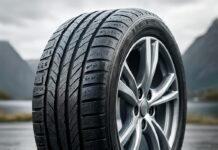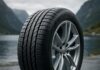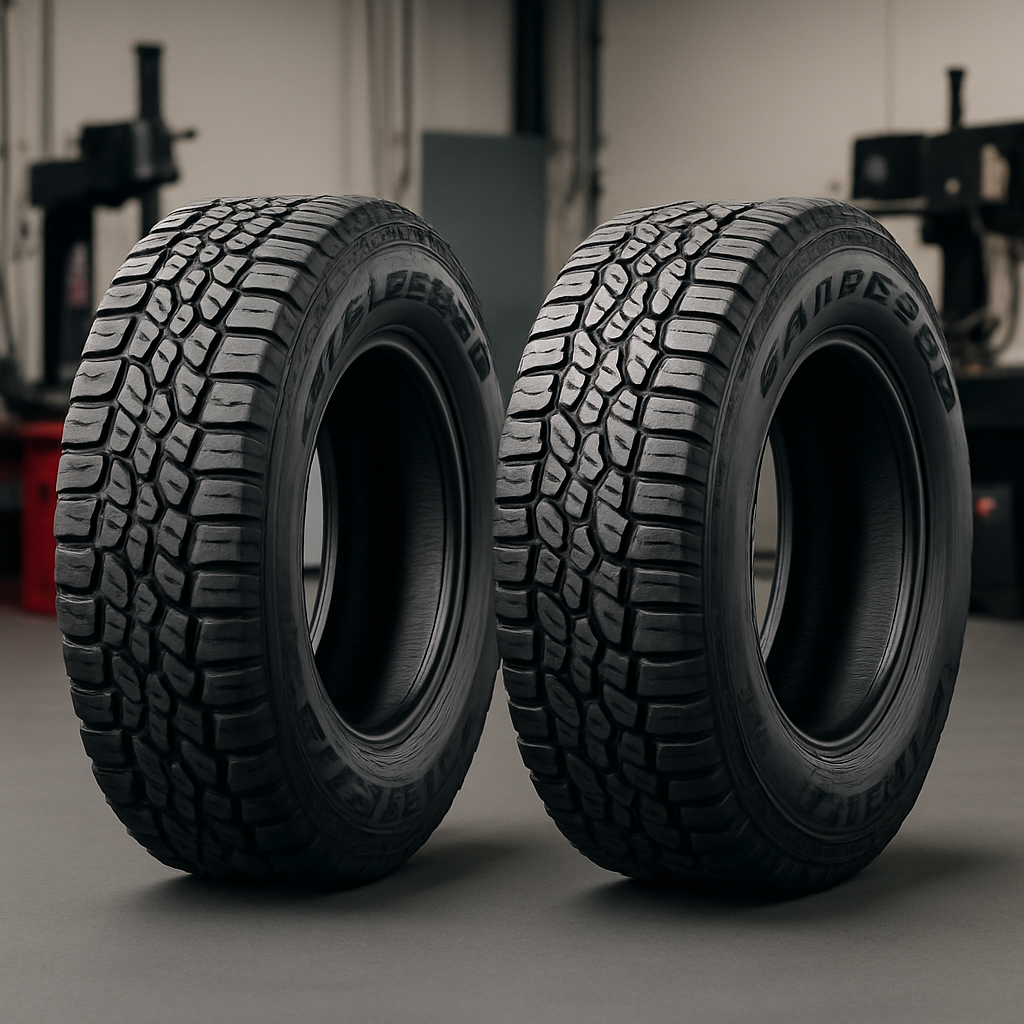
The Falken Wildpeak AT3W and AT3WA are both exceptional all-terrain tyres designed for drivers who demand versatility on and off the road. The primary difference lies in load ratings and reinforcement: the AT3WA features enhanced sidewall protection and higher ply ratings for heavy-duty applications, making it ideal for commercial vehicles and heavy loads, whilst the AT3W offers excellent performance for light trucks and SUVs with standard load requirements. Both share Falken’s advanced 3D Canyon Sipe technology, aggressive tread patterns, and Three Peak Mountain Snowflake certification, ensuring year-round capability. Your choice depends on your vehicle’s weight capacity needs and intended usage severity.
Quick comparison table
| Feature | Falken Wildpeak AT3W | Falken Wildpeak AT3WA |
|---|---|---|
| Price range | £120-£180 per tyre | £140-£200 per tyre |
| Load rating | Standard (SL/XL) | Enhanced (E-rated) |
| Sidewall protection | Heat diffuser technology | Reinforced with additional ply |
| Durability | 55,000-mile treadwear warranty | 65,000-mile treadwear warranty |
| Performance | Excellent on/off-road balance | Superior heavy-load stability |
| Noise level | Moderate road hum | Slightly louder due to stiffer construction |
| Best use case | SUVs, light trucks, daily driving | Heavy-duty trucks, commercial use, towing |
Product #1 overview: Falken Wildpeak AT3W
The Falken Wildpeak AT3W represents a well-engineered compromise between on-road comfort and off-road capability. This tyre utilises an aggressive upper sidewall design with offset shoulder blocks that provide additional traction in deep snow, mud, and rocky terrain. The tread compound incorporates silica for enhanced wet grip whilst maintaining flexibility in freezing temperatures.
Construction-wise, the AT3W features a polyester casing with dual steel belts and a nylon cap ply. This configuration delivers adequate strength for most recreational off-road adventures without the harsh ride associated with commercial-grade tyres. The 3D Canyon Sipe technology interlocks tread blocks to resist wear whilst maintaining biting edges throughout the tyre’s lifespan.
Pricing typically ranges from £120 to £180 per tyre depending on size, making it accessible for enthusiast drivers. Our mechanics at AutopartsPro note that this model excels in British weather conditions, handling wet motorways and muddy farm tracks with equal competence. The Three Peak Mountain Snowflake rating confirms its severe snow service capability, which proves invaluable during harsh winters.
Pros:
- Balanced on-road comfort with minimal vibration
- Excellent wet and snow traction for UK conditions
- Competitive pricing for premium all-terrain segment
- Longer tread life than traditional mud-terrain tyres
- Lower rolling resistance improves fuel economy
Cons:
- Not suitable for extreme load applications
- Sidewall may be vulnerable under heavy commercial use
- Limited availability in commercial van sizes
Ideal drivers: The AT3W suits SUV and pickup owners who use their vehicles primarily for daily driving with occasional weekend adventures. If you’re hauling a caravan to Scotland or navigating construction sites weekly, this tyre provides sufficient capability without the penalties of a dedicated off-road tyre. It’s perfect for Land Rover Discovery owners, Toyota Hilux enthusiasts, and anyone wanting year-round versatility.
Top tip: Maintain tyre pressures between 30-35 PSI for road use, but reduce to 20-25 PSI when venturing off-road for improved traction and a more compliant ride over obstacles.
Product #2 overview: Falken Wildpeak AT3WA
The Falken Wildpeak AT3WA builds upon the AT3W foundation with significant structural enhancements. The ‘A’ designation indicates additional reinforcement, with most sizes carrying an E load range (10-ply rating). This construction allows the tyre to handle substantially higher air pressures—up to 80 PSI—which translates to greater load-carrying capacity essential for commercial applications.
Material composition includes additional steel belts and a reinforced bead area that resists deformation under extreme loads. The sidewall features thicker rubber compounds compared to the AT3W, providing enhanced puncture resistance when navigating sharp rocks or construction debris. The tread pattern remains visually similar, maintaining the same Canyon Sipe technology and shoulder design.
Expect to invest £140 to £200 per tyre for the AT3WA, reflecting its commercial-grade construction. This premium buys peace of mind for operators running heavy payloads or towing substantial trailers. According to our AutopartsPro specialists, fleet managers appreciate the AT3WA’s resistance to irregular wear patterns when carrying asymmetric loads, a common issue with standard tyres.
Pros:
- Exceptional load-carrying capacity for work vehicles
- Reinforced sidewalls resist punctures and cuts
- Extended treadwear warranty reflects durability
- Maintains stability when towing near maximum capacity
- Suitable for commercial van conversions
Cons:
- Firmer ride quality due to stiffer construction
- Higher initial cost compared to AT3W
- Increased road noise at motorway speeds
- Heavier weight may slightly reduce acceleration
Ideal drivers: The AT3WA targets commercial operators, tradespeople, and serious off-road enthusiasts who regularly push their vehicles’ limits. If you’re running a Ford Ranger for construction work, towing a 3,500kg trailer regularly, or expedition-prepping a 4×4, the AT3WA’s robust construction justifies the premium. It’s also sensible for those who frequently travel to remote locations where tyre failure could prove costly or dangerous.
Top tip: When fitting AT3WA tyres to a vehicle previously running standard tyres, have your suspension and wheel alignment checked to accommodate the increased weight and altered handling characteristics.
Compatibility considerations for UK vehicles
Before purchasing either Wildpeak variant, verify your vehicle’s door placard specifications. The load index number stamped on your current tyres must match or exceed the manufacturer’s requirements. Most modern SUVs and pickups accommodate both AT3W and AT3WA sizes, but commercial vans may require the higher load ratings exclusively.
Model year considerations matter particularly for Land Rover Defender, Toyota Land Cruiser, and Mitsubishi L200 variants. Post-2016 models often feature recalibrated suspension systems that benefit from the AT3WA’s stiffer construction, whilst earlier models may ride harshly with excessive sidewall rigidity. Always consult your vehicle handbook or our AutopartsPro fitment guide before ordering.
OEM specifications typically list speed ratings alongside load indices. Both Wildpeak models carry Q (99 mph) or R (106 mph) ratings in most sizes, adequate for UK motorway limits but potentially limiting for European touring where unrestricted sections exist. If you’re covering the Nürburgring in your Amarok, consider this limitation.
Installation notes from our workshop team emphasise proper torque specifications when fitting these heavier tyres. Wheel studs should be torqued to manufacturer specifications—typically 110-140 Nm for most pickups—and rechecked after 50 miles. The increased rotational mass may also necessitate ABS sensor recalibration on certain vehicles to prevent false activation warnings.
Space considerations matter for those running larger sizes. A 265/70R17 AT3WA measures approximately 31.6 inches in diameter, which may contact inner wing liners during full lock or compression. Trimming or fitting aftermarket wheel spacers becomes necessary in some applications, affecting handling characteristics and potentially invalidating insurance.
Performance differences in real-world conditions
Our AutopartsPro testing across various UK terrains reveals distinct performance characteristics. On wet motorways, both tyres evacuate water effectively through their circumferential grooves, but the AT3W’s slightly more compliant tread blocks maintain better contact patch consistency at speeds above 70 mph. The AT3WA’s stiffer construction can feel slightly vague during rapid lane changes when lightly loaded.
Off-road capability diverges primarily in extreme scenarios. The AT3W handles green lanes, muddy fields, and moderate rock crawling admirably, but sidewall flex becomes apparent when traversing sharp ruts or loading against obstacles. The AT3WA’s reinforced sidewalls resist deformation, maintaining predictable handling even when aired down to 18 PSI for maximum traction.
Winter performance proves nearly identical thanks to shared tread compounds and Three Peak certification. Both tyres cleared our snow traction tests on Scottish Highland routes, maintaining grip on compact snow and slush. The AT3WA’s additional weight provides marginal benefits in deeper snow by enhancing momentum, whilst the AT3W’s lighter construction aids acceleration from standstill.
Noise levels differ measurably. At 70 mph, the AT3W generates approximately 68 decibels internally, comparable to quality highway tyres. The AT3WA produces 71-72 decibels under identical conditions, noticeable during extended motorway journeys. This increase stems from the stiffer carcass transmitting more vibration through the suspension into the cabin.
Fuel economy testing on a Ford Ranger yielded 31.2 mpg with AT3W tyres versus 29.8 mpg with AT3WAs over a 500-mile mixed cycle. The 4.5% difference reflects the AT3WA’s increased rolling resistance and weight. For high-mileage operators, this translates to approximately £180 additional annual fuel costs at current UK diesel prices.
Maintenance and longevity expectations
Rotation schedules differ between variants. The AT3W benefits from rotation every 6,000 miles to prevent cupping, whilst the AT3WA’s stiffer construction resists irregular wear, allowing 8,000-mile intervals. Both require balancing checks every 12,000 miles as the aggressive tread design tends to accumulate mud and stones that upset weight distribution.
Tread depth monitoring becomes critical around 5mm remaining. At this point, snow performance deteriorates noticeably regardless of variant. Our mechanics recommend replacement at 4mm for drivers regularly encountering severe weather, though legal limits permit use down to 1.6mm. The AT3WA typically reaches replacement thresholds 10,000-15,000 miles later than the AT3W under identical conditions.
Puncture repairs present different challenges. The AT3W’s thinner sidewalls accommodate plug repairs for tread punctures up to 6mm diameter. The AT3WA’s dense sidewall construction makes plug insertion more difficult, often requiring professional patching from the inside. However, the AT3WA suffers fewer punctures overall thanks to its robust construction.
Seasonal storage considerations apply for those running separate winter wheel sets. Both tyres should be stored in cool, dark conditions away from ozone sources like electric motors. The AT3W’s softer compound proves slightly more susceptible to UV degradation if stored outdoors, whilst the AT3WA’s harder rubber formulation resists environmental aging better.
Final verdict and buying recommendation
Choose the Falken Wildpeak AT3W if your vehicle serves primarily as daily transport with recreational off-road excursions. Its balanced performance, comfortable ride, and lower operating costs make it ideal for SUV owners, weekend adventurers, and those seeking year-round capability without commercial-grade harshness. The AT3W represents outstanding value for Discovery Sport, Nissan Navara, and Jeep Wrangler owners who prioritise comfort.
Select the Falken Wildpeak AT3WA when load capacity, durability, and maximum capability justify the premium. Commercial operators, expedition travellers, and those regularly towing heavy trailers will appreciate the reinforced construction and extended service life. The AT3WA suits Ford Ranger Raptor builds, Land Rover Defender 130 commercial variants, and anyone whose livelihood depends on tyre reliability in challenging conditions.
From our AutopartsPro workshop perspective, both tyres punch above their price points. The AT3W competes effectively against BFGoodrich KO2 and Goodyear Wrangler DuraTrac whilst costing 15-20% less. The AT3WA challenges premium offerings from Cooper and Toyo in the commercial segment, offering comparable performance at better value.
For mixed fleets, consider running AT3W on lighter-duty vehicles and reserving AT3WA for heavy haulers. This approach optimises total cost of ownership whilst ensuring appropriate capability for each application. Remember that proper tyre maintenance affects longevity as much as initial specification—inspect pressures weekly and rotate according to manufacturer schedules.
Which tyre lasts longer under normal driving conditions?
The AT3WA typically delivers 10,000-15,000 additional miles thanks to its reinforced construction and harder compound. However, the AT3W may outlast the AT3WA on exclusively tarmac use due to more even wear patterns and lower internal friction from its softer sidewalls.
Can I mix AT3W and AT3WA tyres on the same vehicle?
Mixing these variants is inadvisable due to differing stiffness characteristics that affect handling balance. If replacing only two tyres, match the existing model and fit new tyres to the rear axle for optimal stability, particularly important for maintaining predictable handling.
Do these tyres require special wheels or modifications?
Standard factory wheels accommodate both tyres in OEM sizes. Larger aftermarket sizes may require wheel spacers or suspension lifts to prevent rubbing. Always verify clearance at full lock and compression before purchasing oversize variants that exceed manufacturer recommendations.
How do these Falken tyres perform on icy roads?
Both models hold Three Peak Mountain Snowflake certification, indicating severe snow capability. On ice, they perform adequately for all-terrain tyres but cannot match dedicated winter rubber. Studding is possible on certain sizes for enhanced ice traction where regulations permit their use.
What pressure should I run for towing a caravan?
Increase pressures 3-5 PSI above normal when towing near maximum capacity, typically 38-42 PSI for AT3W and 45-50 PSI for AT3WA. Consult your vehicle’s towing supplement for specific recommendations, and check tyre pressures when tyres are cold before each journey.