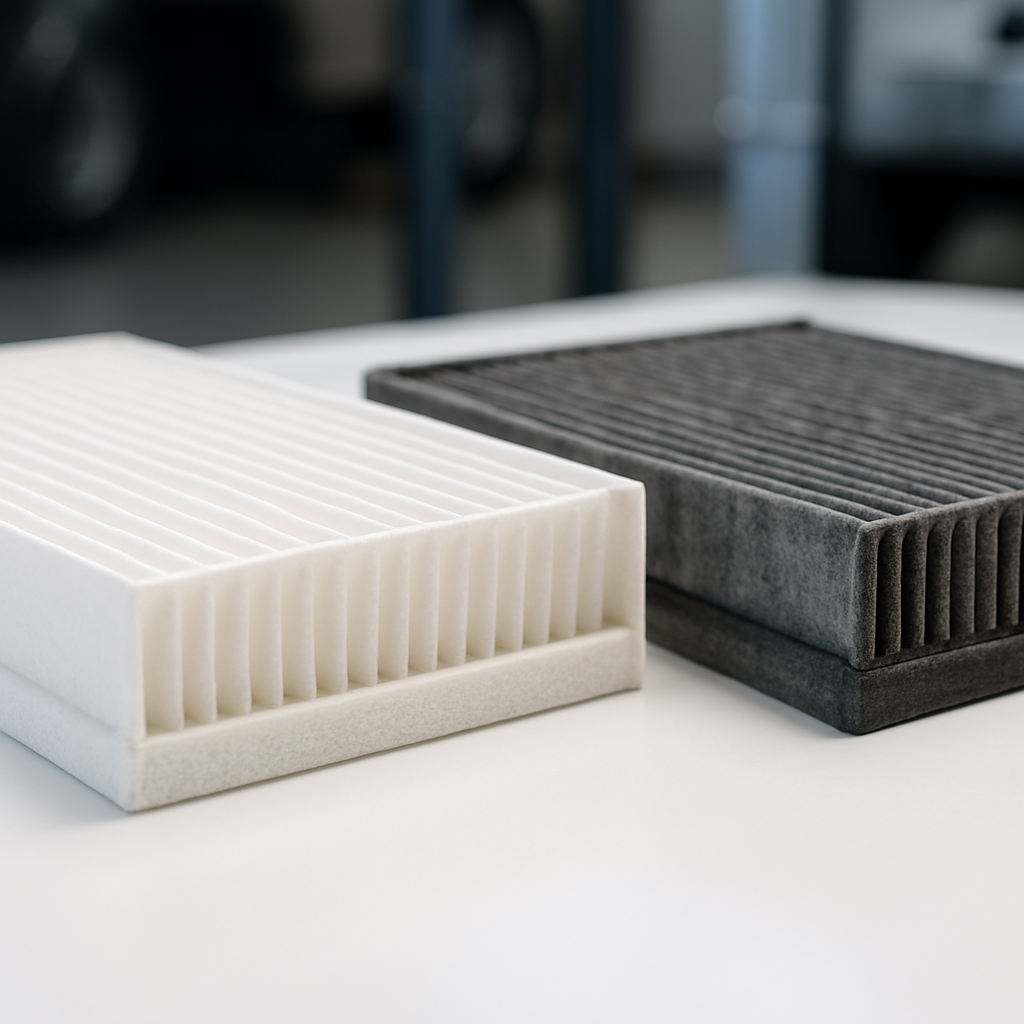
A cabin filter with activated carbon (kupefilter med aktivt kull) offers superior protection against odours, harmful gases, and VOCs compared to standard particulate-only filters. If you drive frequently in urban areas with heavy traffic, industrial zones, or near agricultural regions, an activated carbon filter provides significantly better air quality inside your vehicle. Standard filters without carbon effectively trap pollen, dust, and particulates but cannot neutralise unpleasant smells or toxic gases. For most UK drivers concerned about diesel fumes and city pollution, the activated carbon option delivers the best value and health protection.
Quick comparison table
| Feature | Activated carbon filter | Standard particulate filter |
|---|---|---|
| Price range | £12-£35 | £6-£18 |
| Odour removal | Excellent | None |
| Gas filtration | Yes (NOx, SO2, ozone) | No |
| Particulate filtration | High (pollen, dust, PM2.5) | High (pollen, dust, PM2.5) |
| Lifespan | 12-15 months / 12,000 miles | 12-15 months / 12,000 miles |
| Airflow resistance | Slightly higher | Lower |
| Best for | Urban driving, allergies, pollution | Rural driving, budget-conscious |
Understanding the difference between these two types of cabin air filtration systems helps you make an informed decision. Both filters protect occupants from airborne contaminants, but the activated carbon variant adds a crucial chemical filtration layer that standard filters simply cannot provide.
Activated carbon cabin filter overview
The activated carbon cabin filter incorporates a layer of specially treated carbon granules between filter media layers. This carbon undergoes an activation process that creates millions of microscopic pores, dramatically increasing surface area. A single gram of activated carbon can have a surface area exceeding 500 square metres, allowing it to adsorb gaseous pollutants through chemical bonding.
These filters typically consist of three or four layers: a pre-filter for large particles, a microfibre layer for fine dust and pollen, an activated carbon layer for gases and odours, and sometimes an antimicrobial layer. The carbon effectively traps nitrogen oxides (NOx), sulphur dioxide (SO2), ozone (O3), benzene, and various volatile organic compounds (VOCs) that standard filters allow to pass through completely.
Expect to pay between £12 and £35 for a quality activated carbon pollenfilter, depending on your vehicle make and model. Premium brands like Bosch, Mann-Filter, and Purflux offer excellent options that provide consistent performance throughout their service life.
Pros of activated carbon filters
- Eliminates diesel fumes, exhaust gases, and industrial odours effectively
- Removes harmful gases including nitrogen oxides and benzene
- Provides relief for asthma and allergy sufferers by removing irritants
- Keeps cabin air fresher during traffic jams and urban driving
- Protects against agricultural smells (manure, pesticides) in rural areas
- Reduces fogging on windscreen by maintaining better air quality
Cons of activated carbon filters
- Higher purchase cost compared to standard filters
- Slightly reduced airflow due to denser construction
- Carbon layer saturates over time and cannot be cleaned or regenerated
- May cause minimal reduction in HVAC system efficiency
- Replacement intervals must be strictly observed for optimal performance
Ideal drivers for carbon filters
If you regularly commute through London, Manchester, Birmingham, or other congested urban centres, an activated carbon filter becomes essential. Drivers with respiratory conditions, pregnant women, families with young children, and anyone spending significant time in their vehicle benefits from the enhanced protection. Those living near industrial estates, busy motorways, or agricultural zones will immediately notice improved cabin air quality.
Professional tip: Our technicians at AutoPartsPro recommend activated carbon filters for any vehicle used primarily in urban or suburban environments. The modest price difference pays dividends in health protection and comfort, particularly during summer months when you’re more likely to drive with windows closed and air conditioning running.
Standard particulate cabin filter overview
Standard cabin filters rely on physical filtration through synthetic or cellulose fibre media. These filters trap solid particles through mechanical means: large particles get caught in outer fibres, whilst progressively finer particles become trapped deeper within the filter material. The technology effectively captures pollen grains, dust mites, brake dust, tyre particles, and other airborne debris down to around 0.5 microns in size.
Most standard filters feature electrostatically charged fibres that attract and hold particles more effectively than uncharged media. This electrostatic charge remains active throughout the filter’s service life, maintaining consistent filtration efficiency. The simpler construction means less airflow restriction and lower manufacturing costs.
Standard filters typically cost between £6 and £18, making them an economical choice for budget-conscious motorists. Despite the lower price, quality particulate filters from reputable manufacturers provide excellent protection against solid contaminants. You can find reliable options for most vehicle models through our reservedeler section.
Pros of standard filters
- Lower purchase price makes routine maintenance more affordable
- Better airflow characteristics benefit HVAC system efficiency
- Excellent particulate filtration including pollen and dust
- Adequate for drivers in rural or low-pollution areas
- Widely available with numerous brand options
- Easier on blower motor due to less resistance
Cons of standard filters
- No protection against exhaust gases or toxic fumes
- Cannot remove odours from diesel vehicles or agriculture
- Limited benefit for allergy sufferers sensitive to chemical irritants
- Offers no defence against volatile organic compounds
- Less effective in heavy traffic or industrial environments
Ideal drivers for standard filters
Motorists living in rural Scottish Highlands, Welsh countryside, or other low-traffic areas may find standard filters perfectly adequate. If your daily driving involves country lanes, small villages, and minimal exposure to heavy traffic or industrial areas, the cost savings from standard filters make practical sense. Older vehicles with higher-mileage HVAC systems that struggle with airflow also benefit from the lower restriction of particulate-only filters.
Expert insight: AutoPartsPro’s service specialists note that standard filters work well for vehicles used occasionally or in clean-air environments. However, we’ve observed that most customers who switch from standard to activated carbon filters report noticeable improvements in cabin comfort and don’t return to basic filtration.
Compatibility and installation considerations
Both activated carbon and standard cabin filters must match your vehicle’s specific fitment requirements. Filter dimensions, mounting orientation, and seal design vary significantly between makes and models. Using an incorrect filter allows unfiltered air to bypass the media, rendering the filtration system ineffective.
Check your vehicle handbook or use online fitment tools to identify the correct part number. Most modern vehicles manufactured after 2000 include cabin filtration as standard, though the filter location varies. Common positions include behind the glovebox, under the dashboard near the pedal assembly, beneath the windscreen cowl, or in the engine bay near the bulkhead.
Vehicle compatibility
Nearly all passenger vehicles accept both filter types in the same housing. The physical dimensions remain identical; only the internal construction differs. This interchangeability means you can switch between standard and activated carbon filters at each service interval based on your current needs and budget. Some luxury manufacturers specify activated carbon filters as original equipment, whilst volume manufacturers often fit standard filters to reduce costs.
Certain performance or modified vehicles may require specific filter types to maintain proper airflow for high-output climate control systems. Always verify specifications before purchasing. If you’re upgrading other cabin components, consider checking our range of interiorvifte options for complete HVAC system maintenance.
Installation guidance
Most cabin filter replacements require no tools and take 5-15 minutes. Behind-glovebox installations typically involve releasing catches and removing the glovebox door, then sliding out the old filter from its housing. Under-dash installations may require lying on your back to access the filter door. Bonnet-accessed filters often hide beneath plastic covers secured by clips. For comprehensive guidance on cabin maintenance, visit our article on utskiftning av pollenfilter.
Note the airflow direction arrows printed on the filter frame before removal. Installing the new filter backwards dramatically reduces effectiveness. Ensure the seal sits flush against the housing to prevent air bypass. Many filters include foam gaskets around the perimeter – these must compress fully when installed correctly.
Service intervals and monitoring
Replace cabin filters every 12-15 months or 12,000 miles, whichever comes first. Motorists in dusty environments, rural agricultural areas, or those who frequently drive on unpaved roads should inspect filters every six months. Reduced airflow from dashboard vents, persistent musty odours, or increased windscreen fogging indicate a saturated filter requiring immediate replacement.
Activated carbon filters lose effectiveness gradually as the carbon pores become saturated with trapped molecules. Unlike particulate filters that show visible dirt accumulation, carbon filters may appear clean whilst offering no gas filtration. This invisible saturation makes adherence to replacement intervals crucial for maintaining air quality benefits.
Final verdict and buying recommendation
Choose an activated carbon cabin filter if you drive regularly in urban areas, spend significant time in traffic, have respiratory sensitivities, or simply want the best possible air quality. The modest additional cost provides substantial benefits that enhance comfort and protect health. Drivers in Greater London, West Midlands, Greater Manchester, West Yorkshire, and other metropolitan areas should consider activated carbon filters essential rather than optional.
Select a standard particulate filter if you primarily drive in rural areas with minimal traffic, if budget constraints make every pound count, or if your vehicle’s HVAC system struggles with airflow. The lower restriction and reduced cost make standard filters sensible for occasional-use vehicles, older cars, or situations where gas filtration provides limited benefit.
For families, consider activated carbon filters non-negotiable. Children’s developing respiratory systems are more vulnerable to pollutants, and the enclosed cabin environment can concentrate harmful gases. Similarly, if you or passengers have asthma, allergies, or other respiratory conditions, the enhanced protection justifies the marginal additional expense.
If you’re uncertain, start with an activated carbon filter for one service interval. Most drivers immediately notice fresher cabin air and reduced odours, particularly when following diesel vehicles or passing industrial areas. The real-world difference often exceeds expectations, making the choice clear for future replacements. For related air quality improvements, explore our guide on slik vedlikeholdes klimaanlegget.
Remember that even the best cabin filter cannot compensate for a poorly maintained ventilation system. Clean air conditioning evaporators, clear drain tubes, and functioning recirculation systems work together with quality filters to deliver optimal air quality. Regular HVAC system service maximises the benefits of either filter type.
Frequently asked questions
Can I clean and reuse cabin filters to save money?
No, cabin filters cannot be effectively cleaned and reused. Attempting to wash or vacuum them damages the delicate filter media and removes electrostatic charges. Activated carbon layers become permanently saturated and lose effectiveness. Always replace filters with new units at recommended intervals for proper protection.
How do I know if my cabin filter needs replacing early?
Reduced airflow from vents, persistent odours when running ventilation, increased windscreen fogging, or excessive dust accumulation on the dashboard indicate a clogged filter. Unusual whistling noises from the HVAC system may also suggest restricted airflow. Inspect the filter if you notice any symptoms.
Will a cabin filter affect my car’s fuel consumption?
A severely clogged cabin filter forces the blower motor to work harder, drawing marginally more electrical power from the alternator. However, the fuel consumption impact is negligible – typically less than 0.1 mpg. The comfort and health benefits vastly outweigh any minimal efficiency concerns.
Do premium brand filters perform better than budget options?
Yes, established manufacturers use superior materials, tighter quality control, and verified filtration efficiency. Premium filters maintain consistent airflow, provide reliable fitment, and deliver advertised filtration performance throughout their service life. Budget filters may use inferior media or inadequate carbon quantities. For essential components like air filtration, consider checking lite vedlikehold av bil advice before purchasing.
Can I upgrade to activated carbon if my car came with standard filters?
Absolutely. Provided the filter dimensions match your vehicle’s housing, you can upgrade to activated carbon filtration without modifications. The physical size and mounting method remain identical. Simply purchase the activated carbon version matching your vehicle’s part number for immediate air quality improvements.