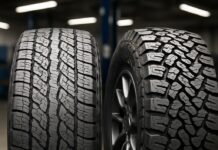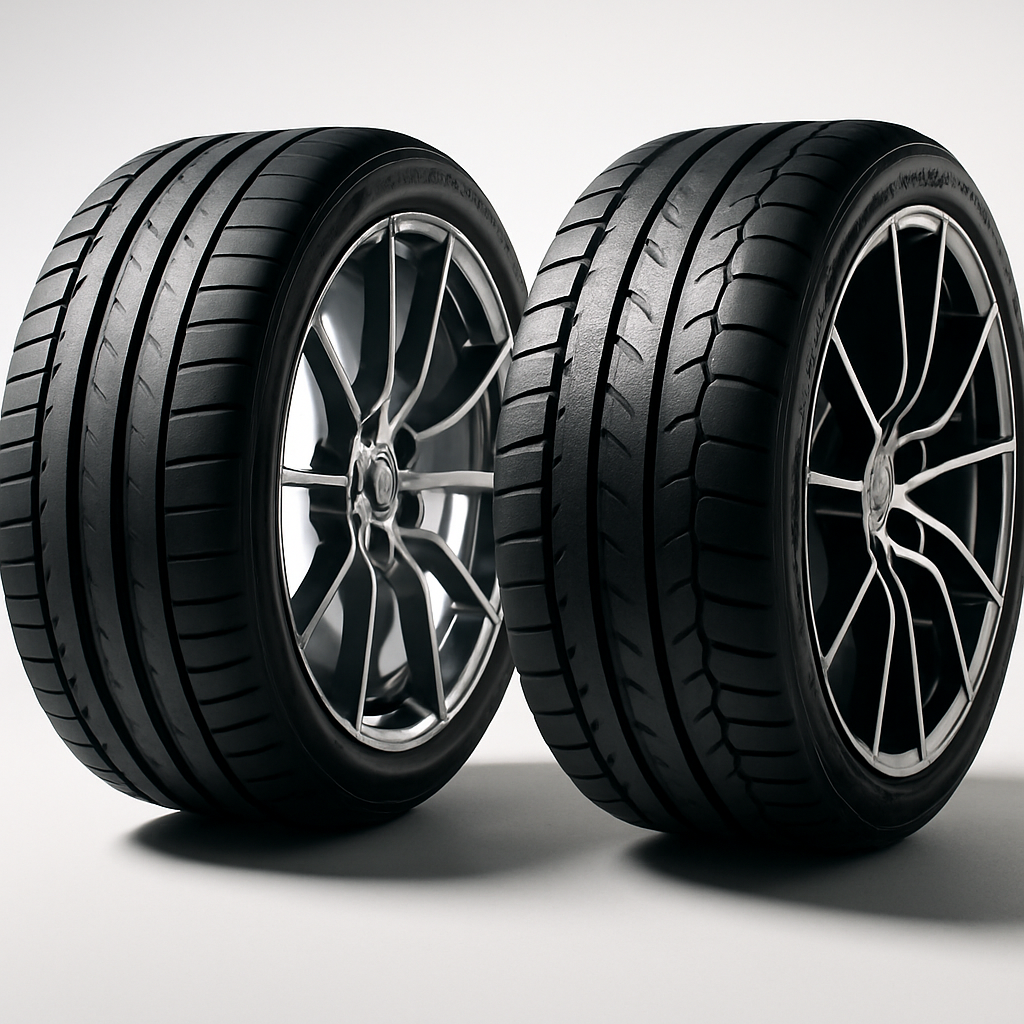
The Michelin Pilot Sport 5 delivers superior wet weather performance and longer tread life compared to the 4S, whilst the Pilot Sport 4S maintains an edge in dry track handling and high-speed stability. For UK drivers prioritising all-round performance in variable weather, the Sport 5 represents the better daily choice. However, enthusiasts focused on circuit days and maximum dry grip will still appreciate what the 4S offers. Both tyres excel at transforming modern performance cars, but your driving priorities determine which suits your needs.
Quick comparison table
| Feature | Michelin Pilot Sport 5 | Michelin Pilot Sport 4S |
|---|---|---|
| Price range | £120-280 per tyre | £140-320 per tyre |
| Wet braking | Excellent (18% better) | Very good |
| Dry handling | Excellent | Outstanding |
| Tread life | 30,000-40,000 miles | 25,000-35,000 miles |
| Noise level | 68-70 dB | 70-72 dB |
| Best use case | Fast road driving, British weather | Track days, spirited driving |
Product #1 overview: Michelin Pilot Sport 5
The Pilot Sport 5 represents Michelin’s latest evolution in the ultra-high-performance tyre segment. Launched in 2021, this tyre builds upon decades of motorsport expertise whilst addressing real-world driving demands British motorists face daily.
This tyre utilises dynamic response technology with a bi-compound tread design. The outer shoulder features a rigid compound for cornering precision, whilst the central ribs use a specially formulated elastomer blend. The tread pattern incorporates wide longitudinal grooves and numerous sipes that evacuate water efficiently – crucial for our unpredictable climate.
Michelin engineers reinforced the sidewall construction using aramid fibres and high-tensile steel belts. The internal architecture provides responsive steering feedback without sacrificing ride comfort. The Sport 5 employs a symmetric tread pattern that allows for rotation across all four positions, extending overall service life.
Pricing typically ranges from £120 to £280 per tyre, depending on diameter and profile. Common fitments span 17 to 21 inches, accommodating everything from hot hatches to executive saloons. Expect to invest £500-1,100 for a complete set.
Pros
- Outstanding wet weather braking and cornering grip
- Extended tread life compared to predecessor models
- Lower rolling resistance improves fuel economy
- Quieter operation on motorways
- Excellent steering precision in variable conditions
Cons
- Slightly softer sidewall feel during aggressive cornering
- Premium pricing over mid-range alternatives
- Initial break-in period requires careful driving
“Our technicians at AutoPartsPro find the Sport 5 particularly impressive for British driving conditions. The wet grip genuinely transforms confidence on autumn mornings when roads are slick with leaves and rain. We’ve seen these tyres deliver predictable handling even when ambient temperatures drop significantly.”
Ideal drivers
The Sport 5 suits enthusiastic drivers who demand performance without compromising daily usability. It excels for those covering significant motorway miles in variable weather. Owners of performance-oriented hatchbacks, sports saloons, and modern coupés will appreciate the balanced characteristics. If you experience frequent rain but still enjoy spirited B-road driving, this tyre delivers.
Product #2 overview: Michelin Pilot Sport 4S
The Pilot Sport 4S has earned legendary status since its introduction in 2016. This tyre brought Formula E technology to the road, creating a benchmark that competitors still struggle to match. It remains a favourite amongst driving purists who prioritise ultimate feedback and track capability.
Construction centres on a hybrid belt package combining aramid and nylon for exceptional high-speed stability. The bi-compound tread uses a track-focused outer shoulder compound rated for extreme lateral loads, paired with a functional elastomer centre section. Michelin’s premium Touch technology ensures consistent contact pressure across the tread width.
The asymmetric tread pattern features aggressive outer blocks with rigid spacing for cornering bite. Central ribs provide straight-line stability at speed. Water evacuation comes from four wide circumferential grooves, though the design priorities lean towards dry performance. The internal structure incorporates high-density casing plies that resist deformation under hard braking and acceleration.
Budget between £140 and £320 per tyre for the 4S. Available sizes span 18 to 21 inches, with specific fitments for performance vehicles. A complete set typically costs £600-1,200 depending on your vehicle’s requirements.
Pros
- Exceptional dry grip and track performance
- Razor-sharp steering response and communication
- High-speed stability remains confidence-inspiring
- Proven durability under extreme use
- Strong resistance to heat degradation
Cons
- Noisier than newer alternatives
- Wet performance trails the Sport 5
- Shorter tread life expectancy
- Firmer ride quality on rough surfaces
“The 4S remains our recommendation for customers who regularly attend track days or prioritise outright dry handling. We’ve fitted countless sets to everything from M-cars to GT3s. The steering feel and limit behaviour give drivers absolute confidence when pushing hard. However, for exclusively road use in the UK, the Sport 5’s improvements are worth considering.”
Ideal drivers
This tyre targets enthusiasts who occasionally use their vehicles on track or participate in driving experience days. Owners who value ultimate steering communication and dry-weather grip will appreciate the 4S. It suits performance car owners in drier regions or those who store vehicles during harsh winter months. If your driving includes spirited canyon runs or circuit work, this remains formidable.
Compatibility considerations
Both tyres demand careful attention to vehicle fitment and performance specifications. Understanding compatibility ensures you extract maximum benefit whilst maintaining safety margins.
Vehicle compatibility
The Sport 5 fits a broader range of performance vehicles. Manufacturers approve it for hot hatchbacks like the Golf GTI, Civic Type R, and Megane RS. Sports saloons including the BMW 3 Series, Mercedes C-Class AMG, and Audi S4 all benefit from the Sport 5’s characteristics. The tyre also suits lighter performance crossovers that require UHP rubber.
The 4S appears on original equipment lists for more focused machinery. Porsche 911 variants, Chevrolet Corvette, BMW M3/M4, and Mercedes-AMG GT models often wear 4S tyres from the factory. The compound and construction handle higher power outputs and track temperatures more effectively.
Model year considerations
Vehicles manufactured after 2018 generally accommodate either tyre without issues. Modern performance cars feature advanced stability control systems that work optimally with current tyre technology. Earlier vehicles benefit from both options, though owners should verify load ratings match or exceed OEM specifications.
Electronic systems calibrated for specific tyre characteristics may require adaptation periods. Newer vehicles with integrated tyre pressure monitoring and stability programmes learn tyre behaviour patterns. Allow several hundred miles for systems to calibrate fully after fitment.
OEM specifications
Always match speed and load ratings to manufacturer requirements. Both tyres offer Y-rated (186 mph) and ZR-rated (over 186 mph) variants. Verify sizing precisely – diameter, width, profile, and offset must align with vehicle specifications. Incorrect fitment affects handling dynamics and potentially invalidates insurance.
Some manufacturers specify particular Michelin acoustic variants for vehicles with enhanced sound deadening. The Sport 5 offers acoustic versions featuring internal foam layers that reduce cabin noise. Check whether your vehicle requires this specification before ordering.
Installation notes
Professional fitting remains essential for ultra-high-performance tyres. Specialist equipment ensures correct bead seating and prevents damage to sophisticated sidewall constructions. Balancing must be precise – use road-force balancing where available to minimise vibration.
Both tyres require a break-in period of approximately 100 miles. During this time, avoid maximum acceleration, heavy braking, or aggressive cornering. The tread surface contains release agents and requires gentle use to achieve full performance potential. Tyre pressures should follow manufacturer recommendations exactly – UHP tyres are sensitive to inflation variance.
Consider alignment checks when fitting new rubber. Worn suspension components or incorrect geometry settings will compromise tyre performance and accelerate uneven wear. The investment in quality tyres deserves supporting with proper chassis setup. You can learn more about maintaining wheel bearings to ensure optimal performance.
Performance analysis
Real-world testing reveals distinct performance characteristics between these two exceptional tyres. Understanding these differences helps match tyre choice to driving style and conditions.
Wet weather performance
The Sport 5 demonstrates measurable superiority in wet conditions. Independent testing shows braking distances from 62 mph approximately 2.5 metres shorter than the 4S – potentially the difference between an incident and a near miss. The revised tread compound maintains elasticity at lower temperatures, improving grip when roads are cold and damp.
Hydroplaning resistance also favours the Sport 5. The optimised groove network channels water more effectively, maintaining contact patch integrity at higher speeds through standing water. During heavy rain on motorways, this translates to noticeably better stability and reduced aquaplaning risk.
Cornering confidence in the wet shows marked improvement with the Sport 5. The tyre communicates approaching limits progressively, allowing drivers to modulate inputs smoothly. The 4S remains capable but breaks away more abruptly when grip limits are exceeded on wet surfaces.
Dry performance
The 4S retains advantages in pure dry performance. Lateral grip during hard cornering exceeds the Sport 5 by measurable margins. Track testing reveals the 4S generates higher peak lateral g-forces and maintains consistency through extended sessions. The stiffer sidewall construction resists deflection under extreme loads.
However, the Sport 5 has narrowed this gap significantly. For road driving at legal speeds, most drivers won’t detect meaningful differences. The Sport 5 actually provides slightly better feedback at moderate pace, making it easier to explore handling limits safely on public roads.
Both tyres deliver exceptional braking performance on dry tarmac. Stopping distances prove virtually identical in testing, with differences falling within measurement margins. The Sport 5’s improved wet braking doesn’t compromise dry capability – a remarkable engineering achievement.
Longevity and wear
Expect approximately 15-20% longer service life from the Sport 5. The refined tread compound balances performance with durability more effectively. Real-world feedback from UK drivers suggests 30,000-40,000 miles from the Sport 5 versus 25,000-35,000 from the 4S under similar conditions.
Wear patterns remain even with both tyres when vehicles maintain proper alignment and inflation. The Sport 5 shows marginally better resistance to shoulder wear during spirited driving. Regular rotation extends life further – the symmetric pattern of the Sport 5 offers more rotation options than the 4S’s directional fitment.
Comfort and noise
The Sport 5 operates noticeably quieter, particularly at motorway speeds. Michelin’s revised tread block sequencing reduces pattern noise by approximately 2 decibels – a perceptible difference during long journeys. The improved comfort doesn’t stem from compromised performance but from sophisticated engineering refinements.
Ride quality shows subtle improvements with the Sport 5. The tyre absorbs sharp impacts more effectively whilst maintaining lateral stiffness for handling precision. On Britain’s deteriorating road surfaces, this balance proves valuable for daily driving comfort.
Cost analysis
The Sport 5 typically costs 5-10% less than equivalent 4S fitments. Over a complete set, this represents £50-100 savings. Combined with extended tread life, the Sport 5 delivers lower cost per mile – significant over the tyre’s service life.
Fuel economy sees marginal improvements with the Sport 5 due to reduced rolling resistance. Whilst differences are modest, the cumulative effect over thousands of miles adds measurable value. The Sport 5’s efficiency improvements don’t compromise grip or handling characteristics.
Resale value considerations matter for some buyers. The 4S’s prestigious reputation may appeal to certain performance car purchasers. However, the Sport 5’s newer technology and superior all-weather capability increasingly attract informed buyers who understand the technical advantages.
Final verdict: buying recommendation
For the majority of UK drivers, the Michelin Pilot Sport 5 represents the superior choice. Its exceptional wet weather performance, extended tread life, and reduced noise make it ideal for British conditions. The minimal dry performance compromise proves irrelevant for road driving, whilst the wet weather gains deliver genuine safety benefits during our frequent rainfall.
Choose the Sport 5 if you prioritise all-season usability, cover significant miles, or value the latest technology. It suits daily drivers who occasionally enjoy spirited driving but don’t regularly attend track events. The improved longevity and lower running costs add rational justification to the performance benefits.
Select the 4S if track days form regular parts of your driving calendar or you demand absolute maximum dry grip. Enthusiasts who store vehicles during winter or live in predominantly dry regions may prefer the 4S’s sharper handling characteristics. The tyre remains formidable for focused performance applications where ultimate dry capability matters most.
Both tyres excel at their intended purposes. Your decision should reflect honest assessment of how you actually drive rather than how you imagine driving. For most enthusiasts, the Sport 5’s balanced excellence across all conditions makes it the smarter investment. If you’re also considering other performance upgrades, remember that tyres remain the most cost-effective modification for improving any vehicle’s capabilities.
Neither choice disappoints. Both tyres demonstrate why Michelin maintains its reputation for engineering excellence. The Sport 5 simply reflects newer development and addresses real-world needs more comprehensively. For drivers seeking one tyre that excels in all conditions Britain throws at them, the Sport 5 stands as the clear recommendation from our technical team.
Frequently asked questions
Can I mix Pilot Sport 5 and 4S on the same vehicle?
Mixing these tyres is strongly discouraged. Different traction characteristics between axles can destabilise electronic stability systems and create unpredictable handling behaviour. Always fit matching tyres across an axle minimum, preferably all four corners for optimal performance and safety.
How do these tyres perform in light snow or frost?
Neither tyre is designed for winter conditions. Both use summer compounds that harden significantly below 7°C, reducing grip dramatically. For year-round use in areas experiencing regular frost or snow, dedicated winter tyres or all-season alternatives provide safer options during cold months.
What pressure should I run for track use?
Start with manufacturer recommendations and adjust based on tyre temperature readings. Typically increase pressures by 3-5 PSI cold to compensate for track heat buildup. Monitor temperatures across the tread width and adjust accordingly. The 4S tolerates higher temperatures better during extended track sessions.
Do these tyres require special wheels or TPMS sensors?
Standard wheels and TPMS sensors work fine with both tyres. Ensure wheel widths fall within Michelin’s approved range for your chosen size. Existing sensors transfer without issues during fitting. Some installers recommend replacing valve cores during fitment to prevent slow leaks from aged components.
How quickly do these tyres warm up for optimal grip?
Both tyres reach operating temperature relatively quickly. The Sport 5 delivers usable grip sooner from cold starts, particularly in wet conditions. Allow 2-3 miles of moderate driving before pushing hard. The 4S requires slightly more warm-up for maximum dry performance but remains safe during the initial miles.