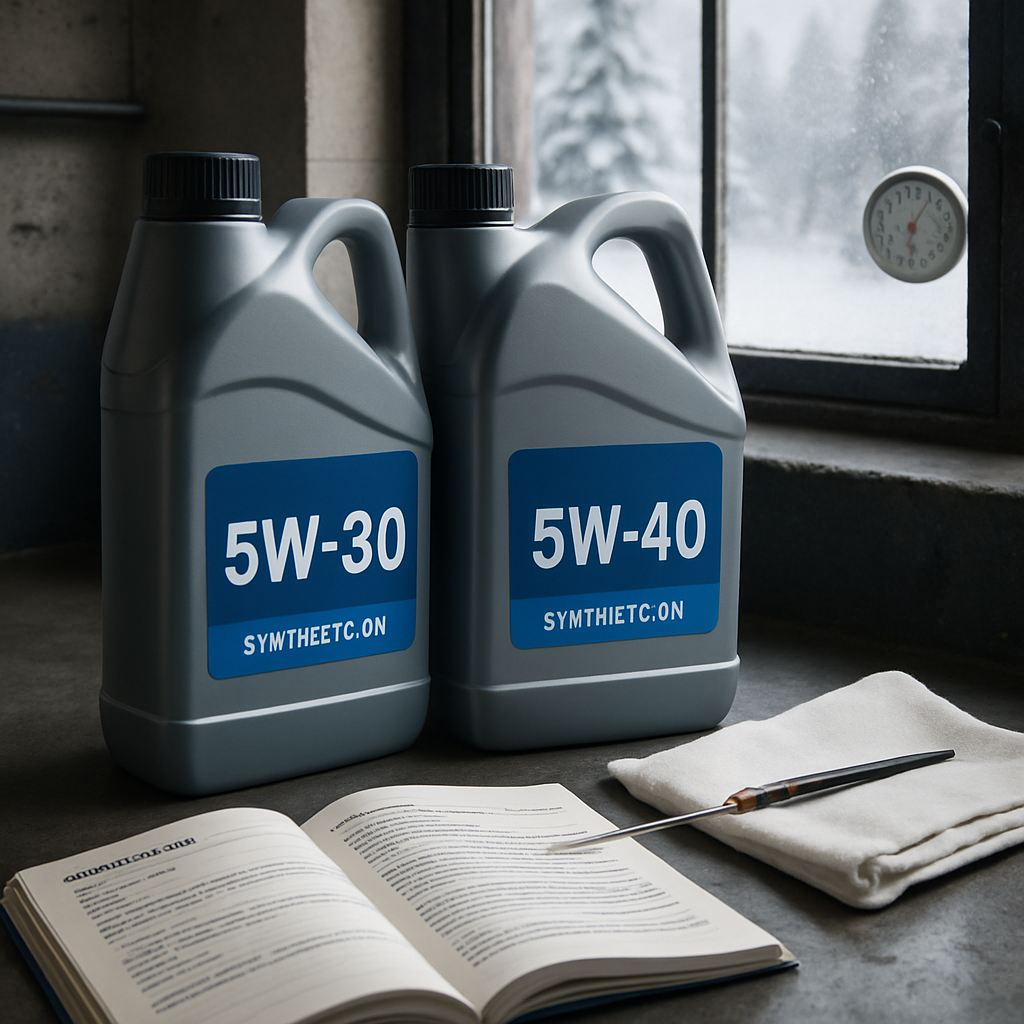
When choosing between 5W30 and 5W40 motor oil for winter driving in the UK, 5W30 is generally the better choice for cold weather as it flows more easily at low temperatures, ensuring faster lubrication during cold starts and reducing engine wear. Both oils share the same winter viscosity rating (5W), meaning they perform identically in cold conditions, but 5W30’s lower operating temperature viscosity makes it ideal for typical British winters. However, if you drive a high-performance vehicle or frequently tow heavy loads, 5W40 provides better protection at higher operating temperatures. Always consult your vehicle’s handbook first, as manufacturers specify oil grades based on extensive testing.
Quick comparison table
| Attribute | 5W30 | 5W40 |
|---|---|---|
| Cold weather performance | Excellent – flows faster at startup | Excellent – identical cold flow properties |
| Fuel economy | Better – lower viscosity reduces friction | Slightly lower – thicker at operating temperature |
| High temperature protection | Good for standard engines | Superior for high-stress conditions |
| Price range | £25-£60 per 5 litres | £30-£70 per 5 litres |
| Engine wear protection | Excellent for modern engines | Enhanced for older or performance engines |
| Best use case | Daily driving, fuel efficiency priority | Towing, performance driving, older engines |
5W30 motor oil overview
5W30 represents a multigrade lubricant where the ‘5W’ indicates winter viscosity and ’30’ denotes operating temperature thickness. This formulation has become the standard recommendation for most modern petrol and diesel engines manufactured in the past two decades. The lower operating viscosity allows the oil to circulate more freely through narrow passages, reaching critical components faster.
Modern motor oils use synthetic or semi-synthetic base stocks combined with advanced additive packages. These formulations maintain their protective properties across temperature extremes whilst reducing internal friction. According to our mechanics at Autopartspro, 5W30 has proven exceptionally reliable in UK climate conditions, where temperatures rarely drop below -15°C.
Typical price: Quality 5W30 oils range from £25 for budget mineral blends to £60 for fully synthetic premium brands per 5-litre container.
Pros:
- Superior cold-start protection minimises wear during critical startup phase
- Improved fuel economy due to reduced internal resistance
- Meets specifications for most modern vehicle manufacturers
- Excellent for turbocharged engines requiring rapid lubrication
- Longer service intervals when using synthetic formulations
Cons:
- May thin excessively in extremely hot climates or under sustained high loads
- Not suitable for older engines designed for thicker oils
- Can increase oil consumption in engines with worn seals
- Less protection margin for engines operating at high temperatures
Ideal drivers: 5W30 suits motorists who primarily drive in urban and motorway conditions, those prioritising fuel efficiency, and owners of vehicles manufactured after 2000. It’s particularly recommended for modern diesel engines with diesel particulate filters that require low-ash formulations.
Our senior technician at Autopartspro recommends checking your oil level every fortnight when using 5W30 in older vehicles, as the thinner viscosity may highlight existing seal deterioration that thicker oils previously masked.
5W40 motor oil overview
5W40 lubricant offers identical cold-weather characteristics to 5W30 but maintains a thicker consistency at operating temperatures. This higher hot viscosity provides an additional protection margin for engines subjected to demanding conditions. The formulation creates a more robust lubricating film between moving components, particularly beneficial for engines with larger tolerances or those experiencing higher thermal loads.
This grade has traditionally been favoured in continental Europe, where summer temperatures climb higher and driving styles tend to be more spirited. Many performance-oriented manufacturers specify 5W40 for their engines, recognising the enhanced protection during sustained high-speed operation. The oil’s characteristics make it particularly suitable for vehicles regularly used for towing caravans or operating in mountainous terrain.
Typical price: Quality 5W40 formulations cost between £30 for conventional blends and £70 for top-tier fully synthetic products per 5-litre container.
Pros:
- Enhanced high-temperature protection prevents oil film breakdown
- Better suited for engines with higher mileage and increased bearing clearances
- Maintains pressure more effectively in hot conditions
- Ideal for performance engines and turbocharged applications under load
- Reduces oil consumption in engines with moderate wear
Cons:
- Slightly reduced fuel economy compared to 5W30
- May not meet manufacturer specifications for some modern engines
- Higher cost per litre in most cases
- Unnecessary for standard driving conditions in moderate climates
Ideal drivers: 5W40 benefits drivers who regularly tow trailers, operate in stop-start traffic generating high engine temperatures, own performance vehicles, or maintain older cars with engines designed before the widespread adoption of thinner oils. It’s also preferred by enthusiasts who enjoy spirited driving or track days.
According to Autopartspro’s workshop data, vehicles using 5W40 in winter show no measurable difference in cold-start wear compared to 5W30, as the winter viscosity rating remains identical. The choice should be based on operating conditions, not cold-weather performance.
Compatibility considerations
Selecting the correct oil viscosity extends beyond simply choosing between two numbers. Modern engines feature precise tolerances and sophisticated lubrication systems designed around specific oil characteristics. Using an incorrect grade can affect everything from oil pump performance to variable valve timing operation.
Vehicle compatibility: Always reference your owner’s manual or the label typically found inside the engine bay or fuel filler cap. Manufacturers conduct extensive testing to determine optimal viscosity grades. Vehicles produced after 2010 predominantly specify 5W30 or even thinner grades like 0W20. Older vehicles, particularly those from the 1990s and early 2000s, often require 5W40 or 10W40.
Model year considerations: Pre-2000 engines generally feature larger internal clearances and benefit from 5W40’s thicker film. Post-2010 engines with variable valve timing, direct injection, and efficiency-focused designs require the lower viscosity of 5W30. Transitional years (2000-2010) vary by manufacturer, making handbook consultation essential.
OEM specifications: Beyond viscosity, oils must meet specific performance standards denoted by codes like ACEA C3, API SN, or manufacturer-specific approvals such as VW 504.00. These specifications address additive chemistry, ash content, and compatibility with emissions equipment. Using oil with incorrect specifications can damage catalytic converters or particulate filters, even if the viscosity grade is correct.
Installation notes: When changing oil grades, perform a complete flush or drain the system thoroughly. Mixing 5W30 and 5W40 won’t cause immediate harm but creates an intermediate viscosity that may not meet manufacturer specifications. If switching permanently, monitor oil pressure and consumption for the first 1,000 miles. Consider updating your service records to reflect the change for future reference.
Engines with turbochargers demand particular attention to oil specification, as these components operate at extreme temperatures and speeds. The rapid oil flow required for turbo cooling makes cold-start viscosity critical, whilst the high temperatures demand thermal stability found in quality synthetic formulations.
Final verdict and buying recommendation
For the majority of UK motorists facing typical winter conditions, 5W30 emerges as the optimal choice. Its superior cold-flow characteristics ensure immediate lubrication during those crucial first seconds after starting, when most engine wear occurs. The fuel economy benefits, whilst modest, accumulate meaningfully over a year’s driving. Most importantly, it aligns with modern engine designs optimised for lower-viscosity lubricants.
Choose 5W30 if you drive a vehicle manufactured after 2005, prioritise fuel efficiency, operate primarily in urban or motorway environments, or follow manufacturer recommendations specifying this grade. It’s particularly suitable for turbocharged engines requiring rapid oil circulation and vehicles equipped with modern emissions control systems.
Select 5W40 when your vehicle’s handbook specifically requires it, you regularly tow heavy loads, engage in performance driving, own a high-mileage vehicle showing minor oil consumption, or operate in consistently hot conditions. It’s also appropriate for certain European performance marques that specify this grade regardless of climate.
Regardless of your choice, invest in quality synthetic or semi-synthetic formulations from reputable manufacturers. Cheap mineral oils, regardless of viscosity grade, cannot provide the protection and longevity that modern engines demand. Regular oil changes using the correct specification matter far more than minor viscosity differences.
Winter driving in the UK doesn’t necessitate special oil changes if you’re already using an appropriate multigrade. Both 5W30 and 5W40 perform identically in cold conditions thanks to their shared 5W rating. Focus instead on maintaining correct oil levels, as consumption often increases during cold weather, and ensure your oil filter is replaced with every oil change to maintain optimal lubrication system performance.
Frequently asked questions
Can I switch from 5W40 to 5W30 in winter?
Yes, you can switch to 5W30 if your manufacturer approves this grade. Both oils flow identically when cold due to the same 5W rating. However, verify your handbook first, as some engines require 5W40’s thicker hot viscosity for adequate protection regardless of season.
Will using 5W30 instead of 5W40 damage my engine?
Using 5W30 in an engine designed for 5W40 may reduce protection margins at high temperatures and loads, potentially accelerating wear. Short-term use won’t cause catastrophic failure, but prolonged use contradicting manufacturer specifications risks voiding warranties and increasing long-term damage.
Does 5W30 really improve fuel economy compared to 5W40?
Yes, but the improvement is modest, typically 1-2% under controlled conditions. The thinner oil reduces internal friction, allowing the engine to operate more efficiently. Real-world benefits depend on driving style, with motorway driving showing more noticeable gains than urban stop-start conditions.
How often should I change oil in winter conditions?
Follow your manufacturer’s service intervals, which already account for seasonal variations. However, if you make frequent short journeys in cold weather, consider reducing intervals by 20-30%, as engines rarely reach optimal operating temperature, preventing moisture evaporation and accelerating oil degradation.
Can I mix 5W30 and 5W40 if I’m topping up?
Mixing these grades won’t cause immediate harm and is acceptable for emergency top-ups. The resulting blend will have intermediate viscosity properties. However, avoid making this standard practice, as the mixture won’t meet specific manufacturer specifications and may affect warranty coverage.