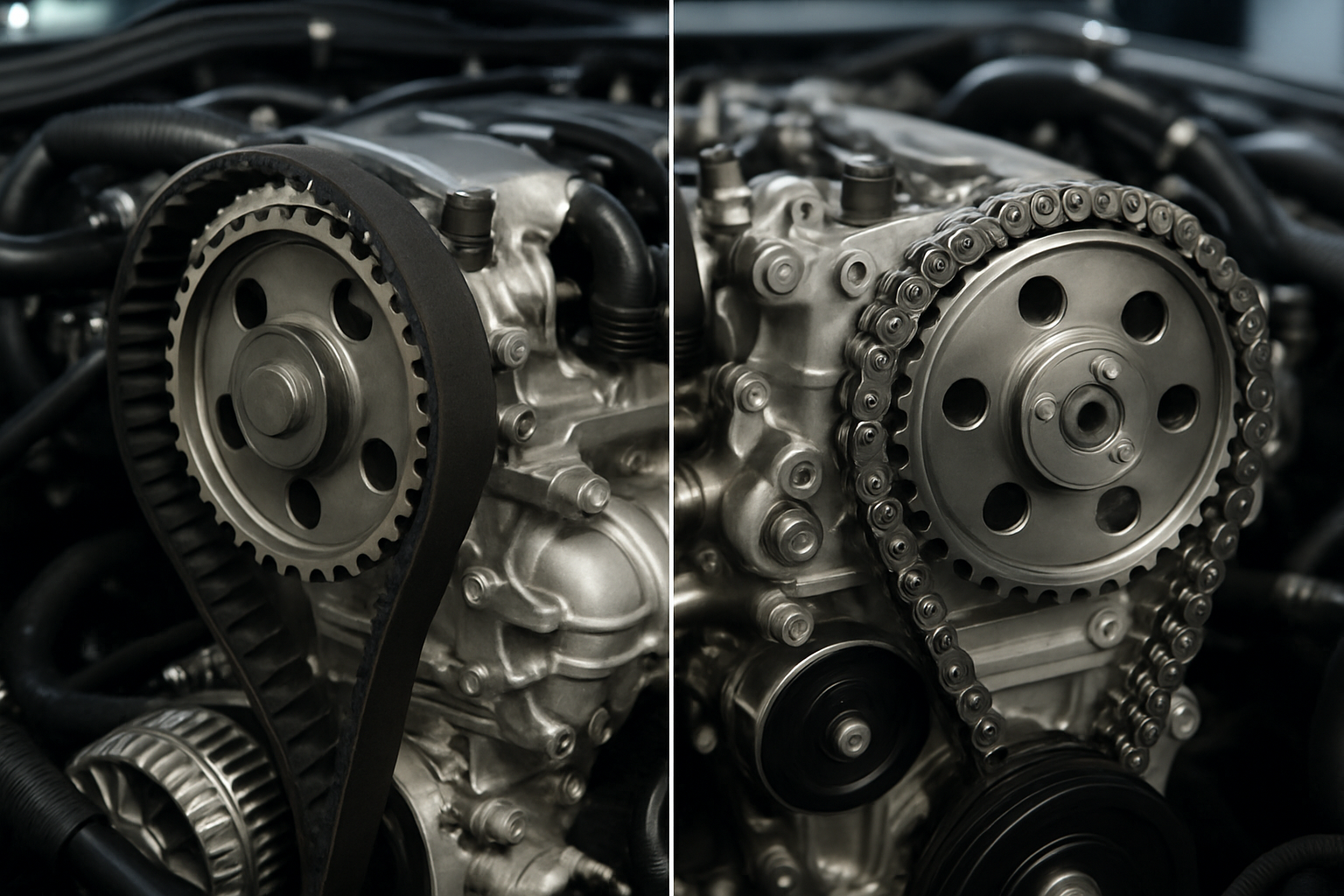
Whether your car has a timing belt (registerreim) or timing chain (kjede) depends entirely on the engine design chosen by the manufacturer. The quickest way to find out is to check your vehicle’s handbook or contact a specialist with your registration number. Timing belts typically require replacement every 60,000-100,000 miles or 5-10 years, whilst timing chains are generally designed to last the engine’s lifetime, though they can stretch and require attention in high-mileage vehicles. Knowing which system your car uses is critical for proper maintenance scheduling and avoiding catastrophic engine damage.
Our mechanics at Autopartspro consistently emphasise that identifying your timing system type should be one of the first maintenance checks for any used car purchase. The difference between these two components affects not only your service costs but also the longevity and reliability of your engine.
Quick comparison table
| Feature | Timing belt (registerreim) | Timing chain (kjede) |
|---|---|---|
| Lifespan | 60,000-100,000 miles | Engine lifetime (typically) |
| Replacement cost | £300-£800 | £500-£1,500 (if needed) |
| Maintenance | Regular replacement required | Minimal, inspection only |
| Noise level | Quieter operation | Slight metallic sound |
| Durability | Wears with age and heat | Very durable, can stretch |
| Failure warning | Often no warning | Rattling or whining noise |
| Best use case | Compact, efficient engines | High-performance, longevity |
This table highlights the fundamental differences that matter to UK drivers. Understanding these distinctions helps you plan maintenance budgets and avoid unexpected repair bills.
Timing belt overview
A timing belt, known as a registerreim in Norwegian terminology, is a reinforced rubber belt with teeth that synchronises the rotation of the crankshaft and camshaft. This synchronisation ensures valves open and close at precisely the right moments during each cylinder’s intake and exhaust strokes. The belt connects various pulleys and drives the engine’s internal timing mechanism.
Modern timing belts are constructed from reinforced rubber compounds with fibreglass or Kevlar cords for strength. They run dry without lubrication, which keeps them quieter than chain alternatives. The typical price for a timing belt replacement ranges from £300 to £800 depending on your vehicle model and labour costs.
Top tip: Always replace the water pump when changing a timing belt if it’s driven by the same belt. The labour costs overlap significantly, and water pumps often fail around the same mileage interval.
The main advantage of timing belts is their quiet operation and compact design, making them ideal for smaller engine bays. They’re lighter than chains, which marginally improves fuel efficiency. However, they require scheduled replacement as rubber degrades over time regardless of mileage.
Disadvantages include the critical nature of replacement intervals. If a timing belt snaps on an interference engine, valves and pistons collide, causing extensive damage costing thousands to repair. There’s typically no warning before failure, making adherence to service schedules absolutely essential.
Ideal drivers for timing belt systems are those who maintain strict service schedules and keep detailed maintenance records. If you’re purchasing a used vehicle with a timing belt, always verify when it was last changed and budget for replacement if records are unclear.
Timing chain overview
A timing chain performs the same synchronisation function as a belt but uses a metal chain similar to a bicycle chain. It runs inside the engine, bathed in engine oil for lubrication and cooling. The chain connects sprockets on the crankshaft and camshaft, maintaining precise valve timing throughout the engine’s operation.
Timing chains are manufactured from hardened steel links designed to withstand extreme forces and temperatures. Unlike belts, they’re built to last the engine’s lifetime under normal conditions. However, ‘lifetime’ doesn’t always mean trouble-free, especially in engines with poor oil change history or design flaws.
The primary benefit of timing chains is longevity. When properly maintained with regular oil changes using the correct specification, chains can easily exceed 150,000 miles without attention. They eliminate the anxiety of belt replacement intervals and associated costs.
Chains do produce slightly more noise than belts—a characteristic metallic sound during cold starts that’s normal. They’re also heavier and require more complex oiling systems, which adds minimal weight to the engine.
Expert insight from Autopartspro specialists: We’ve observed that timing chain problems almost always trace back to extended oil change intervals or using incorrect oil viscosity. Maintaining proper lubrication is the single most important factor in chain longevity.
Disadvantages emerge when chains do fail or stretch. Replacement costs range from £500 to £1,500 or more because the job requires substantial engine disassembly. Chain stretch causes timing variations that trigger check engine lights, rough running, and poor fuel economy before complete failure.
Warning signs include a rattling noise from the engine front during cold starts, the check engine light illuminating with timing-related codes, or rough idle. Unlike belts, chains give advance warning, allowing you to address issues before catastrophic failure.
Timing chains suit drivers who keep vehicles long-term and maintain regular oil changes. They’re particularly common in performance engines and larger displacement motors where durability matters most. Premium manufacturers like BMW, Mercedes-Benz, and Audi favour timing chains for their longevity.
Compatibility considerations for your vehicle
Determining whether your specific vehicle uses a timing belt or chain requires checking several reliable sources. The owner’s manual always specifies the timing system type and maintenance intervals. If you don’t have the manual, the manufacturer’s website or a main dealer can provide this information using your VIN (Vehicle Identification Number).
Online resources like automotive databases allow you to search by registration number or VIN to access detailed specifications. Autopartspro’s parts lookup system can also identify timing components for your exact vehicle model, confirming whether you need a timing chain or belt replacement parts.
Model year considerations are crucial because manufacturers sometimes switch between systems across generations. For example, certain Ford engines used timing belts in earlier years but switched to chains in later models. Always verify the exact year and engine code rather than assuming based on the model name alone.
OEM specifications matter significantly when replacement becomes necessary. Timing components must meet or exceed manufacturer standards for materials and dimensions. Aftermarket parts from reputable suppliers often match OEM quality at lower prices, but avoid bargain-basement alternatives for such critical components.
Installation notes vary considerably between belt and chain systems. Timing belt replacement typically requires removing ancillary belts, engine covers, and sometimes engine mounts to access the belt. Special tools lock the crankshaft and camshaft in position whilst fitting the new belt to ensure correct timing.
Chain replacement is more invasive, often requiring removal of the engine front cover, oil pan, and various sensors. The timing chain tensioner and guides should always be replaced simultaneously, as these components wear at similar rates. Some designs require the engine to be partially removed from the vehicle for access.
Interference versus non-interference engine design determines the consequences of timing failure. Interference engines have valve and piston paths that overlap, meaning timing failure causes collision and severe damage. Non-interference engines have sufficient clearance to prevent contact, limiting damage to the timing system itself. Check whether your engine is an interference type to understand the risks of delayed maintenance.
Water pump considerations apply primarily to timing belt systems where the water pump is belt-driven. Since access requires similar labour, replacing the water pump during belt service makes economic sense. Timing chain engines typically use separately driven water pumps, though this varies by design.
Final verdict and buying recommendation
For daily driving with regular maintenance habits, timing chain systems offer better long-term value and peace of mind. You’ll avoid periodic replacement costs and the anxiety of tracking service intervals. However, you must maintain rigorous oil change schedules using quality lubricants to prevent premature chain wear.
Choose a vehicle with a timing belt if you prefer lower initial ownership costs and don’t mind scheduled maintenance. Belts suit drivers who keep detailed service records and plan to replace vehicles before high mileage accumulates. They’re also ideal for city cars and economy models where the compact, lightweight design offers efficiency benefits.
When purchasing a used vehicle, timing chain cars generally present less immediate maintenance risk, provided oil changes have been regular. For timing belt vehicles, always verify replacement history and budget £500-£800 for immediate belt service if records are absent or the interval is overdue.
Our Autopartspro mechanics recommend timing chain systems for customers planning to keep vehicles beyond 100,000 miles. The durability and reduced maintenance schedule offset any initial cost differences. For lease vehicles or those replaced frequently, timing belt systems work perfectly well with proper servicing.
Whichever system your car uses, never neglect the maintenance schedule. Timing component failure ranks among the most expensive repairs you’ll face, often totalling several thousand pounds for engine rebuilding. Prevention through timely service costs a fraction of repair expenses.
If you’re unsure about your vehicle’s timing system or service history, visit a qualified technician for inspection. They can determine the system type, assess its condition, and recommend appropriate action. For DIY enthusiasts, replacement parts including timing belt tensioners and chain kits are available through specialist suppliers with vehicle-specific fitment guides.
Frequently asked questions
How do I know if my timing belt needs replacing?
Check your service book for the manufacturer’s replacement interval, typically every 60,000-100,000 miles or 5-10 years, whichever comes first. Timing belts rarely show external symptoms before failure, making scheduled replacement critical for interference engines where failure causes severe damage.
Can I replace a timing belt with a timing chain?
No, you cannot convert between systems as they require completely different engine designs. The crankshaft, camshaft, engine covers, and oiling systems are engineered specifically for either belt or chain operation. Stick with your engine’s original timing system design.
How much does timing chain replacement cost?
Timing chain replacement typically costs £500-£1,500 depending on vehicle make and engine complexity. Labour represents the majority of costs due to extensive disassembly required. Premium brands and V-configuration engines sit at the higher end of this range.
What causes timing chain stretch?
Extended oil change intervals, incorrect oil viscosity, low oil levels, and manufacturing defects cause chain stretch. The chain wears against sprockets and guides, gradually elongating and losing precise timing control. Regular oil changes using manufacturer-specified grades prevent premature wear.
Will my car break down if the timing belt snaps?
Yes, your engine will stop immediately if the timing belt breaks. On interference engines, valves and pistons collide causing catastrophic damage requiring engine rebuilding or replacement. Non-interference engines stop running but typically avoid internal damage, requiring only timing system repair.